Carl Benz and the Invention of the Modern Automobile
The transition from horse-drawn carriages to motorized transport was not a sudden leap, but the result of meticulous engineering and daring spirit. At the center of this revolution was Carl Benz (born Karl Friedrich Michael Vaillant), a German engine designer whose vision transformed the way humanity moves. By integrating a gasoline-powered engine with a chassis designed for mobility, Benz created the first practical, modern automobile.
Early Life and Engineering Foundations
Born on November 25, 1844, in Mühlburg, Baden, Carl Benz was drawn to mechanical engineering from a young age. While he initially studied locksmithing, he eventually pursued locomotive engineering, following in his father's footsteps. At just 15 years old, he passed the entrance exam for mechanical engineering at the Karlsruhe polytechnical school, graduating in 1864 at the age of 19.
Benz's early career was marked by a relentless drive for innovation. After marrying Bertha Ringer in 1872, the couple established their own factory. Despite facing various business challenges, Benz focused on developing reliable power sources, specifically concentrating on the petrol two-stroke engine. He completed this design on December 31, 1879, and received the official patent on June 28, 1880.
The Benz Patent-Motorwagen
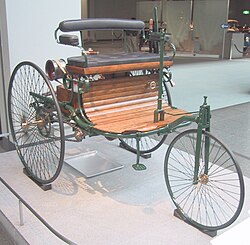
The culmination of Benz's early work arrived in 1885 with the creation of the Benz Patent-Motorwagen. Unlike previous attempts to add engines to existing carriages, Benz designed his vehicle as a cohesive unit. He received the patent for the motorcar in 1886, the same year he conducted the first public drive.
The Patent-Motorwagen featured several groundbreaking technical specifications:
- Chassis: A tubular steel frame with three wheels.
- Steering: Rack and pinion steering connected to a driver's tiller.
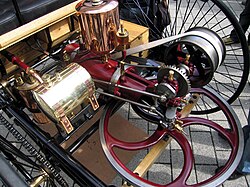
- Engine: A water-cooled, single-cylinder, four-stroke internal combustion engine (capable of running on gas or petrol).
- Ignition: An early electric ignition system.
- Drivetrain: Differential rear end gears.
The patent model boasted a 958 cc engine producing 0.8 hp with a top speed of 16 km/h (9.9 mph), while the commercialized version featured a 1600 cc engine producing 3/4 hp at 13 km/h (8.1 mph).
Bertha Benz and the First Long-Distance Journey
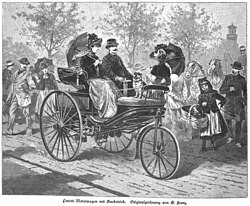
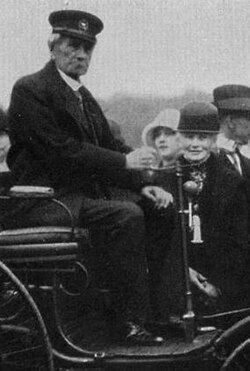
While Carl Benz provided the engineering genius, his wife, Bertha Benz, provided the proof of concept. In 1888, Bertha embarked on the world's first long-distance journey in a Benz Patent-Motorwagen Number 3. This daring trip demonstrated to the public that the automobile was not merely a curiosity but a viable means of transportation.
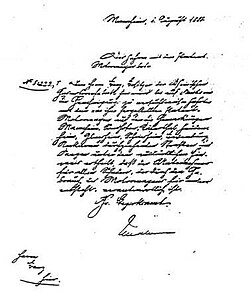

The success of this journey, along with the couple's subsequent travels—including a trip around Munich in September 1888—helped propel the Motorwagen into the public eye. By the time the Model 3 debuted at the 1889 World's Fair in Paris, the potential for a motorized future was undeniable.
Industrial Expansion and Mass Production
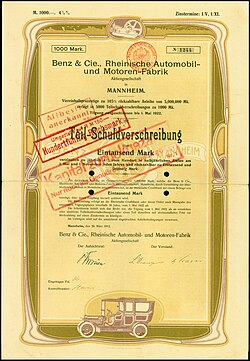
As demand for internal combustion engines grew, Benz expanded his operations in Mannheim. His company, Benz & Cie., grew rapidly, increasing its workforce from 50 employees in 1889 to 430 by 1899. This growth allowed Benz to move from bespoke creations to larger-scale production.
In 1894, Benz introduced the Velo (or Velocipede), which is widely considered the first mass-produced automobile. Between 1894 and 1902, over 1,200 units were produced. The Velo initially featured a 1L 1.5 hp engine, later upgraded to 3 hp, reaching speeds of 19 km/h (12 mph).

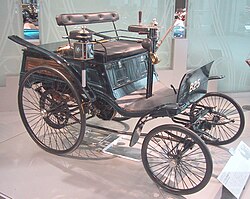
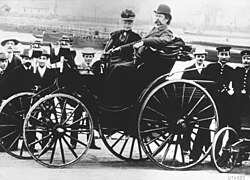
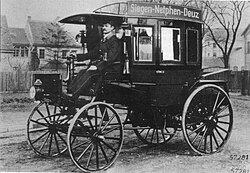
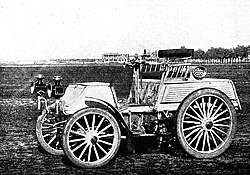
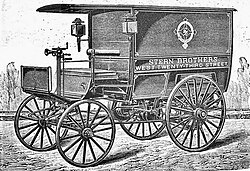
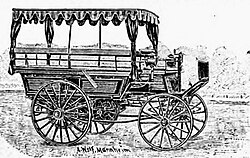
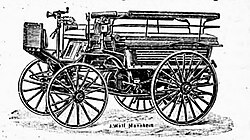
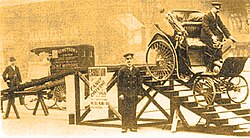
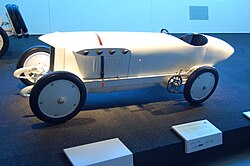
Benz did not stop at passenger cars. He expanded into commercial transport, creating the first internal combustion-engined bus in history—the Benz Omnibus—in 1895 for the Netphener bus company. His portfolio soon included delivery wagons and high-performance racing cars, such as the 14 hp two-cylinder model of 1899 and the record-breaking 1909 Blitzen Benz.
The Path to Mercedes-Benz
By the early 20th century, the automotive landscape was becoming increasingly competitive. Benz retired from design management on January 24, 1903, though he remained a director on the Board of Management. In 1926, a pivotal moment in industrial history occurred when Benz & Cie. merged with DMG (Daimler-Motoren-Gesellschaft) to form the Daimler-Benz corporation.
The new company branded its vehicles as Mercedes-Benz. This name combined the Benz legacy with "Mercedes," the name of the 1902 DMG model (named after Mercédès Jellinek). Following the merger, the company expanded its reach, launching diesel trucks in 1927 and presenting the iconic Mercedes-Benz SSK in 1928.

Key Facts
- First Practical Car: The Benz Patent-Motorwagen (1885/1886) is recognized as the first modern automobile.
- Mass Production: The Benz Velo (1894) was the first large-scale production car.
- Commercial Firsts: Benz built the first internal combustion-engined bus in 1895.
- The Merger: Benz & Cie. merged with DMG in 1926 to create the Mercedes-Benz brand.
- Pioneering Spirit: Bertha Benz proved the car's utility via the first long-distance drive in 1888.
| Year | Model/Milestone | Key Specification |
|---|---|---|
| 1886 | Patent-Motorwagen | 0.8 hp / 16 km/h (Patent model) |
| 1894 | Benz Velo | First mass-produced car; up to 3 hp |
| 1895 | Benz Omnibus | First internal combustion bus; 5 hp |
| 1899 | Racing Car | Two-cylinder, 14 hp |
| 1909 | Blitzen Benz | Held the land speed record |
| 1926 | Mercedes-Benz | Merger of Benz & Cie. and DMG |
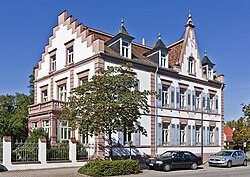
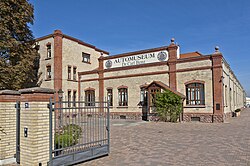
Carl Benz passed away on April 4, 1929, at the age of 84 in Ladenburg. His legacy is preserved today through the Gottlieb Daimler and Carl Benz Foundation and the Automuseum Dr. Carl Benz.
Frequently Asked Questions
Who invented the first modern car?
Carl Benz is credited with inventing the first practical, modern automobile, the Benz Patent-Motorwagen, in 1885, for which he received a patent in 1886.
What was the role of Bertha Benz in automotive history?
Bertha Benz was instrumental in proving the practical utility of the automobile. In 1888, she completed the first long-distance journey in a Benz Patent-Motorwagen, which helped generate public interest and confidence in the invention.
What was the first mass-produced car?
The Benz Velo, introduced in 1894, is considered the first large-scale production automobile, with over 1,200 units produced between 1894 and 1902.
How did the Mercedes-Benz brand start?
The brand was formed in 1926 through the merger of Carl Benz's company, Benz & Cie., and DMG (Daimler-Motoren-Gesellschaft). The name combined the Benz family name with "Mercedes," a successful DMG model.
Did Carl Benz create other types of vehicles?
Yes, beyond passenger cars, Benz developed the first internal combustion-engined bus in 1895, as well as various delivery wagons and high-performance racing cars.