Cargill: The Global Powerhouse of Agriculture and Food Supply
Cargill is one of the world's largest private conglomerates, operating as a critical pillar in the global food supply chain. Founded in 1865 by William Wallace Cargill, the company has evolved from a regional grain operation into a worldwide entity employing over 160,000 people across 66 countries. Headquartered in Minnetonka, Minnesota, Cargill maintains a dominant presence in the agricultural sector, managing a vast network of logistics, processing, and trading.
The scale of Cargill's influence is immense. The company is responsible for 25% of all United States grain exports and supplies approximately 22% of the domestic meat market. Additionally, it holds a unique market position as the sole U.S. producer of Alberger process salt, a specialized product essential for the prepared food and fast-food industries.
![The Cargill Lake Office, occupying the former Rufus Rand mansion on the main corporate campus in Minnetonka, formerly housed the company's top executives; the company's 2016 CEO decided it was bad optics,[clarification needed] moved the senior executive out, and the historic mansion was demolished by Cargill in 2020.[12][13]](/images/66/7f/667ff6a29adad318ad1e8d7de12afaaebecb77a803388a7932a9a3b43d9f1060.jpg)
Key Facts
- Founded: 1865 by William Wallace Cargill.
- Ownership: 88% owned by the Cargill-MacMillan family.
- Revenue: US$ 165 billion (2022).
- Workforce: 160,000 employees (2024).
- Market Reach: Operates in 66 countries worldwide.
- Leadership: Brian Sikes serves as Chairman and CEO.
Corporate Evolution and History
Foundations and International Expansion
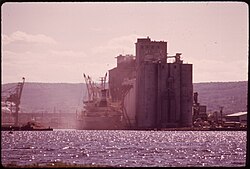
The company's trajectory toward global dominance was largely shaped by John MacMillan, who led the firm until 1936. MacMillan implemented a strategy of internationalism, establishing the company's first East Coast office in New York in 1923, followed by expansions into Canada (1928), Europe (1929), and Latin America (1930). During this era, Cargill also navigated complex geopolitical landscapes, including a controversial commercial rapprochement with the Soviet Union.
Modern Growth and Acquisitions
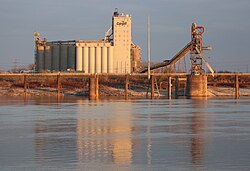
In the 21st century, Cargill expanded its portfolio through strategic acquisitions. In 2002, it purchased the European starch manufacturer Cerestar for $1.1 billion, and in 2011, it acquired the global animal nutrition firm Provimi for €1.5 billion. The company also strengthened its meat solutions division by acquiring Milwaukee Emmpak and Fresno Meats.
Recent Financial and Strategic Shifts
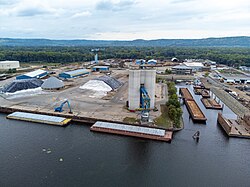
Cargill's financial performance has seen significant peaks, including record profits in 2022 driven by rising food prices and the Russian invasion of Ukraine. In 2020, the company shifted its transparency policy, announcing it would no longer publish quarterly results. Strategically, the company has also divested certain assets, such as its North American power and gas trading business and its Geneva-based petroleum-trading business, both sold to Macquarie Bank in 2017.
Operational Challenges and Controversies
Food Safety and Public Health
Cargill has faced several high-profile food safety incidents. In 2007, nearly 850,000 frozen beef patties were recalled due to suspected E. coli contamination. In 2011, the company recalled 36 million pounds of ground turkey due to antibiotic-resistant salmonella, which resulted in one death and 76 illnesses. A more severe historical incident occurred in 1971, when 63,000 tons of seed treated with a methylmercury-based fungicide—provided at the request of Saddam Hussein—led to at least 650 deaths after being consumed.
Environmental and Ethical Concerns
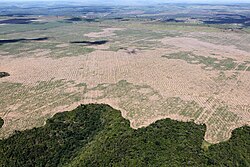
The company has been criticized for its environmental footprint, particularly regarding deforestation in the Amazon for soy and palm oil production. Ethically, Cargill has faced legal challenges, including a 2023 Brazilian court fine of approximately $120,185 for the use of child labor in cocoa harvesting.
Legal and Labor Disputes
Cargill has dealt with various legal battles, including a 2024 lawsuit from McDonald's Corporation alleging price fixing in the beef market. Cargill and Tyson eventually settled this matter in 2026, agreeing to pay $87.5 million. Other controversies include allegations of union busting, wage-fixing, and concerns over worker safety and PPE during the COVID-19 pandemic.
Company Overview Summary
| Metric | Detail |
|---|---|
| Industry | Conglomerate (Agriculture/Food) |
| Headquarters | Minnetonka, Minnesota, U.S. |
| 2022 Revenue | US$ 165 Billion |
| Net Income (2021) | US$ 4.93 Billion |
| Total Assets (2018) | US$ 59.2 Billion |
| Primary Ownership | Cargill-MacMillan family (88%) |
Frequently Asked Questions
Who owns Cargill?
Cargill is a private company, with the Cargill-MacMillan family holding an 88% ownership stake.
What is Cargill's role in the U.S. food market?
Cargill is a dominant force in U.S. agriculture, handling 25% of all U.S. grain exports and supplying roughly 22% of the domestic meat market.
Who is the current CEO of Cargill?
Brian Sikes was appointed as the president and CEO in January 2023.
Has Cargill faced legal issues regarding price fixing?
Yes, Cargill and Tyson settled a beef antitrust lawsuit brought by McDonald's Corporation in 2026, agreeing to pay $87.5 million.
Why did Cargill stop publishing quarterly results?
Cargill announced in June 2020 that it would no longer publish quarterly results, ending a disclosure practice that had been in place since 1996.