Candomblé: The African Diasporic Faith of Brazil
Candomblé is a vibrant African diasporic religion that emerged in Brazil during the 19th century. It is a spiritual tapestry woven from the traditional beliefs of West and Central Africa—specifically the Yoruba, Bantu, and Gbe peoples—blended with influences from Roman Catholicism. Unlike many organized religions, Candomblé has no central governing authority; instead, it is organized into autonomous houses of worship known as terreiros.
At its core, Candomblé is a faith of connection, linking the physical world with a divine spiritual realm. It emphasizes the relationship between humans and the spirits that govern the forces of nature and human destiny.
Key Facts
- Origins: Developed in Brazil, primarily in the Bahia region, during the 19th century.
- Roots: A syncretic blend of Yoruba, Bantu, and Gbe traditions with Roman Catholicism.
- Structure: Organized around independent terreiros led by a priestess (mãe de santo) or priest (pai de santo).
- Deities: Veneration of orixás (also called inkice or vodun), who are subservient to the creator god, Oludumaré.
- Core Rituals: Drumming, singing, dancing, animal sacrifice, and spirit possession.
The Spiritual Hierarchy and Beliefs
Oludumaré and the Orixás
The Candomblé pantheon is topped by Oludumaré, the transcendent creator god. Beneath Oludumaré are the orixás (or inkice and vodun depending on the tradition), spirits that represent natural forces and human archetypes. These deities derive their names and attributes from traditional West African gods.
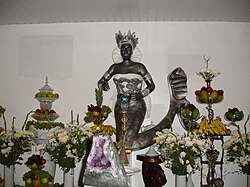
![A statue depicting the orixá Xangô inside a Candomblé terreiro in São Paulo; he is distinguished by his double-headed axe, the oxê[46]](/images/82/8f/828f6280e964ee091a2a956a6953bdf3af09588af657730bb21da62351f5be2d.jpg)
Personal Connection and Tutelary Spirits
A fundamental belief in Candomblé is that every individual is connected to a tutelary orixá from before birth. This specific deity is believed to shape the person's personality and guide their life path. To maintain a healthy relationship with their tutelary spirit, practitioners engage in offerings and rituals.
Syncretism with Catholicism
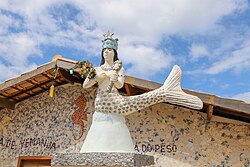
Due to the historical pressures of Portuguese colonialism, Candomblé practitioners often linked their orixás with Roman Catholic saints. This syncretism allowed the faith to survive under the guise of Catholicism during periods of persecution.
Lesser Spirits: Caboclos and Egun
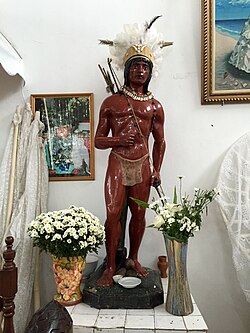
Beyond the orixás, Candomblé recognizes other spiritual entities. These include caboclos (spirits of Native Americans) and egun (the spirits of the dead). Offerings are frequently made to these spirits to seek guidance or healing.
Rituals and Sacred Practices
The Terreiro and Priesthood
The terreiro serves as the community's spiritual hub. These houses are managed by a mãe de santo (priestess) or pai de santo (priest), who act as intermediaries between the community and the divine.
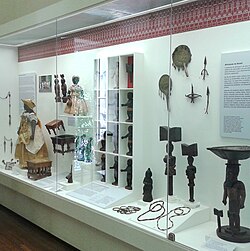
Sacred Objects and Altars
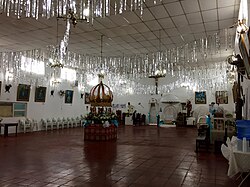
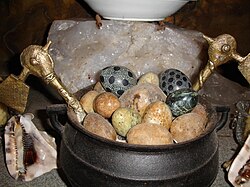
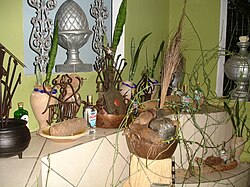
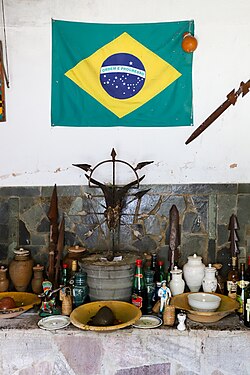
Altars in Candomblé are central to worship and often feature otás—sacred stones that serve as focal points for spiritual energy. Other important items include assamentos (sacred objects where the orixá resides), which are stored in a container called a bakisse.
Possession and Divination
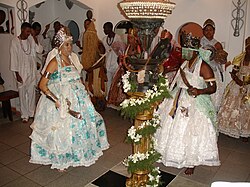
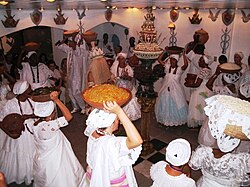
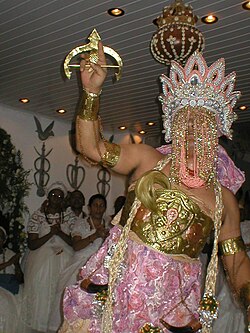
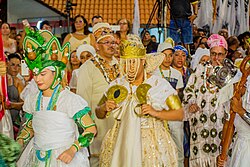
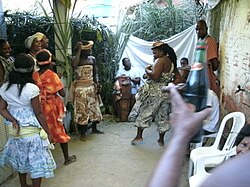
One of the most striking aspects of Candomblé is the ritual of possession. Through rhythmic drumming, singing, and dancing, practitioners invite an orixá to enter and possess a member of the congregation. Once possessed, the deity can interact directly with the community.
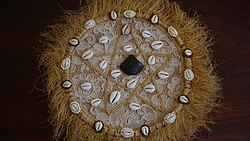
To understand the will of the spirits, practitioners use divination, such as the dilogun (using a divinatory tray), to seek answers and guidance for the future.
Initiation and Offerings
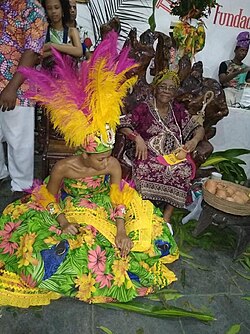
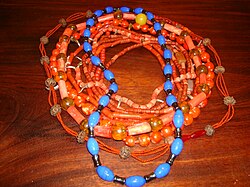
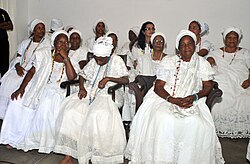
Initiation is a rigorous process that formally brings a member into the faith. During these ceremonies, initiates may wear specific white clothing and receive necklaces associated with their tutelary orixá.
![An initiation conducted in Bahia in 2008; the white clothes and white spots are worn at this ceremony[277]](/images/d4/5b/d45bed436e6a3e96a71d03c353a43ac5d6d1bffdc1a514772f5ffa8b57b7c14d.jpg)
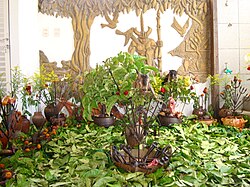
Offerings are essential for maintaining spiritual balance. These range from fruits to animal sacrifices, which are presented to the orixás and other spirits.
Historical Evolution
Origins in the Slave Trade
Candomblé developed among Afro-Brazilian communities during the Atlantic slave trade (16th to 19th centuries). Enslaved people from the Yoruba, Fon, and Bantu regions brought their ancestral religions to Brazil, where they merged into the distinct faith we recognize today, primarily coalescing in Bahia.
Legalization and Modernity
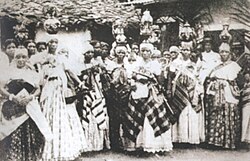
While the Brazilian constitution of 1891 established freedom of religion, Candomblé was long marginalized and often associated with criminality by the Catholic establishment. In the 20th century, the religion spread from Bahia across Brazil and abroad, eventually influencing the creation of Umbanda in the 1920s.
The Re-Africanization Movement
In recent decades, a movement toward re-Africanization has emerged. Some practitioners seek to strip away Roman Catholic influences to return to a form of worship that more closely mirrors traditional West African religions.
Summary of Candomblé Elements
| Component | Description | Key Terms |
|---|---|---|
| Supreme Deity | The transcendent creator god | Oludumaré |
| Nature Spirits | Deities linked to nature and personality | Orixás, Inkice, Vodun |
| Place of Worship | Autonomous spiritual houses | Terreiro |
| Leadership | Priests or Priestesses | Pai de Santo / Mãe de Santo |
| Sacred Objects | Sacred stones and containers | Otás, Bakisse |
| Ancestral Spirits | Native American and deceased spirits | Caboclos, Egun |
Frequently Asked Questions
![On her festival day in February, offerings to Yemanja are placed on boats and taken out to be cast into the water.[313]](/images/09/41/09415a12940b01c51624b361b92b21992c032d0502fb7312bd24ff9b85342d47.jpg)
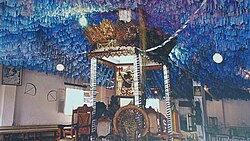
![Altar at the Terreiro de Candomblé in Jiribatuba [pt], Vera Cruz](/images/f4/16/f416d82b4dd5b3c453e8bd2fe0c9f7438dd84fe364eba695f51fe3beab8f54a0.jpg)
What is the difference between an Orixá and Oludumaré?
Oludumaré is the supreme, transcendent creator god of the universe. The orixás are divine spirits who act as intermediaries between Oludumaré and humanity, each governing specific aspects of nature and human life.
How does Candomblé relate to Roman Catholicism?
Candomblé is a syncretic religion. Historically, practitioners blended African deities with Catholic saints to protect their faith from persecution by Portuguese colonialists.
What happens during a possession ritual?
Through drumming, singing, and dancing, an orixá is encouraged to possess a practitioner. During this state, the deity is believed to be speaking and acting through the person, allowing the congregation to interact with the divine.
What is a terreiro?
A terreiro is an autonomous house of worship where Candomblé practitioners meet for rituals, initiations, and community gatherings, led by a priest or priestess.
What are caboclos and egun?
Caboclos are spirits of Native Americans, while egun are the spirits of the deceased. Both are considered lesser spirits compared to the orixás but are still venerated and given offerings.