Cambridge Philosophical Society: Two Centuries of Scientific Inquiry
Founded in 1819, the Cambridge Philosophical Society (CPS) stands as the oldest scientific society in Cambridge. Its name reflects a medieval tradition where "philosophy" encompassed all research outside the specific domains of law, theology, and medicine. For over 200 years, the Society has remained dedicated to its core mission: to keep alive the spirit of inquiry.
While the Society is independent of the University of Cambridge, it maintains a close relationship with the institution, with its headquarters located at 17 Mill Lane within the university estate. In 1832, the Society's prestige was formally recognized when King William IV granted it a Royal Charter.
Key Facts
- Founded: 1819 by John Stevens Henslow, Adam Sedgwick, and Edward Clarke.
- Legal Status: Registered charity (no. 213811) operating under a Royal Charter.
- Membership: Over 2,000 Fellows and Honorary Members.
- Governance: Led by a President (currently Professor John Carr) and an elected Council of senior academics.
- Legacy: Associated with 52 Nobel Prize winners.
Academic Contributions and Publications
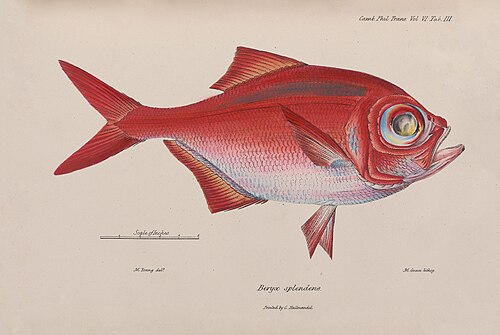
The Society has played a pivotal role in disseminating scientific knowledge through its journals. One of its most enduring contributions is the Mathematical Proceedings of the Cambridge Philosophical Society, first published in 1843 and currently published by Cambridge University Press. It is recognized as one of the oldest mathematical journals in history.
Additionally, the Society established Biological Reviews in 1926. Earlier in its history, it published the Transactions of the Cambridge Philosophical Society from 1821 until 1928.
Lectures and Public Engagement
To further its goal of promoting scientific inquiry, the Society organizes lectures featuring prominent mathematicians and scientists. These events are free and open to the general public, serving as a forum to raise the profile of the sciences.
Prizes and Distinguished Fellows
The Society recognizes excellence in mathematics, physics, and the natural sciences through several prestigious awards, most notably the William Bate Hardy Prize and the William Hopkins Prize.
Established in 1862, the William Hopkins Prize is among the oldest scientific prizes at the University of Cambridge. Its list of past recipients reads like a directory of scientific giants, including James Clerk Maxwell, Paul Dirac, and Stephen Hawking.

The FCPS Designation
Members of the Society are known as Fellows and are entitled to use the post-nominal letters FCPS. Fellowship is typically granted to graduate students or academics engaged in scientific research. Candidates must be recommended in writing by a current Fellow of at least three years' standing and another professional reference before being elected at an open meeting.
A Legacy of Nobel Laureates
The Society's influence is reflected in its association with 52 Nobel Prize winners. Early milestones include Honorary Fellows Hendrik A. Lorentz and Pieter Zeeman (1902) and Marie Curie (1903), who was the first woman to win a Nobel Prize and the first person to win two.
In 1964, Dorothy Hodgkin became the first female Fellow of the Society—and the first female member of the University of Cambridge—to win a Nobel Prize in Chemistry.
Historical Archives and the Darwin Connection
The Society maintains an exceptional historical record dating back to its inception. These archives include Council minutes, membership records, and documents relating to the Society's various premises and publications.
One of the most fascinating chapters in the Society's history involves Charles Darwin. As a student, Darwin was tutored by John Stevens Henslow. During Darwin's five-year voyage on the HMS Beagle, he corresponded frequently with Henslow, sending back botanical and geological specimens.
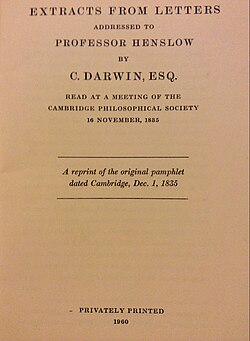
In November 1835, extracts from Darwin's letters were read at a Society meeting and subsequently printed in a private pamphlet. Although Darwin was initially "horrified" that his unpolished notes were made public without his knowledge, the publicity aided his early career.
Commemorating the Bicentenary
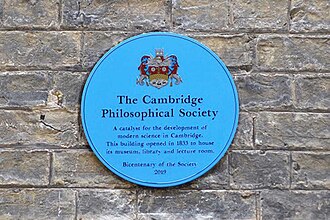
In March 2019, the Society celebrated its 200th anniversary. To mark the occasion, a blue plaque was unveiled by Sir Martin Rees at 2 All Saints Passage, the site of the house built by the Society in 1833 to house its library and meeting rooms.
Society Overview
| Attribute | Details |
|---|---|
| Founded | 1819 |
| Royal Charter | Granted 1832 by King William IV |
| Key Publications | Mathematical Proceedings, Biological Reviews |
| Notable Prizes | William Hopkins Prize, William Bate Hardy Prize |
| Headquarters | 17 Mill Lane, Cambridge, UK |
Frequently Asked Questions
What does the term "Philosophical" mean in the Society's name?
In the medieval context, "philosophy" referred to any research or study conducted outside the specific professional fields of medicine, law, and theology.
Who can become a Fellow of the Society?
Fellows are generally academics or graduate students involved in mathematical or scientific research at the university. They must be recommended by a current Fellow of three years' standing and a professional reference.
What is the significance of the William Hopkins Prize?
Established in 1862, it is one of the oldest scientific prizes at the University of Cambridge and has been awarded to legendary scientists such as Stephen Hawking and James Clerk Maxwell.
How did Charles Darwin's work first appear through the Society?
Extracts from Darwin's letters to his tutor, John Stevens Henslow, were read at a Society meeting in 1835 and printed in a private pamphlet, marking some of his earliest published writings.
Is the Society part of the University of Cambridge?
No, the Cambridge Philosophical Society is independent of the University, although it is located on the university estate and its members are often university academics.