California National Natural Landmarks: A Survey of the State's Geological and Biological Treasures
California is home to an extraordinary array of diverse landscapes, from the towering peaks of the north to the arid deserts of the south. To preserve these unique sites, the United States has designated 37 National Natural Landmarks across the state. These landmarks are recognized for their outstanding biological or geological value, serving as critical benchmarks for understanding the natural history of the North American continent.
These sites range from ancient volcanic formations and deep limestone caverns to rare wetlands and coastal dunes. By protecting these areas, the federal, state, and private owners ensure that rare species and unique geological processes remain intact for future study and appreciation.
Key Facts
- Total Landmarks: There are 37 designated National Natural Landmarks in California.
- Diverse Ownership: Sites are managed by a mix of federal agencies (such as the BLM and National Park Service), state departments, municipal governments, and private owners.
- Geological Variety: Landmarks include stratovolcanoes, solutional caves, glacial geology, and active fault lines.
- Biological Significance: Many sites protect endangered species, such as the Owens pupfish and the western snowy plover.
Geological Wonders and Volcanic Landscapes
California's tectonic activity has created some of the most striking geological features in the world. Among the most prominent is Mount Shasta, one of the world's largest stratovolcanoes—a steep-sided volcano built up by many layers of hardened lava and tephra.
In the desert regions, volcanic activity is further evidenced by the Amboy Crater, a 6,000-year-old cinder cone composed of pahoehoe (smooth, rope-like lava), and the Cinder Cone Natural Area, which features a complex of over 20 large cinder cones and extensive lava flows.
Caves and Subterranean Formations
The state also boasts remarkable subterranean environments. Black Chasm Cave is noted for its variety of speleothems (mineral deposits formed in caves) and some of the finest helictite formations—curving, gravity-defying crystals—in the western United States.
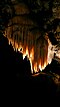
Other significant cave systems include the Lake Shasta Caverns, a solutional cave (formed by the dissolution of soluble rocks) with diverse calcite formations, and the Mitchell Caverns and Winding Stair Cave, which are considered the most important solution caverns in the Mojave Desert.
Rare Ecosystems and Biological Refuges
Beyond geology, California's landmarks protect fragile ecosystems that are increasingly rare. Vernal pools—seasonal wetlands that fill with winter rains—are represented by several sites, including the Dixon Vernal Pools and the Pixley Vernal Pools, the latter of which supports endemic crustaceans like the vernal pool fairy shrimp.
Coastal regions provide critical habitats for migratory and resident wildlife. The Año Nuevo State Reserve serves as one of the largest mainland breeding grounds for the northern elephant seal, while the Audubon Canyon is the largest known nesting area for great blue herons and egrets on the Pacific Coast.
Unique Forests and Dunes
The Pygmy Forest at Jug Handle State Natural Reserve is a biological curiosity, featuring an ecological staircase where stunted trees and shrubs grow in nutrient-poor soil. Meanwhile, the state's dune systems, such as the Eureka Dunes (the tallest in the Great Basin) and the Imperial Sand Hills, showcase the power of wind erosion and deposition.
Summary of Selected California National Natural Landmarks
| Landmark Name | County | Primary Feature | Ownership |
|---|---|---|---|
| Anza-Borrego Desert | Imperial, Riverside, San Diego | Largest desert state park in the nation | State |
| La Brea Tar Pits | Los Angeles | Natural asphalt tar pits | Municipal |
| Point Lobos | Monterey | Monterey cypress habitat | State |
| Sharktooth Hill | Kern | Marine vertebrate fossils | Private |
| Trona Pinnacles | San Bernardino | Pleistocene calcium carbonate formations | Federal |
| San Andreas Fault | San Benito | Crustal movement illustration | Private |
Frequently Asked Questions
How many National Natural Landmarks are in California?
There are 37 designated National Natural Landmarks located throughout the state of California.
What is a solutional cave?
A solutional cave is a cavern formed by the chemical dissolution of soluble rocks, such as limestone, by groundwater.
Which landmark is known for its prehistoric asphalt?
The La Brea Tar Pits (Rancho La Brea) in Los Angeles is the site of the world-famous natural asphalt tar pits.
What makes the Pygmy Forest unique?
The Pygmy Forest at Jug Handle State Natural Reserve features a five-step ecological staircase with a unique forest of low, stunted trees and shrubs.
Where can one find the tallest dune complex in the Great Basin?
The Eureka Dunes, located in Inyo County and managed by Death Valley National Park, are the tallest dune complex in the Great Basin.