California Mission Building Materials and Construction Methods
The construction of the California missions was a feat of necessity and adaptation. Faced with a severe scarcity of imported materials and a lack of skilled professional laborers, the Franciscan Fathers and Native American workers relied on the land around them. By utilizing simple building methods and locally sourced resources, they created enduring structures that defined the architectural landscape of the region.
To build these expansive complexes, the builders relied on five primary materials: adobe, timber, stone, brick, and tile. The integration of these elements allowed the missions to grow from primitive shelters into permanent architectural landmarks.
Key Facts
- Adobe (sun-dried mud bricks) served as the primary wall material.
- Vigas (wooden beams) were used for roof support and wall reinforcement.
- Ladrillos (fired bricks) provided greater durability than sun-dried adobe.
- Tejas (clay tiles) replaced flammable thatch roofs starting around 1790.
- Building dimensions were often limited by the available length of local timber.
Adobe: The Foundation of Mission Walls
Adobes, or mud bricks, were the most common building block. These were created by mixing earth—which could be clay, loam, or sandy soil—with water and binders such as straw, chaff, or manure to prevent the bricks from falling apart. In some instances, shells or pieces of brick were added to increase cohesiveness.
The production process was labor-intensive. Workers dug up soil near water sources, such as creeks or springs, and stomped the mixture with their bare legs until it reached a homogeneous consistency. This mud was then pressed into wooden frames called formas. Once leveled, the bricks were left to dry in the sun, carefully exposed on all sides to prevent cracking. Some bricks still bear the handprints, footprints, or inscribed names of the workers who made them.
Standard California adobes measured 11 by 22 inches (280 by 560 mm), with a thickness of 2 to 5 inches (51 to 127 mm). Weighing between 20 and 40 pounds (10 to 20 kg), they were manageable for workers to carry and stack during construction.
Timber and Structural Limitations
Because milling facilities were nearly non-existent, lumber was shaped using crude saws and stone axes. Many structures utilized logs with only the bark removed, contributing to the rustic appearance of the missions. Timber served as vigas (support beams) for roofs, as well as frames for arches, windows, and doors.
The availability of large trees was limited in coastal plains and valleys, forcing the use of pine, alder, poplar, cypress, and juniper. Transporting this wood was a massive undertaking; at Mission San Miguel Arcángel, oxen-drawn wooden carts called carrettas hauled timber from up to 40 miles away. At Mission San Luis Rey, Father Lasuén optimized the process by floating logs downriver from Palomar Mountain.
The lack of long, sturdy timber directly influenced the architecture, resulting in buildings that were long and narrow. For instance, the widest interior dimensions found at San Carlos, Santa Clara, and Santa Cruz were 29 feet (8.8 m), while Mission Soledad was as narrow as 16.2 feet (4.9 m). Conversely, the longest structure was found at Mission Santa Barbara, stretching 162.5 feet (49.5 m).
Stone and Fired Brick
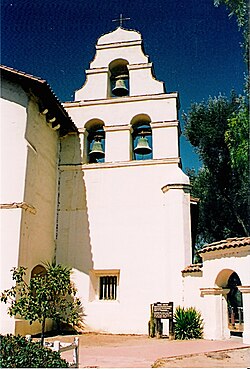
Whenever possible, piedra (stone) was used. Due to a lack of professional stonemasons, builders typically used sandstone because it was easier to cut, although it was less weather-resistant than the materials used by master artisans. To bind the stone, they used a Pre-Columbian Mexican technique involving mud mortar, often mixed with pebbles and colored stones for aesthetic texture.
For structures requiring more endurance, the builders produced ladrillos (conventional bricks). While made similarly to adobes, ladrillos were fired in outdoor kilns. Common bricks were typically 10 inches (250 mm) square and 2 to 3 inches (51 to 76 mm) thick, while paving bricks were wider, ranging from 11 to 15 inches (280 to 380 mm). These fired bricks proved far more durable than sun-dried adobe.
The Evolution of Roofing: From Thatch to Tejas
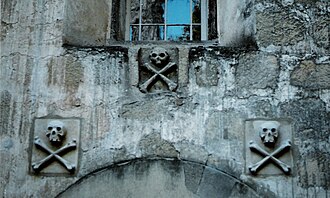
Early mission roofs were simple, consisting of earth or thatch supported by flat poles. However, these were highly flammable. Around 1790, tejas (semicircular clay tiles) were introduced. These were created by molding clay over sanded logs to prevent sticking.
The production of tejas was a community effort. At Mission Santa Barbara, Father Estévan Tapís recorded that 32 Native American men produced 500 tiles daily, while women provided the necessary sand and straw. The clay was worked in pits by animals, shaped on boards, and cut to lengths of 20 to 24 inches (510 to 610 mm). After sun-drying, the tiles were fired in ovens until they turned reddish-brown.
Beyond fire prevention, tejas provided an impermeable surface that protected the adobe walls from rain damage. They were secured with small amounts of adobe and held in place by their tapered shape, which prevented them from sliding.
Construction Materials Summary
| Material | Common Name | Key Characteristic | Primary Use |
|---|---|---|---|
| Sun-dried Mud | Adobe | Easy to produce; weather-sensitive | Main walls |
| Fired Clay | Ladrillos | High endurance and durability | Permanent structures/paving |
| Local Wood | Vigas | Limited length; rustic finish | Roof beams and reinforcement |
| Sandstone | Piedra | Easier to cut than hard stone | Structural accents/walls |
| Fired Clay Tile | Tejas | Fire-retardant and waterproof | Roofing |
Frequently Asked Questions
What is the difference between adobe and ladrillos?
Adobe bricks are sun-dried mud mixed with binders like straw, whereas ladrillos are fired in kilns, making them significantly more durable and resistant to decay.
Why were mission buildings typically long and narrow?
The width of the buildings was limited by the available length of local timber used for roof beams (vigas). Without larger trees, builders could not span wide interior spaces.
How were tejas roof tiles manufactured?
Clay was mixed with sand and straw, worked in pits by animals, molded over sanded logs, sun-dried, and finally fired in ovens to achieve a reddish-brown color and hard finish.
What was used to bind stones together in the absence of lime mortar?
Builders used a Pre-Columbian Mexican technique of mud mortar, which was sometimes enhanced with colored pebbles and stones for visual appeal.
How was timber transported to the mission sites?
Timber was moved using oxen-drawn wooden carts called carrettas, sometimes over distances of 40 miles, or by floating logs downriver, as seen at Mission San Luis Rey.