Calculus: The Mathematics of Continuous Change
Calculus is the branch of mathematics dedicated to the study of continuous change. Serving as the principal precursor to modern mathematical analysis, it provides the essential framework for solving problems where variable quantities change relative to time or another reference value. Often described as the "mathematical backbone" and the "basic instrument of physical science," calculus allows us to quantify the dynamic nature of the universe.
Originally known as infinitesimal calculus or the calculus of infinitesimals, the field is divided into two primary branches: differential calculus and integral calculus. While they focus on different aspects of change, they are inextricably linked by the fundamental theorem of calculus.
Key Facts
- Differential Calculus: Focuses on instantaneous rates of change and the slopes of curves.
- Integral Calculus: Focuses on the accumulation of quantities and the areas under or between curves.
- Founders: Independently formulated in the late 17th century by Isaac Newton and Gottfried Wilhelm Leibniz.
- Core Mechanism: Utilizes the convergence of infinite sequences and series to a well-defined mathematical limit.
- Applications: Essential for science, engineering, and various advanced branches of mathematics.
The Two Pillars of Calculus
Differential Calculus
Differential calculus is concerned with the derivative, which represents the instantaneous rate of change of a function. Geometrically, the derivative of a curve at a specific point is the slope of the line tangent to the curve at that point.
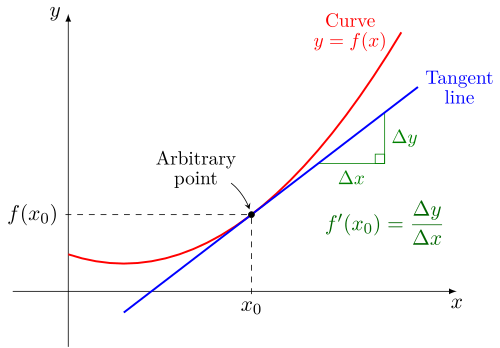
A widely used notation for the derivative was introduced by Gottfried Wilhelm Leibniz. In this system, the derivative is often written as dy/dx, where the dx in the denominator is read as "with respect to x."
Integral Calculus
Integral calculus focuses on the opposite process: accumulation. A primary application is determining the distance traveled over time when speed varies, or calculating the area under a curve. The symbol for integration (∫) is an elongated "S," chosen to represent summation.
There are two types of integrals:
- Definite Integral: Calculates the area of a region with specific boundaries.
- Indefinite Integral: Also known as the antiderivative, it represents a family of functions.
The Fundamental Theorem of Calculus
The fundamental theorem of calculus is the bridge that connects differentiation and integration. It establishes that these two processes are inverse operations. Essentially, it proves that the process of finding the area under a curve (integration) can be solved by finding a function whose derivative is the original curve (differentiation).
Historical Development
Ancient Precursors
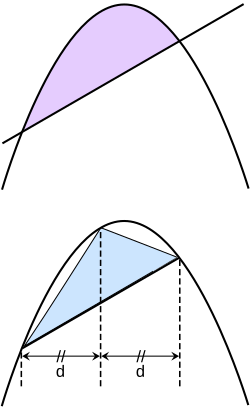
Long before the formalization of calculus, ancient civilizations laid the groundwork. Mathematicians in Egypt, Babylon, China, India, and the Middle East explored concepts of area and volume. In Greece, Archimedes utilized the method of exhaustion to calculate the area under a parabola in his work Quadrature of the Parabola.
The Newton-Leibniz Controversy
In the late 17th century, Isaac Newton and Gottfried Wilhelm Leibniz independently developed infinitesimal calculus. Newton derived his results between 1665 and 1666, referring to his work as the "science of fluxions." Leibniz published his findings in Nova Methodus pro Maximis et Minimis in 1684.
A bitter controversy ensued over who deserved credit, with Newton claiming Leibniz had stolen ideas from his unpublished notes. This dispute divided mathematicians in English-speaking countries from those in continental Europe for years. Modern analysis shows that both men arrived at their conclusions independently: Leibniz began with integration, while Newton began with differentiation. Leibniz is credited with giving the discipline its name and providing the notation still used today.

Advanced Applications and Branches
As the field evolved, it expanded into several specialized areas of study:
- Multivariable and Vector Calculus: Extending calculus to functions of multiple variables.
- Differential Equations: Equations that relate a function with its derivatives.
- Real and Complex Analysis: The rigorous formalization of limits and the study of functions with complex numbers.
- Calculus of Variations: The study of finding the path or function that minimizes or maximizes a certain quantity.
| Branch | Primary Focus | Key Concept | Geometric Interpretation |
|---|---|---|---|
| Differential Calculus | Rates of Change | The Derivative | Slope of a tangent line |
| Integral Calculus | Accumulation | The Integral | Area under a curve |
Frequently Asked Questions
What is the difference between differential and integral calculus?
Differential calculus studies how things change at a specific moment (instantaneous rate of change), while integral calculus studies the total accumulation of those changes over time or space (such as area or volume).
Who actually invented calculus?
Both Isaac Newton and Gottfried Wilhelm Leibniz are credited with its invention. They developed the systems independently in the 17th century, though they approached the problem from different starting points (differentiation for Newton and integration for Leibniz).
What is a limit in calculus?
A limit is the value that a function approaches as the input gets closer and closer to some number. Limits provide the conceptual foundation that allows calculus to handle infinitesimals and continuous change.
Why is the Fundamental Theorem of Calculus important?
It is critical because it proves that differentiation and integration are inverse processes, allowing mathematicians to solve complex area problems using antiderivatives rather than tedious summation.
Where is calculus used in the real world?
Calculus is used extensively in physics, engineering, chemistry, biology, and economics to model everything from planetary orbits and fluid dynamics to the pricing of financial options and the growth of populations.