Cadwalader and His Role in the American Civil War
When the American Civil War erupted, Cadwalader immediately volunteered his services to the Union cause. His extensive military experience made him a natural choice for leadership, leading Governor Andrew Curtin to appoint him as a major general of the Pennsylvania Volunteers in April 1861.
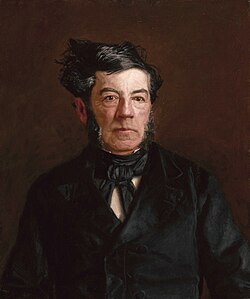
Military Command and the Maryland Crisis
By May 15, 1861, Cadwalader was appointed as the military commander in Maryland. This was a critical assignment, as Union communications were under constant threat from local Confederate sympathizers. During this tenure, federal troops arrested John Merryman, a Maryland planter who had been recruiting soldiers for the Confederate army.
Merryman was imprisoned at Fort McHenry in Baltimore, which served as General Cadwalader's headquarters. A significant legal conflict arose when Chief Justice Taney issued a writ of habeas corpus—a legal recourse used to bring a prisoner before the court to determine if their detention is lawful. Cadwalader ignored the writ, asserting that he was authorized by the President to suspend habeas corpus. This confrontation led to the landmark legal case known as Ex parte Merryman.
Progression of Command and Later Service
Following his time in Maryland, Cadwalader's leadership expanded. He took command of the 1st Division within Robert Patterson's Army of the Shenandoah. His contributions were formally recognized on May 25, 1862, when he was commissioned as a major general in the United States Volunteers.
His service continued with a command at the post in Corinth, Mississippi. Eventually, he returned to his home state of Pennsylvania, where he held a series of leadership roles. He commanded the post at Philadelphia and subsequently led the District of Philadelphia, the District of the Brandywine, and the District of the Susquehanna. He remained in these roles until his resignation in July 1865.
The Legacy of MOLLUS
In April 1865, Cadwalader helped establish the Military Order of the Loyal Legion of the United States (MOLLUS), a quasi-fraternal organization designed for former Union Army and Navy officers. He was officially elected to the Pennsylvania commandery on November 1, 1865, and was assigned insignia number 60.
Cadwalader served as the Commander of the Pennsylvania Commandery from November 4, 1865, until his death. Because Pennsylvania was the oldest and largest commandery, and because the national governing body (the Commandery in Chief) was not established until 1885, Cadwalader is regarded as the first Commander in Chief of MOLLUS.
Key Facts
- Appointment: Named major general of Pennsylvania Volunteers in April 1861.
- Legal Conflict: Involved in Ex parte Merryman after suspending habeas corpus for John Merryman.
- Major Commands: Led the 1st Division of the Army of the Shenandoah and the post at Corinth, Mississippi.
- Fraternal Leadership: Co-founder and first recognized Commander in Chief of MOLLUS.
- Death: Passed away in Philadelphia on February 3, 1879.
| Period/Date | Role or Event | Location/Organization |
|---|---|---|
| April 1861 | Major General | Pennsylvania Volunteers |
| May 1861 | Military Commander | Maryland |
| May 25, 1862 | Major General | United States Volunteers |
| Post-1862 | Post Commander | Corinth, Mississippi |
| April 1865 | Co-founder | MOLLUS |
| July 1865 | Resignation | U.S. Army |
Frequently Asked Questions
What was Cadwalader's role in the case of Ex parte Merryman?
Cadwalader was the military commander who ignored Chief Justice Taney's writ of habeas corpus for John Merryman, claiming presidential authorization to suspend the writ.
Which military divisions did Cadwalader command?
He commanded the 1st Division in Robert Patterson's Army of the Shenandoah, as well as the post at Corinth, Mississippi.
What is MOLLUS?
The Military Order of the Loyal Legion of the United States (MOLLUS) is a quasi-fraternal organization founded for former officers of the Union Army and Navy.
Why is Cadwalader considered the first Commander in Chief of MOLLUS?
Although the national Commandery in Chief was not created until 1885, Cadwalader led the Pennsylvania commandery, which was the organization's oldest and largest branch.
Where did Cadwalader spend his final years?
After resigning his military commission in July 1865, Cadwalader spent the remainder of his life in Philadelphia until his death in 1879.