Bycatch in Commercial Fishing: Impacts and Mitigation Strategies
In the global fishing industry, not every creature caught in a net is intended for the market. Bycatch refers to the unintentional capture of fish or other marine species while fishing for a specific target species or size. This phenomenon occurs when fishers catch the wrong species, the wrong sex, or juveniles that are undersized for legal harvest. While primarily associated with saltwater environments, similar unintentional catches of "undesirable" freshwater fish are known as rough fish in the US or coarse fish in the UK.
The Organisation for Economic Co-operation and Development (OECD) defines bycatch as the total fishing mortality excluding the retained catch of target species. Because it removes animals from the ecosystem without purpose, bycatch is a significant driver of fishery decline and a primary mechanism of overfishing.
Key Facts
- High Impact: Shrimp trawl fisheries produce more than one-third of the world's total bycatch, despite making up only 2% of the total global catch by weight.
- Species Loss: Oceanic shark and ray populations declined by over 70% between 1970 and the 2020s, largely due to bycatch.
- Avian Risk: Approximately 100,000 albatrosses are killed annually in commercial longline fisheries.
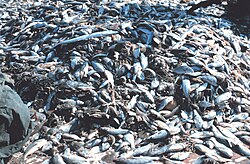
- Trawl Ratios: Global average discard rates for shrimp fisheries are 5.7:1, meaning 5.7 kg of bycatch is discarded for every 1 kg of shrimp kept.
- Marine Mammals: Between 1990 and 1999, the US estimated an average annual bycatch of 6,215 pinnipeds and cetaceans.
Types of Bycatch Activities
Commercial Fishing
Bycatch is an inevitable byproduct of commercial fishing. Beyond non-target fish, high-profile victims include dolphins, sea turtles, and seabirds. The issue gained significant global attention in the 1960s following reports of dolphin mortality in tuna nets.
Recreational Fishing
While often overlooked, recreational fishing contributes to fish mortality. A 2013 US study suggested that discards from recreational fishers may be an important but unmonitored source of mortality.
Shrimp Trawling
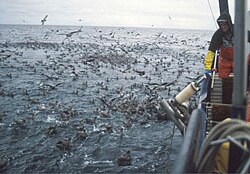
Tropical shrimp trawling is associated with some of the highest rates of incidental catch. In these fisheries, nets are often hauled after four hours and washed by zigzagging at full speed before the contents are sorted on deck. In the South Atlantic rock shrimp fishery, sampling revealed a staggering variety of bycatch, including 166 finfish species, 37 crustacean species, and 29 other invertebrate species.
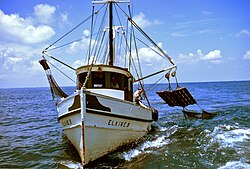
The scale of this issue is evident in the Gulf of Mexico, where shrimp fisheries remove 25–45 million red snapper annually as bycatch—nearly half the amount taken by dedicated commercial and recreational snapper fisheries.
Vulnerable Species and Ecological Impact
Cetaceans and Sharks
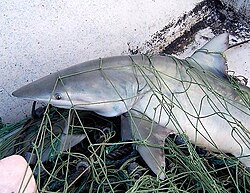
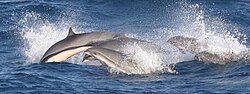
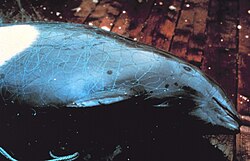
Dolphins and porpoises are frequently entangled in nets, leading to significant population pressures. Similarly, the drastic decline of oceanic sharks and rays is attributed heavily to their incidental capture in gear meant for other species.
Albatrosses and Seabirds
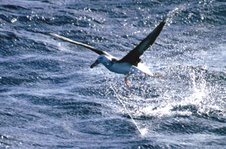
Of the 22 albatross species recognized by the IUCN, 15 are threatened with extinction. Longline fishing is a primary threat; birds are attracted to the bait (offal) on the lines, where they become hooked and drown. This problem is often worsened by unregulated pirate fisheries.
Sea Turtles
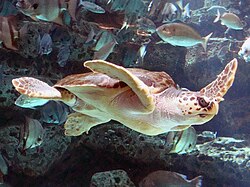
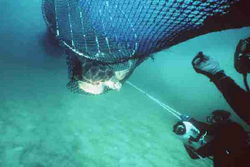
Critically endangered species, including Kemp's ridley, loggerhead, green, and leatherback turtles, are frequently caught in shrimp trawl nets. The duration of the tow is critical: mortality is less than 1% for tows under 10 minutes, but jumps to 50–100% for tows exceeding 60 minutes.
Mitigation and Conservation Engineering
Bycatch Reduction Devices (BRDs)
BRDs are designed to allow commercial finfish to escape. While some have reduced Spanish mackerel and weakfish bycatch by 40%, their effectiveness is debated. Some surveys in Florida found that BRDs failed to exclude hundreds of species of fish and invertebrates.
Innovative technology like SharkGuard, a pulsed electric field device, has shown promise in the Mediterranean, reducing blue shark bycatch by 91% and stingrays by 71%.
Turtle Excluder Devices (TEDs)
Developed by the NMFS in 1978, a TED is a grid that deflects large animals like turtles, allowing them to exit the net through a dedicated opening. While required for shrimp trawlers marketing in the US, enforcement varies globally. Certified TEDs are 97% effective, though some turtles are still recaptured in heavily trawled areas.
Longline Modifications
To protect seabirds and turtles, several strategies have been implemented in longline fishing:
- Using weights to sink lines faster.
- Deploying streamer lines (brightly colored polyester ropes) to scare birds away from hooks.
- Setting lines at night with minimal lighting.
- Limiting fishing seasons to the southern winter.
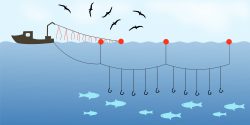
In Alaskan groundfish fisheries, streamer lines reduced seabird deaths by approximately 70%. However, gear changes aren't a total cure; for example, the Hawaii longline swordfish season was closed in 2006 due to excessive loggerhead turtle bycatch despite the use of modified circle hooks.
Summary of Bycatch Impacts and Solutions
| Fishing Method | Primary Bycatch Victims | Key Mitigation Tool | Reported Effectiveness |
|---|---|---|---|
| Shrimp Trawling | Sea Turtles, Finfish | TEDs / BRDs | TEDs up to 97% effective |
| Longline Fishing | Albatrosses, Sharks, Turtles | Streamer Lines / Weights | 70% reduction in some seabird deaths |
| Tuna Nets | Dolphins (Cetaceans) | Gear Modification | Variable |
| General Longline | Blue Sharks / Stingrays | SharkGuard (Electric Field) | 91% reduction for blue sharks |
Frequently Asked Questions
What exactly is bycatch?
Bycatch is the unintentional capture of non-target species, undersized fish, or the wrong sex of a target species during fishing operations.
Why is shrimp trawling considered so damaging?
Shrimp trawling has an extremely high discard ratio, averaging 5.7 kg of bycatch for every 1 kg of shrimp. It accounts for over one-third of the world's total bycatch despite its small share of total catch weight.
How do Turtle Excluder Devices (TEDs) work?
TEDs use a physical grid to deflect large animals like sea turtles out of the trawl net through a specialized escape opening, preventing them from being trapped.
What are streamer lines?
Streamer lines are brightly colored polyester ropes that flap in the water to frighten seabirds away from baited hooks in longline fisheries.
Can bycatch be completely eliminated?
While mitigation tools like BRDs, TEDs, and SharkGuard significantly reduce mortality, they do not eliminate bycatch entirely, as some species still get trapped or are recaptured.