Budding: Mechanisms of Asexual Reproduction Across Species
In the diverse world of biology, organisms have evolved various strategies to ensure their survival and proliferation. One of the most fascinating methods is budding, also known as blastogenesis. This form of asexual reproduction occurs when a new organism develops from a specialized outgrowth, or "bud," created by cell division at a specific site on the parent's body.
Because this process is asexual, the resulting offspring is a genetic clone of the parent. Barring any spontaneous mutations, the daughter organism is genetically identical to the mother, allowing for the rapid expansion of a population without the need for a mate.
Key Facts
- Genetic Identity: Offspring produced via budding are clones of the parent.
- Mechanism: New individuals grow from outgrowths caused by localized cell division.
- Diversity: Occurs in single-celled organisms (yeast), multicellular animals (hydra), and even within viral processes.
- Internal Budding: Some parasites use endodyogeny, where offspring develop inside the mother cell.
Cellular Budding
At the microscopic level, budding is a common method of asymmetric cell division. A primary example is Saccharomyces cerevisiae, the yeast species essential for brewing and baking. In this process, a small bulb-like projection emerges from the mother cell, eventually developing into a smaller daughter cell.
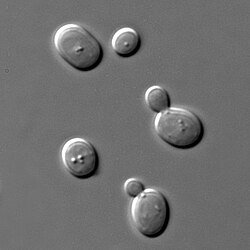
Recent scientific advancements using cryo-electron tomography have further revealed that this mechanism is not limited to the cell as a whole; mitochondria within cells also divide through budding.
Budding in Multicellular Animals
Many multicellular animals utilize budding to create offspring. In organisms like the hydra, regenerative cells drive the process. A bud forms as an outgrowth due to repeated cell division at a specific site on the parent body. These buds grow into tiny, complete individuals that eventually detach to live independently.
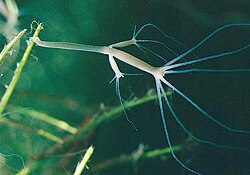
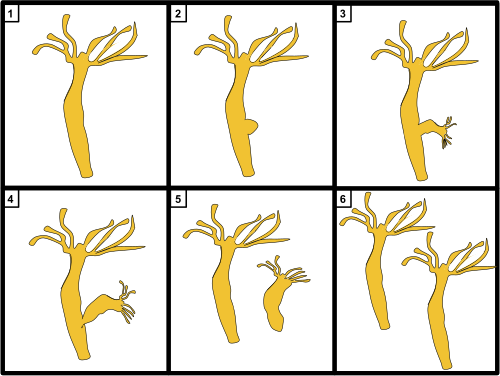
Beyond hydra, budding is observed in a wide array of animals, including:
- Corals and some sponges
- Bryozoans, tunicates, and some polychaetes
- Flatworms and certain acoels (such as Convolutriloba)
- Phoronids (one specific species), placozoans, symbions, and pterobranchians
- Echinoderm larvae and entoproctans
Specialized Forms of Budding
Internal Budding and Endopolygeny
Some organisms employ internal mechanisms for reproduction. Endodyogeny is a form of internal budding favored by parasites like Toxoplasma gondii. In this unusual process, two daughter cells are produced inside a mother cell; the offspring then consume the mother cell before separating.
When internal budding results in the simultaneous division into several organisms at once, the process is referred to as endopolygeny.
Colony Division in Insects
While rare, budding behavior has been observed in social insects. In certain bee species, such as Apis dorsata, a group of worker bees may leave their natal nest to construct a new one nearby, effectively "budding" the colony.
Budding in Virology and Botany
The term "budding" is also applied to non-reproductive biological processes. In virology, budding is a method of viral shedding. Enveloped viruses acquire their external membrane by pushing through the host cell membrane, which bulges outward to enclose the virion.
In the fields of agriculture and horticulture, budding refers to a technique of grafting, where a bud from one plant is surgically joined to another to propagate specific traits.
| Type | Example Organism | Key Characteristic |
|---|---|---|
| External Budding | Hydra / Yeast | Outgrowth detaches from parent |
| Endodyogeny | Toxoplasma gondii | Internal development; mother cell consumed |
| Endopolygeny | Various Parasites | Internal division into multiple organisms |
| Viral Budding | Enveloped Viruses | Acquisition of envelope from host membrane |
| Colony Budding | Apis dorsata | Workers establish a new nearby nest |
Frequently Asked Questions
Is a bud genetically different from the parent?
No. Because budding is a form of asexual reproduction, the offspring is a clone and is genetically identical to the parent, unless a genetic mutation occurs.
How does budding differ from binary fission?
While both are asexual, budding involves an asymmetric division where a small outgrowth (the bud) forms on the parent, whereas binary fission typically involves a parent cell splitting into two equal-sized daughter cells.
What is endodyogeny?
Endodyogeny is a specialized form of internal budding used by certain parasites, where daughter cells develop inside the mother cell and consume it before they are released.
Do plants reproduce by budding in the same way as animals?
In a biological sense, no. In botany and agriculture, "budding" refers to a grafting technique used to join a bud from one plant to another, rather than a natural process of asexual reproduction like that seen in yeast or hydra.
Which animals are known to reproduce via budding?
A wide variety of animals use budding, including hydra, corals, sponges, flatworms, bryozoans, and certain species of tunicates and polychaetes.