British Military Order of Wear and Campaign Medals
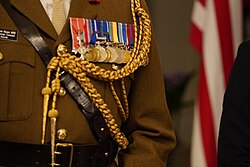
The Order of Wear is the standardized system used by all branches of the British Armed Forces to determine the correct sequence in which medals and decorations are displayed on a uniform. Established and updated to ensure consistency, the 2019 order of wear provides a rigorous hierarchy that reflects the prestige, level of gallantry, and chronological nature of military service.
Properly displaying these honors is a matter of military protocol, ensuring that the highest decorations for bravery and merit are given prominence over campaign or long-service awards.
Key Facts
- Standardization: All services follow a common order of wear based on the 2019 guidelines.
- Hierarchy: Decorations are categorized into levels (e.g., Level 1, 2A, 2B, 3B) to dictate precedence.
- Campaign Scope: Medals span from 18th-century conflicts to 21st-century operational service.
- Diverse Categories: The system includes gallantry awards, campaign medals, jubilee medals, and long-service decorations.
The Hierarchy of Decorations
Military decorations are divided into levels that determine their position on the medal bar. The higher the level, the closer the medal is worn to the center of the chest.
Level 1 and 2 Decorations
Level 1 represents the highest tier of decorations. Level 2 is further divided into Level 2A, which includes Orders and specific Indian Orders, and Level 2B, which encompasses medals for distinguished conduct and gallantry.
Notable awards in these categories include the Distinguished Service Cross (established 1901) and the George Medal (established 1940). Historically, this level also included the Distinguished Conduct Medal (1854–1993) and the Conspicuous Gallantry Medal.
Level 3B and Below
Level 3B includes medals such as the Military Medal (1916–1993), the Air Force Medal, and the British Empire Medal (Military Division). These are followed by campaign medals and long-service awards.
When medals are not worn in full, ribbon bars are used. These may be adorned with specific symbols to denote further awards or specific achievements.

A silver rosette is often used on ribbon bars to indicate a second award of the same decoration.

Silver oak leaves may also be applied to ribbon bars to signify specific levels of merit or repeated gallantry.
Military Campaign Medals
Campaign medals are awarded for service in specific geographic areas or during particular conflicts. These are generally organized chronologically by century.
18th and 19th Century Medals
Early honors include the Monghyr Mutiny Medal (1766) and the Deccan Medal (1784). The 19th century saw a vast array of awards, including the Waterloo Medal (1816), the Crimean War Medal (1854), and the India General Service Medals of 1854 and 1895.
20th Century Medals
The 20th century was marked by the World Wars, resulting in the 1914 Star, the British War Medal, and the Victory Medal for WWI, and the 1939–45 Star, Defence Medal, and War Medal for WWII. Later conflicts are recognized by the Korea Medal (1951), the South Atlantic Medal (1982), and the Gulf Medal (1992).
21st Century and Operational Medals
Modern service is recognized through the Operational Service Medal (OSM), which has various versions for different theaters (e.g., Afghanistan, Iraq). Other recent awards include the Ebola Medal (2015), the Humanitarian Medal (2023), and the Wider Service Medal (2024).
Efficiency and Long Service Awards
Beyond gallantry and campaigns, the military recognizes dedication through long-service and efficiency medals. These include the Meritorious Service Medal and the Medal for Long Service and Good Conduct (Military).
Specialized awards exist for part-time forces, such as the Volunteer Reserves Service Medal (1999–present) and the Efficiency Medal. Additionally, the system recognizes service in international coalitions, including numerous United Nations (UN) and NATO medals, such as the NATO Kosovo Medal and the UN Service Medal for UNMISS.
| Category | Examples | Primary Purpose |
|---|---|---|
| Gallantry | George Medal, Distinguished Service Cross | Bravery and distinguished conduct |
| Campaign | Iraq Medal, Korea Medal, Waterloo Medal | Service in specific conflicts/regions |
| Long Service | Army Long Service and Good Conduct Medal | Dedication and length of service |
| Commemorative | Platinum Jubilee Medal, Coronation Medals | Marking royal milestones |
| International | NATO Non-Article 5 Medal, UN Service Medals | Coalition and peacekeeping operations |
Frequently Asked Questions
What is the purpose of the Order of Wear?
The Order of Wear ensures that all military personnel display their medals in a consistent, standardized sequence that correctly reflects the precedence and importance of each award.
How are ribbon bars different from full medals?
Full medals are worn on formal occasions, while ribbon bars are smaller strips of fabric worn on daily uniforms. Ribbon bars can include devices like silver rosettes or oak leaves to indicate multiple awards.
What is an Operational Service Medal (OSM)?
The OSM is a modern award given for service in specific operational theaters, with different versions issued depending on the location and timeframe of the deployment.
Are there medals for non-combat service?
Yes. The system includes long-service medals, jubilee medals for royal milestones, and the Humanitarian Medal for service in aid of disaster relief.
Who determines the order of precedence for these medals?
The order is determined by official government and military guidance, such as the 2019 order of wear and publications in The London Gazette.