British Indian Ocean Territory Coat of Arms: Symbolism and History
The coat of arms of the British Indian Ocean Territory (BIOT) serves as a visual narrative of the region's geography, wildlife, and political history. Combining traditional British heraldry with local natural elements, the emblem represents the intersection of colonial administration and the unique biodiversity of the Indian Ocean.
Key Facts
- Supporters: Features a hawksbill turtle and a green turtle to represent native wildlife.
- Motto: "In tutela nostra Limuria," meaning "Limuria is in our charge/trust."
- Political Status: Likely to become obsolete following the UK's agreement to return the Chagos Islands to Mauritius.
- Key Symbols: Includes St. Edward's Crown, a palm tree, and the Union Flag.
Detailed Symbolism of the Arms
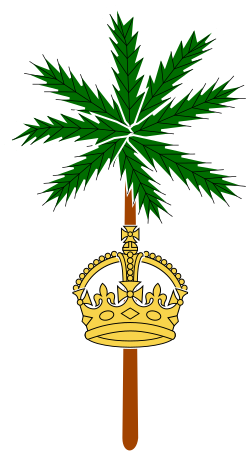
The central element of the coat of arms is the shield, which incorporates several layers of meaning. At the base, three white wavy lines symbolize the surrounding ocean. Above this base sits a palm tree and St. Edward's Crown, while a "sun in splendour" occupies the upper-left corner. The top of the shield, known as the chief, features the Union Flag, signifying British rule over the territory.
Supporting the shield are two sea turtles—specifically a hawksbill turtle and a green turtle—which highlight the local native wildlife of the islands.
The Crest and Motto
The crest consists of a naval crown with a red tower rising through it. This tower features a crosslet loophole shaped like the Holy Cross and bears the territory's flag. Notably, the crest lacks a helm (the helmet) or mantling (the decorative cloth draped from the helmet) typically found in traditional heraldry.
The motto, In tutela nostra Limuria, is written in Latin and translates to "Limuria is in our charge/trust." The term "Limuria" is a latinized reference to Lemuria, a hypothetical continent once believed to have sunk beneath the Indian Ocean.
Integration with Other National Symbols
The visual identity of the British Indian Ocean Territory is consistent across its official symbols. The palm tree and royal crown found on the coat of arms are also prominent features of the territory's flag, both of which were granted on the same date.
Furthermore, the coat of arms was utilized in the territory's currency. The first coin issued under the British Indian Ocean Territory Coin Ordinance in 2008 featured the arms on one side and the image of Queen Elizabeth II on the reverse.
Future Status and Political Transition
The relevance of these symbols is changing due to geopolitical shifts. On May 22, 2025, the UK Government agreed to return the Chagos Islands to Mauritius, although the British Naval base at Diego Garcia will continue to operate. While the treaty does not explicitly mention the coat of arms, it is expected to become obsolete as the territory ceases to be under British rule.
| Element | Symbolism/Meaning |
|---|---|
| Union Flag | British rule of the territory |
| Sea Turtles | Native wildlife (Hawksbill and Green turtles) |
| Wavy White Lines | The Indian Ocean |
| Palm Tree & Crown | Regional identity and royal authority |
| Limuria | Reference to the mythical lost continent of Lemuria |
Frequently Asked Questions
What do the turtles on the coat of arms represent?
The hawksbill turtle and the green turtle serve as supporters for the shield and represent the native wildlife found within the territory.
What is the meaning of the motto "In tutela nostra Limuria"?
The motto is Latin for "Limuria is in our charge/trust," referring to Lemuria, a non-existent continent once thought to have sunk in the Indian Ocean.
Will the coat of arms continue to be used?
Because the UK Government agreed to return the Chagos Islands to Mauritius on May 22, 2025, the coat of arms will likely become obsolete as British rule ends.
Where else does the coat of arms appear besides official documents?
The coat of arms appeared on the first coin issued by the British Indian Ocean Territory Coin Ordinance in 2008.
How is the British connection represented on the shield?
The British connection is represented by the Union Flag in the chief (the top section) of the shield and the presence of St. Edward's Crown.