Union Jack: History, Design, and Global Influence of the UK National Flag
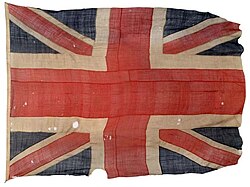
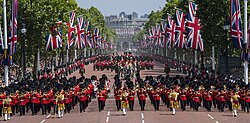
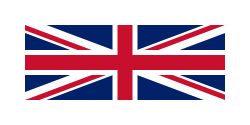
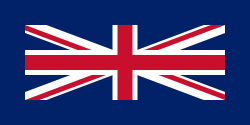
The Union Jack, officially known as the Union Flag, is one of the most recognizable symbols in the world. Serving as the national flag of the United Kingdom, it is a composite design that tells the story of the political unions between the kingdoms of England, Scotland, and Ireland. From its royal origins in the early 17th century to its role as a global icon of the British Empire, the flag has evolved through royal decrees and acts of parliament to reach its current form.
Key Facts
- Origins: First established by royal decree in 1606 under King James VI and I.
- Composition: Combines the crosses of St George (England), St Andrew (Scotland), and St Patrick (Ireland).
- Standard Proportions: Typically 1:2 for most purposes, though 3:5 is common for land flags in the UK.
- Current Design: The present version was adopted in 1801 following the Act of Union 1800.
- Global Reach: Historically used as the national flag of Canada and Australia, and incorporated into many Commonwealth ensigns.
The Evolution of the Design
The First Union Flag (1606–1801)
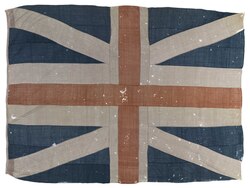
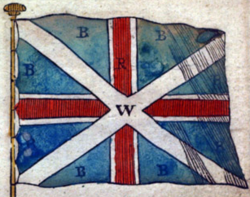
The original Union Flag was created in 1606 by a proclamation of King James VI and I. This initial version combined the St George's Cross (the red cross of England and Wales) and the St Andrew's Cross (the white saltire of Scotland). At this time, the Kingdom of Ireland was not represented in the design, although it had been in a personal union with England since 1541.
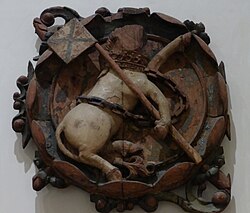
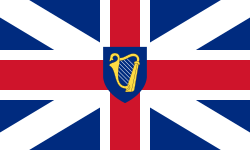
During the mid-17th century, the flag underwent temporary changes. Between 1658 and 1660, the Protectorate Jack included the arms of Ireland, but these were removed during the Restoration because King Charles II found them offensive.
The Modern Union Flag (1801–Present)
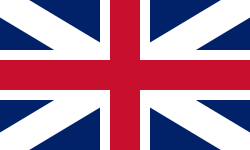
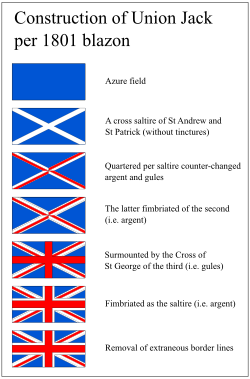
The design we recognize today was established by an order in council following the Act of Union 1800. This act joined the Kingdom of Great Britain and the Kingdom of Ireland to create the United Kingdom of Great Britain and Ireland. To mark this union, the St Patrick's Cross (the red saltire of Ireland) was added to the design.
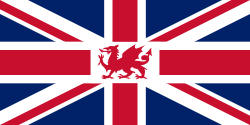
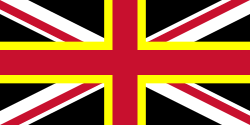
Despite the secession of the Irish Free State in 1922, the design of the flag remained unchanged. While there has been occasional speculation or proposals to redesign the flag—such as adding the red dragon of Wales—the 1801 version remains the official national symbol.
Technical Specifications and Protocol
Proportions and Geometry
The Union Jack is typically produced in a 1:2 ratio (twice as long as it is tall). However, land flags in the United Kingdom often use a 3:5 ratio. In 2008, an attempt was made via a Ten Minute Rule bill to standardize the design to 3:5, but the bill did not proceed past the first reading.
The geometry is precise: the red St George's Cross width is 1/5 of the flag's height, accompanied by a 1/15 flag height fimbriation (a narrow border used to separate two colors).
Official Colors
| Color | Pantone (Paper) | Hex Code | RGB Decimal |
|---|---|---|---|
| Blue | 280 C | #012169 | 1, 33, 105 |
| Red | 186 C | #C8102E | 200, 16, 46 |
| White | N/A | #FFFFFF | 255, 255, 255 |
Flying the Flag
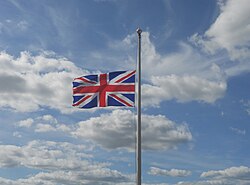
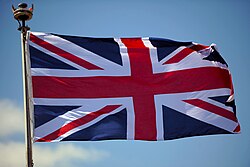
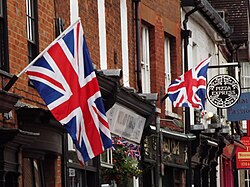
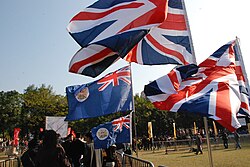
Correct display is critical to avoid the flag being flown upside down. The Union Jack is asymmetrical; when flown horizontally, the white diagonal stripes must be positioned correctly relative to the hoist. It is flown at half-mast during periods of national mourning, such as following the death of Elizabeth II in September 2022.
Global Usage and Influence
Commonwealth and Former Colonies
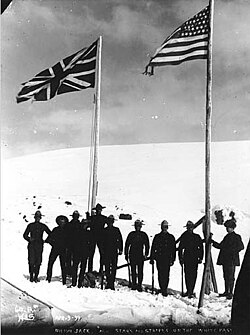
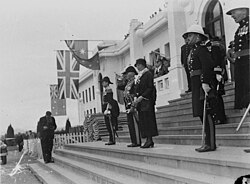
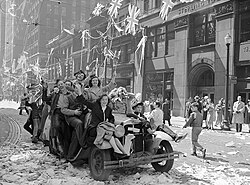
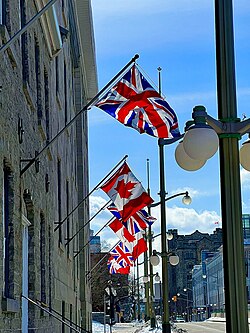
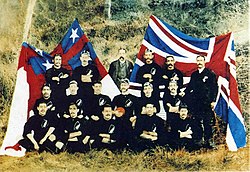
The Union Jack has a deep history outside the UK. It served as the formal national flag of Canada until 1965 and Australia until 1953. In Newfoundland, it was the national flag of the dominion until 1931 and remained a provincial flag until 1980.
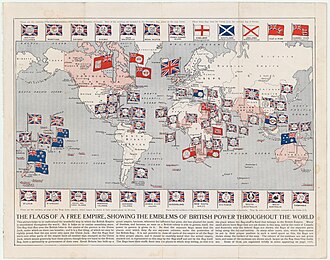
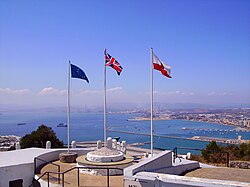
Many nations and territories continue to incorporate the Union Jack into their own flags, typically in the canton (the upper-left quarter). This includes the flags of various British Overseas Territories and several Commonwealth ensigns.
Corporate and Cultural Impact
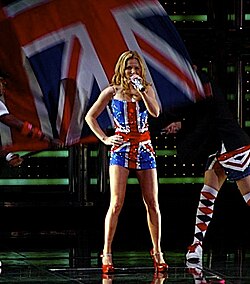
Beyond government use, the Union Jack has become a potent cultural symbol. It appears in corporate branding for companies like British Airways and has been used in fashion, most notably in the iconic dress worn by Geri Halliwell of the Spice Girls at the 1997 Brit Awards.
Frequently Asked Questions
Why is the Union Jack asymmetrical?
The asymmetry arises from the counter-changing of the St Andrew's Cross (Scotland) and the St Patrick's Cross (Ireland). Because the Scottish saltire takes precedence over the Irish saltire, the white stripes are wider and positioned differently, meaning the flag looks different when flipped vertically.
Which countries' flags are represented in the Union Jack?
The flag represents England (St George's Cross), Scotland (St Andrew's Cross), and Ireland (St Patrick's Cross). Wales is not represented by a specific cross because it was considered a principality of England at the time the first Union Flag was created in 1606.
What is the difference between the Union Flag and the Union Jack?
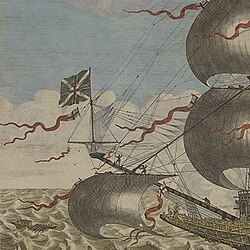
While often used interchangeably, "Union Flag" is the formal term. A "Jack" is technically a flag flown from the jackstaff at the bow (front) of a ship. Because the Union Flag is flown in this position on Royal Navy vessels, the term "Union Jack" became common in general usage.
When is the Union Jack flown on government buildings?
The flag is flown on specific "flag days," including Commonwealth Day (second Monday in March), the official birthday of the King (second Saturday in June), and Remembrance Sunday (second Sunday in November). It is also flown on national days such as St David's Day (March 1) in Wales and St Andrew's Day (November 30) in Scotland.