British India: The Evolution of Administrative Provinces and Presidencies
From the early 17th century until the mid-20th century, the Indian subcontinent underwent a profound administrative transformation under British influence. What began as a series of isolated trading posts evolved into a complex network of presidencies (administrative centers) and eventually into a structured system of provinces. Collectively known as British India, this governance spanned from 1612 to 1947, shifting from the mercantile interests of a private company to the direct rule of the British Crown.
Key Facts
- Timeline: British presence evolved through three stages: Trading Posts (1612–1757), Company Rule (1757–1858), and the British Raj (1858–1947).
- The Three Presidencies: The core of early administration was based in Madras, Bombay, and Calcutta.
- Dual Governance: British India consisted of directly administered regions and princely states, which maintained internal autonomy under British suzerainty.
- Demographics: By 1910, British-administered areas covered roughly 54% of the land but held over 77% of the population.
- Independence: British rule ended in 1947 with the creation of the Dominions of India and Pakistan.
The Rise of the East India Company (1608–1757)
The British entry into India began in 1608 when the Mughal Emperor Jahangir issued a firman (a royal decree) allowing the East India Company (EIC) to establish a trading settlement at Surat. This served as the company's first headquarters. Over the following decades, the EIC established "factories"—which were essentially fortified trading posts—along the coast, including Machilipatnam in 1611 and various sites in Bengal by 1612.
During this era, the EIC faced stiff competition from Portuguese, Dutch, Danish, and French merchant companies. While the EIC suffered temporary setbacks, such as defeats in the Anglo-Mughal war by 1690, the gradual decline of the Mughal Empire after 1707 created a power vacuum that the Company was eager to fill.
The Era of Company Rule (1757–1858)
The turning point for British power occurred with the Battle of Plassey in 1757 and the Battle of Buxar in 1764. These victories allowed the EIC to secure the Diwani of Bengal—the right to collect land revenue—and eventually the Nizamat, which granted criminal jurisdiction. By 1793, the Company had established full practical sovereignty over the Bengal Presidency.
As the EIC expanded through the Anglo-Maratha and Anglo-Mysore Wars, it established three primary administrative hubs known as Presidencies, each led by a governor:
- Bengal Presidency: Centered at Fort William in Calcutta.
- Madras Presidency: Centered at Fort St. George in Madras.
- Bombay Presidency: Centered in Bombay (ceded to the Crown by Portugal in 1661).
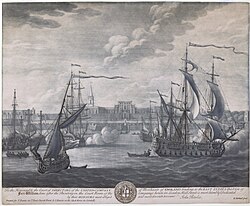
By the mid-19th century, the EIC had become the dominant political and military force in South Asia, holding vast territories in trust for the British Crown. However, this period of corporate rule ended abruptly following the Indian Rebellion of 1857.
The British Raj and the Transition to Provinces (1858–1947)
Under the Government of India Act 1858, all powers of the East India Company were transferred to the British Crown. This era, known as the British Raj, saw India officially designated as the Indian Empire after 1876. To manage the vast territories more effectively, the unwieldy presidencies were gradually broken down into smaller provinces.
The administration was split between British India (directly ruled by the UK Parliament) and the princely states (ruled by local leaders who recognized British authority). This period also saw the incorporation of regions like Upper Burma and Baluchistan into the empire's fold.
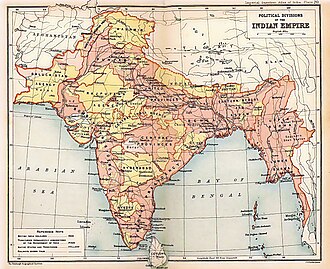
Major and Minor Provinces
By the early 20th century, the administration was divided into major provinces (governed by a Governor or Lieutenant-Governor) and minor provinces (governed by a Chief Commissioner). The partition of Bengal (1905–1912) briefly created the province of Eastern Bengal and Assam before being partially reversed in 1912.
| Province | Area (1,000 sq miles) | Population | Chief Administrative Officer |
|---|---|---|---|
| Burma | 170 | 9,000,000 | Lieutenant-Governor |
| Bengal | 151 | 75,000,000 | Lieutenant-Governor |
| Madras | 142 | 38,000,000 | Governor-in-Council |
| Bombay | 123 | 19,000,000 | Governor-in-Council |
| United Provinces | 107 | 48,000,000 | Lieutenant-Governor |
| Punjab | 138 | 20,000,000 | Lieutenant-Governor |
Independence and the End of British Rule
By the time of independence in 1947, British India had been organized into 17 provinces, including Sindh, Orissa, and the North-West Frontier. The end of British rule resulted in the partition of the subcontinent into two independent nations: the Dominion of India and the Dominion of Pakistan. The latter included East Bengal, which later became the independent nation of Bangladesh in 1971.
Frequently Asked Questions
What were the three original Presidencies of British India?
The three original Presidencies were Bengal (Calcutta), Madras, and Bombay. These served as the primary administrative and trading hubs for the East India Company before the system transitioned to provinces.
What is the difference between British India and the Princely States?
British India referred to territories directly administered by the British government through acts of the British Parliament. Princely states were regions ruled by local ethnic leaders who maintained internal autonomy but acknowledged British suzerainty.
How did the administration change after the 1857 Rebellion?
Following the rebellion, the Government of India Act 1858 transferred all powers from the East India Company to the British Crown, marking the beginning of the British Raj.
What was the Diwani of Bengal?
The Diwani was the right granted to the East India Company to administer and collect land revenue (land tax) in the region of Bengal, starting in 1772 following the treaty of 1765.
When did Burma separate from British India?
Burma was separated from British India in 1937 and was subsequently administered independently by the British Government Burma Office.