Brett McGurk: A Career in High-Stakes Diplomacy and Middle East Strategy
Brett McGurk has spent over two decades at the center of United States foreign policy in the Middle East, serving across three different presidential administrations. From drafting interim constitutions in Baghdad to leading global coalitions against terrorism, McGurk's career is defined by his role as a primary architect of U.S. strategy in some of the world's most volatile regions.
Key Facts
- Special Presidential Envoy: Led the Global Coalition to Counter ISIL, coordinating 62 nations to defeat the Islamic State.
- Iraq Strategy: An early advocate for "the surge" in 2007 and a key figure in the transition to the Interim Iraqi Government.
- Hostage Negotiations: Served as lead negotiator in secret talks with Iran, securing the release of four Americans.
- Bipartisan Service: Held senior roles under Presidents George W. Bush, Barack Obama, and Joe Biden.
- Recent Diplomacy: Led the 2024-2025 negotiations resulting in a ceasefire and hostage exchange between Israel and Hamas.
Early Career and the Iraq War
McGurk entered public service in January 2004 as a legal advisor to the Coalition Provisional Authority (CPA)—the transitional administration overseeing Iraq—and the U.S. ambassador in Baghdad. During this period, he helped draft the Transitional Administrative Law (Iraq's interim constitution) and managed the legal shift toward an Interim Iraqi Government led by Prime Minister Ayad Allawi.
By 2005, McGurk moved to the National Security Council (NSC), eventually becoming the senior director for Iraq and Afghanistan. He is recognized as an early proponent of "the surge," a fundamental shift in Iraq policy that began in January 2007 to stabilize the country. He later negotiated the strategic framework and security agreements with the Iraqi government to ensure policy continuity across administrations.
Leading the Global Coalition to Counter ISIL
In 2014, as the Islamic State of Iraq and the Levant (ISIL) overran Mosul and threatened Baghdad, McGurk played a critical role in the U.S. response. He oversaw the evacuation of 1,500 U.S. embassy employees and facilitated the appointment of Prime Minister Haider al-Abadi to replace Nouri al-Maliki.
On September 12, 2014, McGurk was appointed deputy senior envoy to General John Allen, later becoming the ambassador and deputy special presidential envoy for the Global Coalition to Counter ISIL. He helped form a formal alliance of 62 nations in Brussels to support Iraq through military and diplomatic efforts.
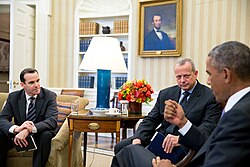
McGurk's work involved complex ground-level diplomacy, including negotiating agreements between Arab and Kurdish forces for the liberation of Mosul and coordinating with Turkey to open the Incirlik airbase. He also facilitated the defense of Kobani in Syria by arranging for the Kurdish Peshmerga to enter the city via Turkish territory.
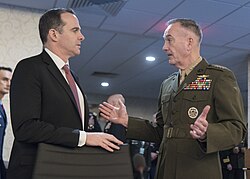
During the Trump administration, McGurk continued his role, working with Secretary of Defense James Mattis and Secretary of State Rex Tillerson to accelerate the campaign, leading to the liberation of Raqqa in October 2017. He also spearheaded efforts to restore diplomatic ties between Saudi Arabia and Iraq.
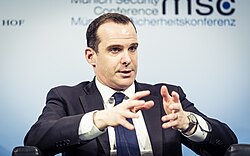
Diplomatic Challenges and Controversies
McGurk's career has not been without friction. In 2012, his nomination as U.S. Ambassador to Iraq was withdrawn following the leak of private emails exchanged with journalist Gina Chon. While critics questioned his judgment, supporters viewed the matter as a personal lapse. McGurk and Chon married later that year.
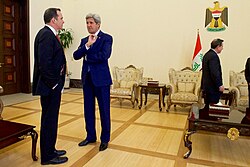
His tenure under President Donald Trump ended in resignation on December 31, 2018. McGurk resigned in protest of the decision to withdraw U.S. troops from Syria, arguing that a premature exit would create a power vacuum for extremist groups to regenerate. This led to a public exchange of criticisms between McGurk and President Trump.
Academic Transition and Return to the NSC
Between 2019 and 2020, McGurk transitioned to academia and media. He served as the Frank E. and Arthur W. Payne Distinguished Lecturer at Stanford University and as a non-resident senior fellow at the Carnegie Endowment for International Peace. He also contributed as a Senior Foreign Affairs Analyst for NBC News and MSNBC.
In 2021, President Joe Biden appointed McGurk to the National Security Council. In this capacity, he managed critical relations with Saudi Arabia and Israel, including organizing President Biden's visits to the region to advance normalized relations between the two nations.
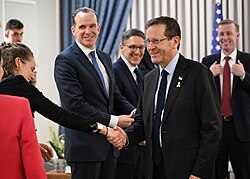
Israel-Gaza War Negotiations
In November 2023, McGurk was tasked with leading negotiations to secure the release of hostages in Gaza. His approach linked the release of hostages to a significant pause in fighting and a massive surge of humanitarian relief, a position that drew criticism from some international observers who argued humanitarian aid should not be conditional.
In a rare display of bipartisan cooperation, McGurk worked with Steve Witkoff (Donald Trump's nominee) and Qatari Prime Minister Sheikh Mohammed bin Abdulrahman Al Thani. This collaboration resulted in a January 2025 agreement featuring a six-week ceasefire and the exchange of 33 Hamas-held hostages for approximately 1,000 Palestinian prisoners.
Summary of Career Milestones
| Period | Role/Organization | Key Achievement/Focus |
|---|---|---|
| 2004-2005 | Legal Advisor, CPA | Drafted Iraq's interim constitution |
| 2005-2009 | NSC / Senior Advisor | Developed "the surge" strategy in Iraq |
| 2014-2018 | Special Presidential Envoy | Led 62-nation coalition against ISIL |
| 2014-2016 | Lead Negotiator (Secret) | Secured release of U.S. prisoners from Iran |
| 2019-2020 | Stanford / Carnegie / NBC | Academic research and foreign policy analysis |
| 2021-2025 | National Security Council | Israel-Gaza ceasefire and hostage negotiations |
Frequently Asked Questions
What was Brett McGurk's role in the fight against ISIL?
McGurk served as the Special Presidential Envoy for the Global Coalition to Counter ISIL. He coordinated a 62-nation alliance, managed ground coalitions of Arab and Kurdish fighters, and negotiated critical logistics with Turkey to liberate strongholds like Mosul and Raqqa.
Why did Brett McGurk resign from the Trump administration?
McGurk resigned in December 2018 due to President Trump's order to withdraw U.S. troops from Syria. He believed the withdrawal was premature and would allow ISIL and other extremist groups to fill the resulting power vacuum.
How did McGurk contribute to U.S.-Iran relations?
Between October 2014 and January 2016, McGurk acted as the lead negotiator in secret talks with Iran, which successfully resulted in a prisoner exchange and the return of four American citizens.
What was the outcome of the 2025 Israel-Hamas negotiations?
Working with Steve Witkoff and Qatar, McGurk helped secure a six-week ceasefire and a hostage swap involving 33 hostages taken on October 7 in exchange for approximately 1,000 Palestinian prisoners, alongside a surge in humanitarian aid to Gaza.
What is the "surge" that McGurk advocated for?
The "surge" refers to a fundamental change in U.S. Iraq policy starting in January 2007, which involved increasing troop levels to stabilize the country and secure the population against insurgent violence.