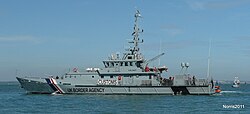
Border Guard Agencies: A Global Overview of National Security Forces
Border security is a fundamental pillar of national sovereignty, tasked with managing the flow of people and goods while preventing illegal activities. Depending on the country, these duties are carried out by a diverse array of organizations, ranging from civilian law enforcement agencies and customs services to specialized paramilitary units and branches of the national armed forces.
The structure of these agencies often reflects a nation's specific geopolitical challenges, historical legacy, and legal framework. While some countries utilize a single unified command, others distribute responsibilities across multiple agencies to separate customs, immigration, and tactical patrolling.
Key Facts
- India's Border Security Force (BSF) is the largest border guarding force in the world.
- The United States divides border authority between Customs and Border Protection (CBP), the Coast Guard, and Immigration and Customs Enforcement (ICE).
- Paramilitary structures are common in countries like Bangladesh, Egypt, and Pakistan to balance police and military functions.
- Civilian transitions have occurred in Germany, where the Federal Border Guard became the civilian Federal Police in 2005.
- Integrated agencies, such as Canada's CBSA, merge customs, immigration, and food inspection into one entity.
Border Security Models by Region
North America
In the United States, the Department of Homeland Security oversees border control. This is a shared jurisdiction: U.S. Customs and Border Protection handles primary inspection, the U.S. Coast Guard manages interdiction (and is the only military branch not subject to the Posse Comitatus Act of 1878), and U.S. Immigration and Customs Enforcement (ICE) focuses on investigations both at the border and within the interior.
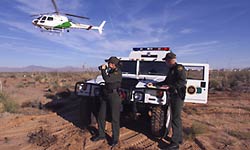
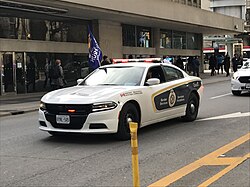
Canada utilizes the Canada Border Services Agency (CBSA), established in 2003. The CBSA amalgamated the enforcement roles of the Canada Customs and Revenue Agency, Citizenship and Immigration Canada, and the Canadian Food Inspection Agency. While traditionally unarmed, the agency completed the arming of its officers between 2007 and 2016.
Asia and the Middle East
India employs several specialized forces. The Border Security Force (BSF), established in 1965, is the world's largest and guards the borders with Pakistan and Bangladesh. Other agencies include the Indo-Tibetan Border Police (ITBP) for the China border, the Sashastra Seema Bal (SSB) for Nepal and Bhutan, and the Assam Rifles for the Myanmar border.
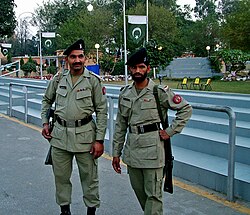
In Pakistan, the Pakistan Rangers are paramilitary forces divided into two commands: Rangers Punjab (Lahore) and Rangers Sindh (Karachi), both under the Ministry of the Interior.
Bangladesh operates the Border Guard Bangladesh (BGB), a paramilitary force under the Ministry of Home Affairs with roots dating back to 1795. The BGB focuses on border protection and anti-smuggling but can assist the government during national emergencies.
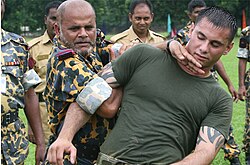
Other Asian nations utilize varied models. Indonesia splits duties between Customs and Immigration at ports, while sea borders are managed by a joint operation involving the Navy, Coast Guard, and Maritime Security Agency. Vietnam uses the Vietnam Border Guard, a branch of the Vietnam People's Army established in 1959.
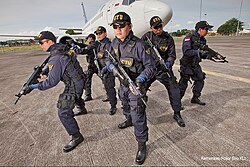
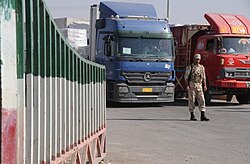
In the Middle East, Iran utilizes the Islamic Republic of Iran Border Guard Command for land and sea patrol, while the Islamic Revolutionary Guard Corps manages airport entry points.
Europe
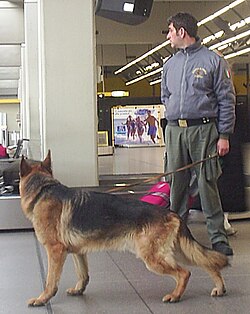
European border security is often influenced by the Schengen Agreement, which allows for open borders between member states. In Germany, the civilian Federal Police (Bundespolizei) handle border tasks. Interestingly, the state of Bavaria reestablished its own State Border Police in 2018 following the European migrant crisis.
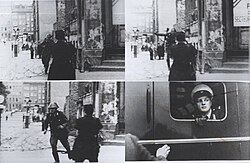
Italy employs the Guardia di Finanza (Fiamme Gialle), a part of the Armed Forces under the Finance Minister, to fight smuggling and financial crimes, working alongside the civilian Italian Customs Agency.
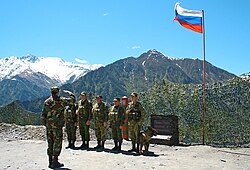
In Russia, the Border Service of the Federal Security Service (FSB) manages the borders, viewing itself as the successor to the Soviet Border Troops.
Other European nations include the Netherlands, where the Royal Marechaussee serves as both border patrol and military police, and the Czech Republic, which uses the specialized Alien Police Service to detect illegal migration.
Other Regions
In Australia, the Australian Border Force (ABF) was created in 2015, merging customs and immigration compliance into a single law enforcement agency under the Department of Home Affairs.
Panama utilizes SENAFRONT (Servicio Nacional de Fronteras), a specialized police force created in 2008 to protect land borders and maintain public order.
Global Border Agency Summary
| Country | Primary Agency | Nature of Force | Key Responsibility |
|---|---|---|---|
| India | Border Security Force (BSF) | Paramilitary / CAPF | World's largest border patrol |
| USA | CBP / Coast Guard / ICE | Law Enforcement / Military | Multi-layered inspection and interdiction |
| Canada | CBSA | Law Enforcement | Integrated customs and immigration |
| Germany | Bundespolizei | Civilian Agency | Federal border control |
| Vietnam | Vietnam Border Guard | Military Branch | Sovereignty and security |
| Australia | Australian Border Force (ABF) | Law Enforcement | Offshore and onshore enforcement |
Frequently Asked Questions
What is the difference between a border guard and a customs officer?
While often overlapping, border guards typically focus on the security of the perimeter and the prevention of illegal entry (immigration), whereas customs officers focus on the legal movement of goods, tariffs, and the prevention of smuggling.
Which country has the largest border guarding force?
India's Border Security Force (BSF) is recognized as the largest border patrol agency in the world.
Are border guards always military personnel?
No. Some countries use military branches (like Vietnam), some use paramilitary forces (like Bangladesh), and others use purely civilian law enforcement agencies (like Germany's Federal Police).
How does the U.S. Coast Guard differ from other U.S. military branches regarding law enforcement?
The U.S. Coast Guard is the only military branch not subject to the Posse Comitatus Act of 1878, allowing its officers to act as law enforcement officers with limited customs authority.
What happened to the German Federal Border Guard?
In 2005, the Federal Border Guard was renamed the Federal Police (Bundespolizei) and transitioned from a paramilitary organization to a civilian agency.