Boni & Liveright: The Radical Publisher of American Modernism
In the early 20th century, the American publishing landscape was largely conservative, operating much like traditional banking houses. This changed with the arrival of Boni & Liveright, a firm that defied convention to champion the avant-garde, challenge strict obscenity laws, and introduce the American public to some of the most influential writers of the modernist era.
The Beginnings and The Modern Library
Incorporated on February 16, 1917, Boni & Liveright was founded with investment from Herman Elsas, a paper executive and the father-in-law of Horace Liveright. While Liveright brought experience in bond and paper sales, Albert Boni provided the literary connection, having previously run a bookshop in Greenwich Village and published the Little Leather Library—a series of inexpensive, pocket-sized classics.
Drawing on Boni's ties to the Washington Square bohemian scene, the firm launched The Modern Library of the World's Best Books. These lambskin-bound volumes were priced at 60 cents each and featured a mix of accessible and obscure literature, including works by Nietzsche, Dostoyevsky, Ibsen, and Wilde. The series was an immediate success, expanding from its initial list to 36 titles by the end of 1917.
While the Modern Library provided the financial stability that allowed the firm to take risks on high-profile authors, its eventual sale to Bennett Cerf is regarded by historians as a critical tactical error that deprived the company of essential long-term revenue.
Horace Liveright and the Rise of Modernism
Following a disagreement and a failed buyout attempt by Albert Boni, Horace Liveright took sole control of the company. Liveright embraced the role of the radical publisher, opening the house to experimental literary trends and avant-garde ideas.
One of Liveright's most significant relationships was with Ezra Pound. After Pound's earlier work received poor reviews elsewhere, Boni & Liveright published his prose collection Instigations and the daringly titled Poems: 1918–1921. Liveright also employed Pound as a European scout and translator, which led to the publication of T.S. Eliot's The Waste Land in 1922.
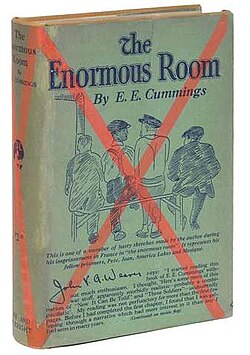
The firm became a beacon for experimental writers, introducing the American public to figures such as Hemingway, Crane, H.D., Toomer, and E.E. Cummings. They also published early works by William Faulkner, including Soldiers' Pay and Mosquitoes, which utilized stream of consciousness—a narrative technique that mimics the fragmented flow of human thought.
While many avant-garde projects were financial losses, Eugene O'Neill provided a commercial anchor. His play Strange Interlude sold over 100,000 copies, becoming the bestselling play of the decade. Liveright published thirteen of O'Neill's dramas before losing the rights during bankruptcy proceedings in 1933.
Battling the New York Society for the Suppression of Vice
Boni & Liveright's willingness to publish provocative material made them a primary target for censorship. The firm frequently clashed with John Sumner and the New York Society for the Suppression of Vice, as well as Boston's Watch and Ward Society (which popularized the phrase "Banned in Boston").
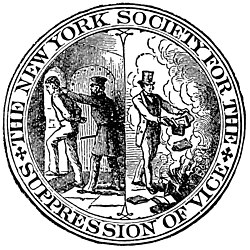
Liveright often turned these legal battles into marketing opportunities, as the controversy only increased reader curiosity. To bypass some restrictions, the firm issued limited editions available only by subscription. However, some conflicts escalated into major legal battles:
- The Satyricon Case: In 1922, Sumner targeted a translation of Petronius's Satyricon due to references to homosexuality and orgies. The case was eventually dismissed by a grand jury.
- The Clean Books Bill: In 1923, Liveright led a fierce opposition against a proposed New York law that would have allowed an entire book to be banned based on a single obscene passage. With the help of future mayor James "Jimmy" Walker, Liveright successfully lobbied against the bill.
Despite winning many battles in the court of public opinion with the help of lawyers like Clarence Darrow, Liveright finally capitulated in 1930 on the verge of bankruptcy, destroying the plates of the work Josephine, the Great Lover.
Notable Staff and Industry Influence
The firm served as a training ground for some of the most influential figures in 20th-century publishing and communications. T.R. "Tommy" Smith served as the editorial guiding force, while Edward Bernays—the nephew of Sigmund Freud and a pioneer of modern public relations—consulted on publicity, using propaganda as a marketing tool for titles covering psychoanalysis, radicalism, and sex.
Many future publishing titans passed through Boni & Liveright, including Richard Simon (co-founder of Simon & Schuster) and Bennett Cerf (co-founder of Random House). Other notable contributors included readers Lillian Hellman and Louis Kronenberger.
Legacy
Boni & Liveright, alongside other Jewish-American firms like Knopf and Huebsch, broke the "closed corporation" nature of the American publishing industry. By challenging obscenity laws and embracing unconventional authors, they transformed a staid industry into a vibrant forum for contemporary writing.
| Category | Details |
|---|---|
| Founded | February 16, 1917 |
| Key Figures | Horace Liveright, Albert Boni, T.R. Smith, Edward Bernays |
| Major Successes | The Modern Library, Eugene O'Neill's plays |
| Key Authors | Ezra Pound, T.S. Eliot, Ernest Hemingway, William Faulkner |
| Major Adversary | New York Society for the Suppression of Vice |
Key Facts
- The Modern Library launched in 1917 with lambskin-bound classics priced at 60 cents.
- The firm published T.S. Eliot's The Waste Land in 1922.
- Eugene O'Neill was the firm's most consistent commercial success; Strange Interlude sold over 100,000 copies.
- Horace Liveright successfully lobbied against the Clean Books Bill in 1923.
- Edward Bernays introduced modern public relations and propaganda techniques to the firm's marketing.
- The company eventually merged with Random House after bankruptcy in 1933.
Frequently Asked Questions
Why was the sale of the Modern Library considered a mistake?
Biographer Tom Dardis notes that selling the Modern Library to Bennett Cerf was a major loss of steady revenue that likely crippled the firm's financial stability in its final years.
Which famous authors did Boni & Liveright publish?
The firm published a wide array of modernist writers, including Ezra Pound, T.S. Eliot, Ernest Hemingway, William Faulkner, E.E. Cummings, and Eugene O'Neill.
How did the firm handle censorship and banned books?
They often fought censors in court, used the resulting publicity to increase sales, and issued limited subscription-only editions to avoid general distribution laws.
What was the "Clean Books Bill"?
It was a proposed 1923 New York law that would have allowed an entire work to be banned if any portion of the text was deemed obscene, lewd, or indecent.
Who was Edward Bernays and what was his role?
Bernays was a pioneer of public relations and Sigmund Freud's nephew. He consulted for Boni & Liveright, applying propaganda techniques to promote books on controversial topics like psychoanalysis and radicalism.