Bombardment of Fort St. Philip
During the closing stages of the War of 1812, the Mississippi River became a critical theater of operations. As part of the broader Battle of New Orleans campaign, the Bombardment of Fort St. Philip took place between January 9 and 18, 1815. This engagement saw a British naval flotilla attempt to neutralize an American stronghold to create a strategic diversion, though the result remained ultimately inconclusive.
The Stronghold: Fort St. Philip
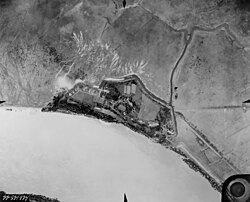
Originally constructed by the Spanish in 1795, Fort St. Philip was an irregular, parallelogram-shaped fortification. Its geography made it naturally defensible, with approaches that were nearly impracticable. By the time of the conflict, the fort was heavily armed with 35 pieces of artillery, including twenty-nine 24-pound cannons, a 6-pound cannon, two howitzers (5.5-inch and 8-inch), and a 13-inch mortar. Additionally, two 32-pound cannons were positioned in a covert way at water level.
Under the command of Major Walter H. Overton, the American garrison consisted of 406 personnel. This force included 163 regulars, 84 militia, 117 artillerymen, and a company from the 7th Infantry, supplemented by 30 volunteer free men of color militiamen. A US Navy gunboat also provided offshore support.
The British Naval Force
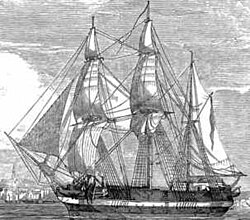
The British objective was to sail up the Mississippi River and create a diversion by launching exploding bomb shells into the fort. The flotilla was composed of "unrated" vessels—ships with fewer than 20 guns—because larger ships, such as the fifth-rate HMS Nymphe, were too large to cross the shallow bar at the mouth of the Mississippi.
- HMS Herald: Sloop-of-war (18 guns)
- HMS Thistle: Brig-of-war (12 guns)
- HMS Pigmy: Schooner (10 guns)
- HMS Aetna and HMS Volcano: Bomb vessels equipped with heavy mortars
- Two bumboats used for river soundings
Chronology of the Engagement
The Opening Moves
The engagement began on January 9, 1815. At 10:15 am, the British flotilla was sighted. By midday, the Americans had lit the fort's furnace to prepare heated shot (cannonballs heated red-hot to set enemy ships on fire). Two British bumboats attempted to take soundings of the river bottom within 1.5 miles of the fort, prompting the American 32-pounders to open fire. While the bumboats were driven back, the action revealed the maximum range of the fort's cannons to the British.
By 2:00 pm, a British landing party had occupied the signal station, which the American soldiers had abandoned an hour earlier.
![Attack on Fort St. Philip[6]: 1051](/images/d0/75/d075f276b0245f76471233b5a92c1c2d318a9730b0e0d8fc763c9eefdd898191.jpg)
The Mortar Duel
The British moored their fleet 2.25 miles south of the fort, with the bomb vessels advancing to 3,700 yards. At 3:30 pm on January 9, the bombardment commenced. While some accounts suggest a continuous day-and-night barrage, logs from HMS Volcano indicate a more measured pace, recording 50 shells fired on the first day.
The American response was limited; retaliatory fire on January 9, 10, and 11 generally fell short of the British ships. On January 12, HMS Volcano fired 56 shells before a shell burst inside its own mortar, causing damage that required overnight repairs.
The Conclusion
The duel continued intermittently through January 17. On the final night and into the early morning of January 18, several shells lodged in the fort's parapet, and one burst in the center bastion. At 6:00 am on January 18, the British vessels retreated south, eventually exiting the Mississippi on January 22.
![Route of British after the Battle of New Orleans[6]: 1036](/images/cb/37/cb37965577adb103603b4f96e05d531c9d5ee8446655aae57ba0a1875dc5aa5c.jpg)
Key Facts
- Duration: January 9–18, 1815.
- Outcome: Inconclusive; the fort remained in American hands.
- British Strategy: Used as a diversion to prevent General Andrew Jackson from redeploying forces.
- Casualties: The British suffered no recorded losses; the Americans suffered 2 killed and 7 wounded.
- Naval Constraint: The shallow bar at the river's mouth prevented larger British warships from participating.
Strategic Aftermath
The engagement demonstrated the physical limitations of the British fleet. Most of Admiral Cochrane's ships exceeded 1,000 burthen tons (with the flagship HMS Tonnant at 2,281 tons), making it impossible for them to overcome the river bar. In contrast, the heaviest vessel in this engagement, HMS Herald, was only 430 tons.
While the bombardment did not result in the capture of the fort, it served a psychological purpose. By maintaining a hostile presence, the British deterred Jackson's forces from redeploying, potentially aiding the escape of General Lambert's army elsewhere.
| Feature | United States | United Kingdom |
|---|---|---|
| Commanders | Walter H. Overton | Hugh Pigot |
| Personnel | 406 (Regulars, Militia, Artillery) | Not specified |
| Key Assets | 35 artillery pieces, 1 gunboat | 1 sloop, 1 brig, 1 schooner, 2 bomb vessels |
| Casualties | 2 killed, 7 wounded | None |
| Result | Held the fort | Withdrew Jan 18 |
Frequently Asked Questions
Why didn't the British attempt to capture the fort?
There is little evidence of a planned amphibious landing. The British were content to act as a diversion, remaining out of range of the fort's cannons while shelling it from a distance with mortars.
What were "bomb vessels"?
Bomb vessels were specialized ships equipped with heavy mortars designed to launch exploding shells in high arcs, allowing them to attack land fortifications from a distance.
How did the geography of the Mississippi affect the battle?
The shallow bar at the mouth of the river acted as a natural barrier, preventing the British from bringing in their larger, more powerful warships and forcing them to use smaller, unrated vessels.
Who were the primary American defenders?
The defense was led by Major Walter H. Overton and included a mix of Regular Army infantry, militia, and specialized artillerymen, as well as volunteer free men of color.
Was the bombardment effective?
Physically, the effect was limited, with only a few casualties and some damage to the parapets. Strategically, however, it may have prevented the Americans from moving troops to other critical areas of the campaign.