Bodleian Libraries: The Vast Knowledge Network of the University of Oxford
The Bodleian Libraries represent a sophisticated network of 28 libraries serving the University of Oxford in England. This expansive collection includes the world-renowned Bodleian Library alongside various central and faculty-specific libraries. Together, they form one of the most significant academic repositories in the world, providing essential resources for students, faculty, and global researchers.
To manage such a massive scale of information, the libraries utilize a joint integrated library system known as OLIS (Oxford Libraries Information System). The public-facing side of this system is SOLO (Search Oxford Libraries Online), a union catalogue that allows users to search across all member libraries. Notably, SOLO also includes data from individual college libraries and other faculty libraries that, while not formal members of the group, share their cataloguing information to ensure seamless access to knowledge.
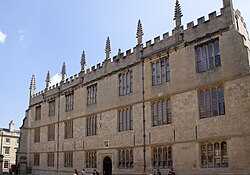
Key Facts
- Scale: Second largest library system in the UK, following the British Library.
- Holdings: 13.5 million printed items and 28,293 metres (92,825 ft) of archives and manuscripts.
- Staffing: Employs 541 full-time equivalent staff members.
- Infrastructure: Includes a £26 million Book Storage Facility in Swindon with 153 miles of shelving.
- Reach: Includes 28 member libraries, with an additional 40 college and 20 faculty libraries sharing data.
History and Evolution
The organization was originally established in February 2000 as Oxford University Library Services (OULS) before being renamed the Bodleian Libraries on March 2, 2010. Over the decades, the sheer volume of acquisitions has led to a critical shortage of storage space within Oxford itself.
To combat this, the libraries have had to look beyond the city limits. More than 1.5 million items are currently stored in external locations. Historically, this included unconventional sites such as a disused salt mine in Cheshire and a redundant village church at Nuneham Courtenay.
The Modern Storage Solution
Between 2007 and 2008, OULS sought planning permission for a new depository at Osney Mead in southwest Oxford. When that application failed, the university constructed a dedicated Book Storage Facility on the South Marston Industrial Estate in Swindon. Opened in October 2010 at a cost of £26 million, this facility features 3,224 bays with 95,000 shelf levels and 600 map cabinets capable of holding 1.2 million maps and other items. The original Osney Mead premises now serve as a hub for backroom operations, including the Packing and Design Service department.
Organizational Structure
The Bodleian Libraries are managed through several centralized departments to ensure the preservation and accessibility of their collections:
- Academic and Learning Services (ALS): Focusing on user support and educational integration.
- Scholarly Resources: This department encompasses the Bodleian Digital Library Systems and Services (BDLSS), as well as Collections Management (which handles Resource Description, Storage, and Logistics).
- Communications: Managing the public image and outreach of the libraries.
- Conservation and Collection Care: Dedicated to the physical preservation of rare and fragile materials.
Since 2014, the Director of the Libraries, Richard Ovenden, has held the position concurrently with that of Bodley's Librarian, following in the footsteps of predecessors Sarah Thomas and founding director Reginald Carr. Administrative operations are headquartered in the Clarendon Building on the central Bodleian estate.
Member Libraries Overview
The group comprises a diverse array of specialized libraries. While the main Bodleian Library (including the Old Library, Radcliffe Camera, and Weston Library) is the centerpiece, other vital members include the Social Science Library—one of the busiest sites, serving up to 7,500 visitors in a nine-week peak period—and the Radcliffe Science Library, which houses the Alexander Library of Ornithology.
| Category | Details |
|---|---|
| Total Member Libraries | 28 |
| Printed Items | 13.5 Million |
| Archive/Manuscript Length | 28,293 Metres |
| External Storage Site | South Marston Industrial Estate, Swindon |
| Search Interface | SOLO (Search Oxford Libraries Online) |
Frequently Asked Questions
How many libraries are part of the Bodleian Libraries group?
There are 28 member libraries within the group. However, they collaborate with an additional 40 college libraries and 20 faculty or specialty libraries through shared cataloguing information.
What is SOLO?
SOLO (Search Oxford Libraries Online) is the public interface for the Oxford Libraries Information System (OLIS). It serves as a union catalogue, allowing users to search for materials across all member libraries and participating college/faculty libraries.
Where are the Bodleian Libraries' books stored if they don't fit in Oxford?
Over 1.5 million items are stored outside of Oxford. The primary modern facility is the £26 million Book Storage Facility in Swindon, though the libraries previously used a salt mine in Cheshire and a church in Nuneham Courtenay.
Who leads the Bodleian Libraries?
The libraries are led by a Director who also holds the title of Bodley's Librarian. As of the current records, this position is held by Richard Ovenden.
Which is the largest library in the UK?
The British Library is the largest in the UK; the Bodleian Libraries are the second largest.