Blue Grama Grass: The Resilient Foundation of the Great Plains
In the vast, sweeping landscapes of the North American shortgrass steppe, one species stands out as a cornerstone of the ecosystem: Blue grama (Bouteloua gracilis). As a long-lived, warm-season perennial grass, it plays a vital role in the net primary productivity of the central and southern Great Plains. Known for its ability to thrive where other plants might wither, this low-growing, drought-tolerant grass is as ecologically significant as it is visually distinctive.
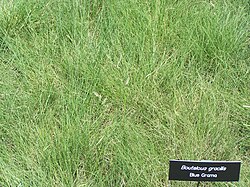
Whether you are a land manager, a gardener looking for low-maintenance native plants, or a nature enthusiast, understanding the biology and utility of Blue grama reveals why it is considered one of the most valuable grasses in its native range.
Key Facts
- Scientific Name: Bouteloua gracilis
- Type: Warm-season (C4) perennial grass
- Native Range: North America, from Alberta, Canada, to the northern Mexican Plateau
- Conservation Status: Least Concern (IUCN 3.1)
- Primary Use: High-quality forage and native landscaping
- State Grass: Colorado and New Mexico
Botanical Description and Growth Habits
Blue grama is characterized by its compact stature and unique flowering structures. At maturity, the plant typically reaches a height of 6 to 12 inches (15 to 30 cm). Its leaves are narrow, measuring less than 3 mm wide and ranging from 1 to 10 inches in length, often appearing in shades of green or greyish tones.
The most striking feature of the plant is its flowering stems, or culms. These stems can reach lengths of 7 to 18 inches. At the tip, they produce one to four comb-like spikes that extend at a sharp angle. These spikes contain between 20 and 90 spikelets—small units that house the plant's reproductive parts. Each spikelet consists of a fertile floret and one or two smaller, sterile florets.
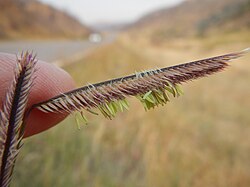
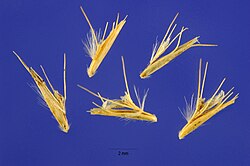
The reproductive process is intricate. If successfully pollinated, the fertile floret produces a small, oblong-elliptic brown seed. As the seeds reach maturity, the entire spikelet often detaches from the spike, though the glumes (protective scales) typically remain attached.
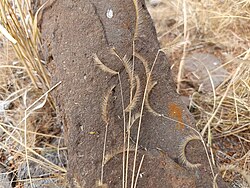
Below the surface, Blue grama develops an extensive root system. While the roots may spread 12 to 18 inches outward, they can reach depths of 3 to 6.5 feet (0.9 to 2.0 m). This deep root structure is a key component of its drought tolerance, allowing the plant to access moisture deep within the soil profile.
Ecology and Distribution
Blue grama boasts the widest distribution of all grama grasses. It is highly adaptable, growing on most soil types across a massive geographic footprint. Its range extends from Alberta, Canada, through the U.S. Midwest and Great Plains, reaching as far west as Southern California and as far south as Mexico. It has also been introduced to parts of South America and various eastern U.S. states.
Survival Strategies
As a C4 grass—a group of plants that use a specific photosynthetic pathway to thrive in high temperatures—Blue grama is an expert at water management. It employs an opportunistic water-use strategy: it rapidly utilizes available moisture and enters a state of dormancy during unfavorable, dry conditions. This makes it a climax species, meaning it is a stable, dominant component of its ecosystem that is slow to recover from major disturbances.
Role in the Food Web
Beyond its role as a primary producer, Blue grama serves as a critical host for several butterfly species. It is a larval host to the Garita skipperling, green skipper, Pahaska skipper, Rhesus skipper, Simius roadside skipper, and the Uncas skipper.
Horticulture, Agriculture, and Cultural History
In agriculture, Blue grama is highly prized as a palatable and resilient forage for livestock. It can withstand heavy grazing and extreme drought, making it an ideal range grass for the American Southwest. In the horticultural sector, it is frequently used in:
- Perennial gardens and naturalistic landscaping
- Habitat restoration projects
- Erosion control for residential, civic, and highway projects
- Dried flower arrangements
The grass also holds significant cultural importance. Historically, the Zuni people used grass bunches for hairbrushes, brooms, and straining goat's milk. The Costanoan (Ohlone) utilized the hollow stems as straws, and the Navajo used the grass as essential feed for sheep and horses.
Summary of Blue Grama Characteristics
| Feature | Description |
|---|---|
| Growth Form | Low-growing, warm-season perennial |
| Height | 6 to 12 inches (plant); 7 to 18 inches (culms) |
| Root Depth | Up to 3 to 6.5 feet |
| Water Needs | Drought-tolerant; opportunistic water use |
| Primary Habitat | Shortgrass prairie and steppe |
Frequently Asked Questions
Is Blue grama grass easy to maintain in a garden?
Yes. It is a low-maintenance, drought-tolerant grass that is well-suited for naturalistic landscaping and erosion control.
How does Blue grama reproduce?
While it can be established from seed, the plant relies heavily on vegetative reproduction via tillers (side shoots from the base of the plant). Seed dispersal is aided by wind, insects, birds, and mammals.
Why is Blue grama important for livestock?
It is considered the most valuable grama grass for forage because it is highly palatable to livestock and can survive heavy grazing and extreme drought conditions.
What is the difference between a C3 and a C4 grass?
Blue grama is a C4 grass, which means it has a specialized photosynthetic pathway that allows it to be more efficient at using water and thriving in high-temperature, high-light environments compared to C3 plants.
Is Blue grama considered an endangered species?
While it is listed as "Least Concern" globally by the IUCN, it is specifically listed as an endangered species in the state of Illinois.