Blanc Coursier Herald: The History of a Unique Office of Arms
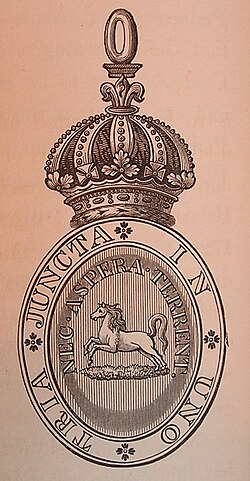
In the intricate world of British heraldry, few positions are as specialized as the Blanc Coursier Herald. An officer of arms active during the 18th and 19th centuries, this role was inextricably linked to the Order of the Bath. The title itself is a nod to the Hanoverian monarchs, derived from the white horse (blanc coursier) featured in their coat of arms.
The creation of this office was not merely a matter of tradition, but a strategic move involving political patronage and legal security. To understand the Blanc Coursier, one must first understand the political climate surrounding the revival of the Order of the Bath in 1725.
The Political Origins of the Office
The foundation of the Order of the Bath in 1725 provided Prime Minister Sir Robert Walpole with a powerful tool for political patronage. By appointing individuals to the Order and its associated offices, Walpole could reward loyalty and manage political demands. Initially, the Order's statutes established seven officers—including a Registrar, Secretary, and Genealogist—who held sinecures (positions requiring little to no work but providing a salary) funded by member fees.
However, these early positions were precarious, as they were held at the pleasure of the Great Master and could be revoked at any time. To secure these roles, John Anstis, the Garter King of Arms and architect of the Order's statutes, pushed for a new statute. This change attached permanent heraldic offices to three of the existing roles. Specifically, the Genealogist became the Blanc Coursier Herald, the Usher became the Brunswick Herald, and the King of Arms of the Order of the Bath became the Gloucester King of Arms, granting the latter jurisdiction over Wales.
This transition was critical because appointments to heraldic offices were made via letters patent under the Great Seal from the King, meaning the positions were held for life rather than at the whim of a superior.
The Role and Privileges of the Blanc Coursier
Formally established on January 14, 1726, the office of Blanc Coursier Herald was perpetually consolidated with the role of Genealogist of the Order of the Bath. The holder enjoyed the same rights and privileges as a Royal herald or a herald to a peer of the blood royal.
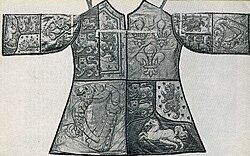
The Blanc Coursier occupied a unique dual status. He served as a Royal herald and as a private officer of arms to the Principal Companion of the Order. Initially, this meant he was the personal herald to Prince William. Consequently, the tabard (the ceremonial coat worn by heralds) displayed the arms of Prince William.
By the time of the ceremonial installation in 1727, George II had ascended the throne. This changed the heraldic requirements for Prince William's arms; as the son of a Sovereign rather than a grandson, his arms featured a label of three points (with the center point charged with a cross gules) instead of five. The tabard also reflected a differenced version of the Hanover quarter.
Evolution and Abolition
The first person to hold the office was John Anstis the younger, the son of the Garter King of Arms who had designed the system. Over the following century, the role continued to evolve. In 1815, when the Royal Guelphic Order was established, Sir George Nayler, the then Blanc Coursier, successfully petitioned for an additional statute that appointed him as the King of Arms of that Order.
This dual appointment was continued by his successor, Walter Blount. However, the era of the Blanc Coursier came to an end in 1857, when the office was abolished during a general revision of the Statutes of the Order of the Bath.
Key Facts
- Origin: Created January 14, 1726, and linked to the Order of the Bath.
- Etymology: Named after the white horse in the Hanoverian arms.
- Legal Status: Held for life via letters patent under the Great Seal.
- Dual Role: Served as both the Genealogist of the Order and a personal herald to the Principal Companion.
- End of Office: Abolished in 1857.
Summary of Office Holders
| Name | Dates of Office | Notes |
|---|---|---|
| John Anstis, younger | 1725–1754 | Office created by his father, John Anstis. |
| Sackville Fox | 1755–1757 | Brother of Lord Bingley. |
| John Suffield Brown | 1757–1792 | - |
| Sir George Nayler | 1792–1830 | Later became Clarenceux King of Arms. |
| Walter Blount | 1830–1857 | Later became Clarenceux King of Arms; office abolished during his tenure. |
Frequently Asked Questions
Why was the office of Blanc Coursier Herald created?
It was created to provide permanent, life-long security for the Genealogist of the Order of the Bath. By attaching a heraldic office to the role, the holder was appointed by letters patent under the Great Seal, protecting them from being dismissed at the pleasure of the Great Master.
What does the name "Blanc Coursier" mean?
The name refers to the white horse found in the coat of arms of the Hanoverian monarchs.
Who was the first Blanc Coursier Herald?
The first holder was John Anstis the younger, whose father, Garter King of Arms John Anstis, was responsible for proposing the Order and drafting its statutes.
What was the relationship between the Blanc Coursier and the Royal Guelphic Order?
When the Royal Guelphic Order was founded in 1815, it initially had no officer of arms. Sir George Nayler, the Blanc Coursier at the time, secured a statute that appointed him as the King of Arms of the Royal Guelphic Order.
When was the office finally abolished?
The office of Blanc Coursier Herald was abolished in 1857 as part of a revision of the Statutes of the Order of the Bath.