Black Nobility: The History of Rome's Papal Aristocracy
The Black Nobility refers to a distinct class of Roman aristocratic families who maintained a deep, centuries-old connection to the papacy. While the term itself is relatively recent, the influence of these families dates back to the baronial class of Rome and those who migrated to the city to leverage family ties with the Vatican. These families played a pivotal role in the administration of the Holy See and the governance of the Papal States—the territories once ruled by the Pope.
Over generations, the lines between secular power and ecclesiastical authority blurred, as many members of these noble houses ascended to high-ranking positions within the clergy, with some eventually becoming Popes themselves.
Key Facts
- Origin: Emerged from the Roman baronial class and families allied with the Vatican.
- Role: Assisted in governing the Papal States and administering the Holy See.
- Legal Status: Granted dual citizenship in Italy and Vatican City following the 1929 Lateran Treaty.
- Decline: Many of their official roles were abolished by Pope Paul VI in 1968.
- Military Connection: Many served in the ceremonial Papal Noble Guard.
Prominent Families and Figures
The Black Nobility comprises several influential lineages. Some families remain active today, while others have become extinct. Those still in existence include the Colonna, Massimo, Orsini, Ruspoli, Pallavicini, Theodoli, Sacchetti, Borghese, Odescalchi, and Boncompagni-Ludovisi.
Historically significant but now extinct papal families include the Savelli, Caetani, Aldobrandini, and Conti. These houses produced figures of immense political and religious weight, such as Prospero Colonna, who served as the mayor of Rome, and Arnaldo De Rosette, the Bishop of Asti, known for promulgating a Synod to regulate the clergy of Piedmont and Lombardy, specifically focusing on the Knights Hospitallers.
The nobility also produced modern figures of global importance, including Ernesto Pacelli, a notable financier, and Eugenio Pacelli, who ascended to the papacy as Pope Pius XII.
The Lateran Treaty and the Papal Noble Guard
A turning point for the Black Nobility occurred in 1929 with the signing of the Lateran Treaty. This agreement established Vatican City as an independent state and granted members of the Black Nobility dual citizenship in both Italy and the Vatican. Furthermore, the treaty ensured that noble titles granted by the Pope were officially recognized within the Kingdom of Italy.
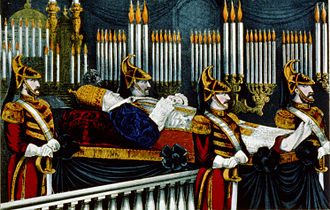
Many of these aristocrats served in the Papal Noble Guard, a largely ceremonial unit. During World War II, this guard worked alongside the Swiss Guard to protect the Pope. The exclusivity of this group was maintained even under pressure; in 1931, Pope Pius XI rejected a request from Alfonso XIII of Spain to open the Noble Guard to nobles from all Catholic nations.
The Reforms of Pope Paul VI
The status of the Black Nobility shifted dramatically in 1968. Pope Paul VI issued a motu proprio (a document issued on the Pope's own initiative) titled Pontificalis Domus (The Papal Household). This decree reorganized the Papal Court into the Papal Household and abolished numerous positions previously held by the Black Nobility.
The Pope reasoned that many of these offices were outdated, as they had been designed to administer the Papal States, which were lost in 1870. He stated that these roles had become purely honorary and no longer corresponded to the concrete needs of the modern era. Along with their official functions, perks such as Vatican City license plates were withdrawn.
These changes caused resentment among some members of the aristocracy. Diplomat Roger Peyrefitte noted that some Black Nobles fueled scandals by leaking allegations regarding the Pope's personal associations. By May 1977, a faction led by Princess Elvina Pallavicini began seeking ties with the traditionalist Archbishop Marcel Lefebvre.
Summary of the Black Nobility
| Category | Details |
|---|---|
| Primary Function | Governance of Papal States and Holy See administration |
| Key Existing Families | Colonna, Orsini, Borghese, Massimo, Ruspoli |
| Key Extinct Families | Savelli, Caetani, Aldobrandini, Conti |
| Legal Milestone | 1929 Lateran Treaty (Dual Citizenship) |
| Turning Point | 1968 Pontificalis Domus (Abolition of roles) |
Frequently Asked Questions
Who exactly were the Black Nobility?
They were Roman aristocratic families, originating from the baronial class, who held close ties to the papacy and assisted in the administration of the Holy See and the Papal States.
What was the significance of the Lateran Treaty for these families?
The 1929 treaty granted them dual citizenship in Italy and Vatican City and ensured that their papal noble titles were recognized by the Kingdom of Italy.
Why did Pope Paul VI abolish their positions in 1968?
Through the document Pontificalis Domus, the Pope removed roles that were considered purely honorary and obsolete, as they were originally intended for the administration of the Papal States, which had been lost in 1870.
What was the Papal Noble Guard?
It was a largely ceremonial guard composed of many Black Nobility members and some foreigners affiliated with the Holy See. They protected the Pope, notably during World War II, alongside the Swiss Guard.
How did the Black Nobility react to the 1968 reforms?
Some members resented the loss of their positions and privileges. This friction led some to leak scandals to authors like Roger Peyrefitte or align themselves with traditionalists like Archbishop Marcel Lefebvre.