Black Holes: The Physics of Spacetime's Most Extreme Objects
A black hole is an astronomical body so compact that its gravitational pull prevents everything, including light, from escaping its grasp. This phenomenon is a direct prediction of Albert Einstein's theory of general relativity, which describes gravitation not as a traditional force, but as the curvature of spacetime. When a mass becomes sufficiently compact, it warps spacetime so severely that it creates a region of no return.
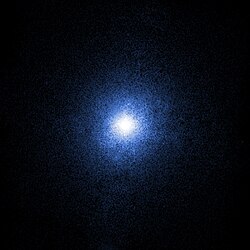
For centuries, the idea of objects with gravity too strong for light to escape was a theoretical curiosity. While the first mathematical solutions appeared in 1916, it wasn't until the 1960s that scientists realized black holes were a generic prediction of general relativity rather than mathematical anomalies. The scientific community's perspective shifted toward physical reality between 1971 and 1974 with the study of Cygnus X-1, the first widely accepted black hole candidate.
Key Facts
- Event Horizon: The boundary surrounding a black hole beyond which nothing can escape.
- Singularity: The central point of a black hole where spacetime curvature becomes infinite.
- Formation: Typically created during supernova events when massive stars collapse.
- Supermassive Black Holes: Massive entities found at the centers of most galaxies, often formed by merging or direct gas cloud collapse.
- Observational Evidence: Confirmed via gravitational waves, X-ray emissions, and direct interferometry imaging.
The Structure of a Black Hole
To understand a black hole, one must look at its distinct anatomical regions, moving from the outer influence to the inner core.
External Geometry and the Accretion Disk
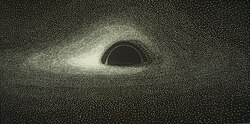
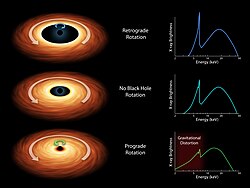
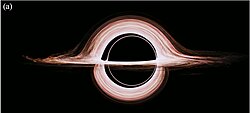
While the black hole itself is invisible, its surroundings are often violent and bright. An accretion disk is a rotating disk of matter falling toward the black hole. As this matter orbits, it heats up and emits intense radiation. Within this disk is the Innermost Stable Circular Orbit (ISCO); particles orbiting inside this limit must inevitably plunge into the black hole.
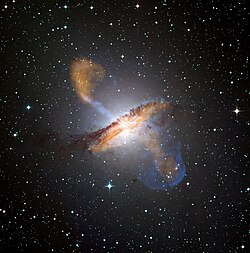
Some black holes produce relativistic jets—beams of ionized matter blasted perpendicularly from the galaxy's center at nearly the speed of light.
The Event Horizon and Photon Sphere
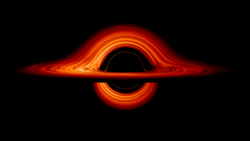
The event horizon is the definitive boundary of the black hole. Crossing it produces no locally detectable change for the object entering, but it ensures that the object is trapped forever. Just outside this boundary lies the photon sphere, a region where gravity is so strong that photons (light particles) are forced to travel in orbits.
The Ergosphere and Singularity
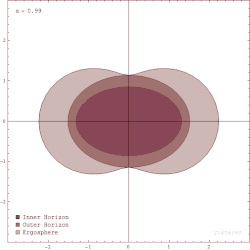
Rotating black holes possess an ergosphere, a region outside the event horizon where the rotation of spacetime itself drags all objects along, making it impossible to remain stationary. At the very center lies the singularity, where the laws of general relativity predict that density and curvature become infinite.
Classification by Mass
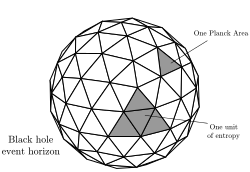
Black holes are categorized primarily by their mass, which dictates their size and their role in the evolution of the universe.
| Class | Approximate Mass (Solar Masses M☉) | Approximate Radius |
|---|---|---|
| Ultramassive | 108} – 1011 | >1,000 AU |
| Supermassive | 106} – 1010 | 0.001–400 AU |
| Intermediate-mass | 102} – 105 | ≈ Radius of Earth |
| Stellar | 2–150 | ≈ 30 km |
| Micro | Up to Mass of Moon | Up to 0.1 mm |
Observational Evidence
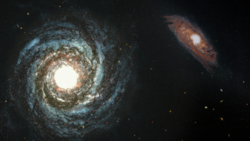
Because black holes do not emit light, astronomers rely on indirect evidence and advanced technology to prove their existence.
Direct Imaging and Interferometry
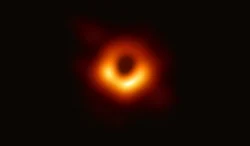
The Event Horizon Telescope has provided the first direct images of black hole shadows, most notably the supermassive black hole in the center of galaxy Messier 87.
Gravitational Waves
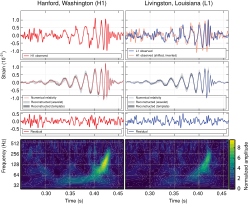
LIGO observatories have detected gravitational waves—ripples in spacetime caused by the collision and merger of binary black holes.
Stellar Motion and X-Rays
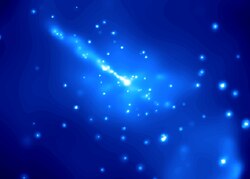
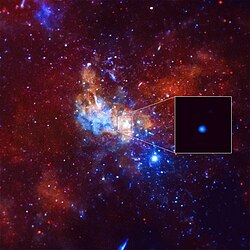
By observing stars orbiting an invisible point, such as Sagittarius A* at the center of the Milky Way, scientists can calculate the mass of the central object. Additionally, X-ray flares and binaries provide clues about the presence of black holes.
Frequently Asked Questions
What happens when a star becomes a black hole?
When a massive star reaches the end of its life cycle, it may undergo a supernova event. If the remaining core is sufficiently massive, it collapses under its own gravity, overcoming all internal pressure to form a stellar-mass black hole.
Can a black hole "suck in" everything in the universe?
No. Black holes only trap objects that cross their event horizon. If a star or planet remains outside this boundary, it will orbit the black hole much like planets orbit a sun, provided it stays beyond the critical distance.
What is the difference between a black hole and a quasar?
A quasar is not a type of black hole, but rather an extremely luminous active galactic nucleus powered by a supermassive black hole that is actively accreting vast amounts of matter.
Is there a way to see a black hole?
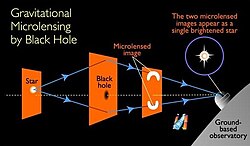
You cannot see the black hole itself, but you can see its effects. This includes the glowing accretion disk, the bending of light from background stars (gravitational lensing), and the "shadow" cast against the bright surrounding gas.