Black Color Variations and Off-Black Shades
While black is often perceived as a single, absolute void of light, the world of design and color theory reveals a vast spectrum of off-black colors. These variations, ranging from deep charcoal to greenish-blacks, provide depth and nuance to art, architecture, and digital interfaces. By adjusting the hue, saturation, and value, we can create shades that evoke specific materials, emotions, or historical eras.
Key Facts
- Off-black refers to colors that appear black at first glance but contain subtle undertones of blue, green, brown, or gray.
- Color standards like Pantone, RAL, and Crayola provide precise formulations for these dark shades.
- Some off-blacks are derived from natural materials, such as ebony wood, onyx gemstones, and licorice.
- Digital colors are often defined by Hex triplets (e.g., #000000 for pure black) and sRGB coordinates.
The Spectrum of Dark Grays and Neutrals
The lightest of the off-blacks are often categorized as dark grays. Dim gray (#696969) is a notable example, first appearing in 1987 as part of the X11 color list, which later became the foundation for web colors.
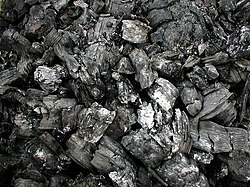
Another historical neutral is Davy's gray (#555555), named after Henry Davy. This specific shade is composed of carbon black, iron oxide, and powdered slate. Similarly, Charcoal (#36454F) represents the dark gray of burned wood and has been used as a color name in English since 1606.
Deep Earthy and Natural Tones
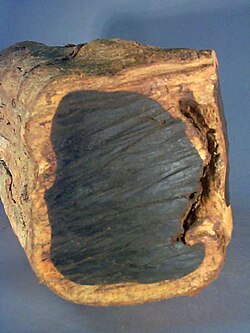
Many dark shades are inspired by the natural world. Ebony (#555D50) is a grayish olive green based on the tropical hardwood used in fine furniture for French kings; the term has been used in English since 1590.
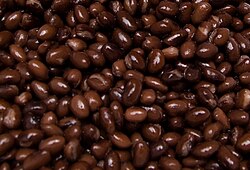
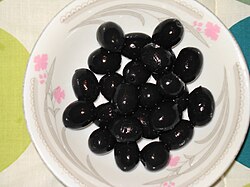
Taupe (#483C32) is a dark grayish yellowish brown. While modern usage often refers to lighter versions, the original 1930 standard defined it as a much darker shade. Other nature-inspired colors include Bean (#3D0C02), which mimics black beans, and Black Olive (#3B3C36), a representation of the fruit also recognized as color No. 6015 in the European RAL color matching system.
Cool and Atmospheric Blacks
Some off-blacks lean toward the cooler end of the spectrum. Cool black (#002E63) is actually a very dark shade of blue and is part of the Pantone color system. Outer Space (#2D383A), formulated by Crayola in 1998, is a dark grayish green inspired by the void of the cosmos.
Charleston green (#232B2B) is a fascinating historical shade. Legend suggests it was created after the American Civil War when residents of Charleston, South Carolina, mixed Northern black paint with blue and yellow. Technically a very dark shade of cyan, it appears black until illuminated by the sun, which reveals a dark forest green hue.
The Deepest Blacks
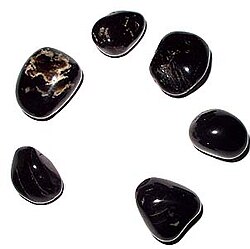
As we move toward the darkest values, we encounter colors that are nearly indistinguishable from pure black but maintain a distinct identity. Onyx (#0F0F0F) is a greenish black introduced in Crayola's 1994 "Gem Tones" set.
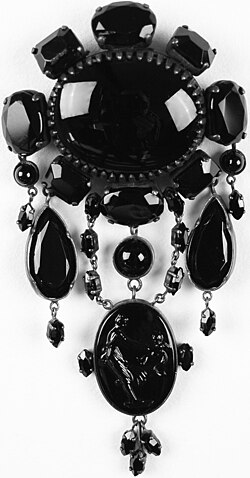
Jet (#343434) and Jet black (RAL 9005, #131516) are based on the mineraloid jet. The term "jet" has been used to describe this deep black since 1450.

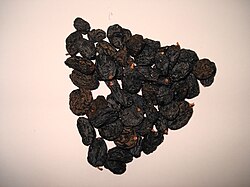
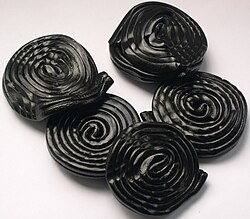
Other specialized deep shades include Raisin black (#242124), Vampire black (#080808), and Eerie black (#1B1B1B). Finally, Licorice (#1A1110), also known as light black, was introduced by Crayola in 1994 as part of a scented crayon line.
Off-Black Color Comparison Table
| Color Name | Hex Code | Primary Undertone | Source/Origin |
|---|---|---|---|
| Dim Gray | #696969 | Neutral Gray | X11 Web Colors |
| Cool Black | #002E63 | Blue | Pantone |
| Ebony | #555D50 | Olive Green | Maerz and Paul |
| Charleston Green | #232B2B | Cyan/Green | Historic Charleston |
| Onyx | #0F0F0F | Greenish Black | Crayola |
| Jet Black | #131516 | Black | RAL Classic |
Frequently Asked Questions
What is the difference between jet black and pure black?
While pure black is the total absence of light or color, jet black is a representation of the mineraloid jet. In systems like RAL, jet black (#131516) may have very slight blue or cool undertones compared to a theoretical absolute black.
How is Charleston green created?
According to popular history, Charleston green was created by mixing black paint with small amounts of yellow and blue. This results in a color that looks black in the shade but reveals a dark forest green hue in direct sunlight.
What are X11 web colors?
X11 web colors are a set of colors formulated in 1987 for the X11 window system. After the invention of the World Wide Web in 1991, these colors were adopted as standard names for web design, including shades like dim gray.
Which off-black colors are based on gemstones?
Onyx is a primary example, represented as a greenish black (#0F0F0F) in the Crayola Gem Tones set. Jet is also based on a mineraloid, producing the famous jet black shade.
What is the significance of the RAL color system?
The RAL color matching system is widely used in Europe for industrial applications. It provides standardized codes, such as RAL 9005 for jet black and RAL 6015 for black olive, to ensure color consistency across different manufacturers.