Bird Flight: Mechanics, Wing Adaptations, and Evolutionary Origins
Bird flight is the primary mode of locomotion for the vast majority of avian species. This complex biological capability is essential for survival, enabling birds to find food, secure breeding grounds, escape predators, and migrate across vast distances. Over millions of years, evolution has sculpted a diverse array of wing specializations, allowing different species to adapt to specific environments and ecological niches.
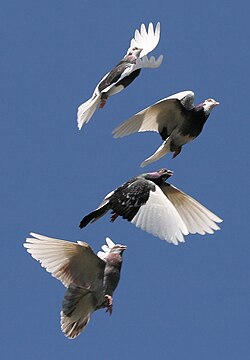
The process of flight is not a single action but a collection of intricate movements, including taking off, landing, and hovering. These motions are governed by the principles of aerodynamics—specifically the interaction of lift (the upward force), drag (the resistance of air), and thrust (the forward force).
Key Facts
- Speed Records: The peregrine falcon holds the record for the fastest dive at 242 mph (389 km/h), while the spine-tailed swift is the fastest in straight, powered flight at 105 mph (169 km/h).
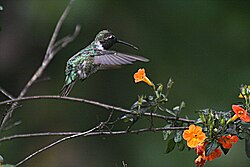
- Hummingbird Precision: Hummingbirds are unique in producing lift on both the up-stroke and down-stroke, beating wings between 43 and 80 times per second.
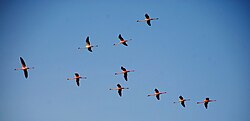
- Formation Efficiency: Flying in a V-formation can reduce induced drag, potentially increasing a bird's flight range by up to 71%.
- Evolutionary Roots: Most paleontologists agree that birds evolved from small theropod dinosaurs.
The Mechanics of Avian Motion
Birds employ several distinct types of flight depending on their biological needs and wing structure.
Flapping, Gliding, and Bounding
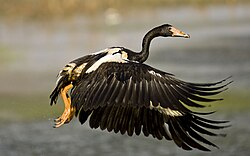
While flapping flight is the most common method of powered movement, many birds utilize gliding to conserve energy. Some species also engage in bounding flight, an intermittent style of movement. During take-off, some birds, such as the young tundra swan, may even run atop the water to gain the necessary speed for lift.
The Art of Hovering
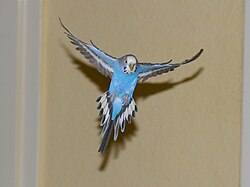
Hovering requires specialized wing morphology. Most hovering birds possess high aspect ratio wings (wings that are long and narrow relative to their width), which are ideal for low-speed flight. Hummingbirds are the most accomplished hoverers; they move their wings in a symmetrical figure-of-eight pattern, extending the wing throughout the entire stroke to maintain a constant lift.
Wing Shapes and Specializations
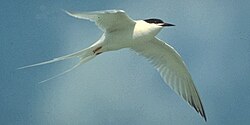
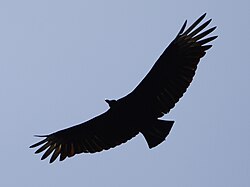
The shape of a bird's wing determines its flight capabilities, from extreme speed to effortless soaring.
| Wing Type | Characteristics | Primary Use | Example |
|---|---|---|---|
| Elliptical | Short, rounded | Manoeuvrability in tight spaces | Budgerigar |
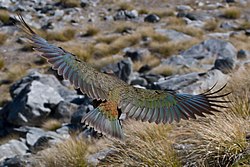
| High Speed | Tapered, swept-back | Rapid pursuit and diving | Peregrine Falcon |
| High Aspect Ratio | Long, narrow | Low-speed flight and efficiency | Roseate Tern |
| Soaring (Slotted) | Broad with deep slots | Long-distance soaring | Black Vulture |

Some birds have evolved mechanical advantages to further reduce physical strain. For instance, albatrosses possess locking mechanisms in their wing joints, which allow them to soar for long periods without exhausting their muscles.
Coordinated Formation Flight
Many species fly in an echelon or V-formation to maximize efficiency. The leading bird creates rotating line vortices at its wingtips. The trailing birds position themselves to capture the upwash (upward moving air) on the outside of these vortices, which reduces induced drag and allows them to overlap wings for additional lift.
The Evolution of Flight
The transition from ground-dwelling dinosaurs to airborne birds is a subject of intense paleontological debate. While there is a consensus that birds descended from small theropod dinosaurs, the exact method of origin remains contested.
Primary Evolutionary Hypotheses
- Trees Down: Ancestors glided from heights and gradually developed powered flight.
- Ground Up: Fast, predatory dinosaurs developed feathers for other reasons, eventually evolving the ability to generate lift while running.
- Pouncing Proavis: Flight evolved from arboreal ambush tactics, where ancestors pounced on prey.
- Wing-Assisted Incline Running (WAIR): The use of wings to help climb steep slopes.
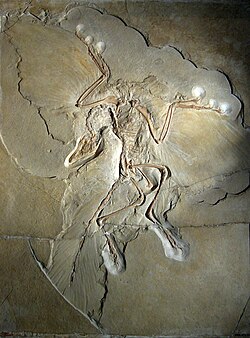
Recent research into Archaeopteryx suggests it was likely capable of flight, though its method differed substantially from modern birds. Additionally, embryological debates continue regarding whether bird wings developed from digits 1, 2, and 3 (like coelurosaurs) or digits 2, 3, and 4.
Frequently Asked Questions
How do hummingbirds differ from other hovering birds?
Unlike most birds, hummingbirds produce lift on both the forward and backward strokes of their wings, moving them in a figure-of-eight pattern at speeds up to 80 times per second.
What is the benefit of flying in a V-formation?
Flying in formation allows trailing birds to exploit the upwash created by the bird in front, reducing induced drag and potentially increasing their flight range by as much as 71%.
Which bird is the fastest in the world?
The peregrine falcon is the fastest during a dive, reaching 242 mph, while the spine-tailed swift is the fastest in straight, powered flight at 105 mph.
What is the "ground up" hypothesis of flight?
This theory proposes that bird ancestors were fast-running predatory dinosaurs that developed feathers and the ability to generate lift from the ground, rather than gliding from trees.
What is the purpose of the alula?
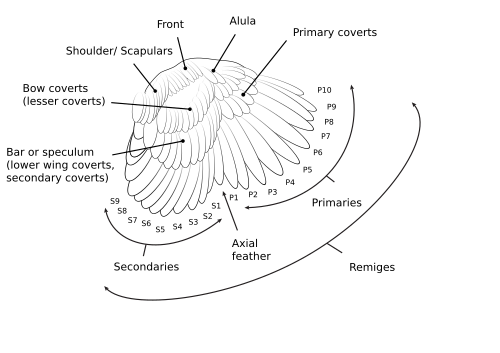
The alula is a small group of feathers on the first digit of the wing that helps birds avoid stalling during low-speed flight, which is critical during landing.