Biological Strains: Genetic Variants Across Species
In biology, a strain is a genetic variant, subtype, or culture within a biological species. While the term is used across various disciplines, it is often viewed as an artificial concept created for the purpose of genetic isolation. This is most evident in microbiology, where strains are typically derived from a single cell colony and kept isolated within the physical confines of a Petri dish.
The application of the term varies significantly depending on whether the subject is a bacterium, a virus, a plant, or a laboratory animal. From the engineering of industrial microbes to the standardization of disease models in rodents, strains provide the precision necessary for scientific research and industrial application.
Key Facts
- Definition: A strain is generally a group of descendants from a single isolation in pure culture.
- Prokaryotes: Escherichia coli is the most common species used for strain engineering in biotechnology.
- Genomic Identification: Average Nucleotide Identity (ANI) gaps at 99.5% or 99.8% are proposed as objective markers for strain assignment.
- Virology: Definitions vary by family; for Filoviridae, strains are distinguished by stable phenotypic characteristics.
- Botany: Strains refer to descendants sharing uniform morphological or physiological traits, often leading to the development of cultivars.
- Rodents: Inbred strains are considered genetically identical after 20 generations of sibling-mating.
Prokaryotes: Bacteria and Archaea
Prokaryotes typically follow a vertical pattern of inheritance, though horizontal gene transfer can occur. According to the Prokaryotic Code, a strain consists of the descendants of a single isolation in pure culture, meaning members of the same strain should exhibit minimal genetic and phenotypic differences.
Strains are identified either by assigned names (such as "natto") or by culture collection abbreviations and numbers (e.g., ATCC 23308). In biotechnology, scientists engineer strains to create specific metabolic pathways, particularly for biofuel production. Escherichia coli is the primary chassis for this work. Researchers have even developed minimal genomes—strains stripped of non-essential pathways—to ensure that experiments on specific genes are not interfered with by unnecessary biological processes. For industrial protein production, strains like BL21 are modified to minimize protease activity, increasing efficiency.
Natural vs. Artificial Strains
While lab strains are constructed via mutagenesis or genetic modification, the concept has expanded to include natural populations identified through metagenomics (the study of genetic material recovered directly from environmental samples). This expansion highlighted a flaw in traditional definitions: bacteria often change phenotypically when moved from the wild to a lab, yet they are not usually classified as different strains.
To resolve this, researchers proposed using Average Nucleotide Identity (ANI). A study by Rodriguez et al. (2024) identified a natural genomic gap between 99.2% and 99.8%. Using cutoffs of 99.5% or 99.8% allows for an objective, genome-based strain assignment that aligns with historical records.
Fungi and Plants
Under the Botanical Code, the term "strain" has no official taxonomic rank. However, in common practice, it is used similarly to the prokaryotic definition. In fungi, yeast strains are frequently modified for industrial fermentation.
In botany, a strain refers to descendants of a common ancestor that share uniform physiological or morphological characters. These may result from conventional breeding, biotechnological modification, or natural mutation. For example, in rice production, a modified plant creates a strain. If these traits are stabilized so the plants "come true" (remain identical to the parent), they are given a cultivar name and released for agricultural use.
Virology and Viral Constructs
Viruses generally follow vertical inheritance, but the term "strain" lacks a universally accepted definition in virology. Many scientists use the terms strain, variant, and isolate interchangeably, though some families have strict rules.
Filoviridae Nomenclature
For the Filoviridae family, the definitions are precise:
- Strain: Viruses of the same species distinguished by stable phenotypic characteristics. A "lab strain" is one that has gained the ability to cause disease through serial passage.
- Variant/Mutant: Members of the same strain with slight genomic or symptomatic differences (no more than 10% genetic difference from the reference).
- Isolate: A single instance of a particular virus, whether cultured or not.
Orthomyxoviridae and Vaccines
The WHO provides a standard nomenclature for Orthomyxoviridae (flu viruses), such as "A/chicken/Nakorn-Patom/Thailand/CU-K2/04(H5N1)", though the WHO often uses "strain" in a sense similar to "isolate."
Scientists also create artificial viral constructs for research and medicine. For instance, live attenuated influenza vaccines are created by swapping surface antigen genes (HA, NA) from a human flu isolate into a non-human isolate that replicates poorly at human body temperature. This trains the immune system without causing full-scale infection.
Laboratory Models: Rodents and Insects
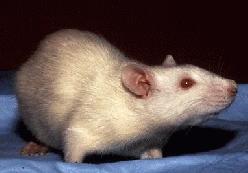
In animal research, a strain is a genetically uniform group. Mouse strains may be inbred, mutated, or genetically modified, while rat strains are typically inbred. A rodent population is generally considered genetically identical after 20 generations of sibling-mating. These strains are essential for creating disease models and testing drug toxicity.
Similarly, the fruit fly (Drosophila melanogaster) is a cornerstone of genetic analysis due to its simple genome and rapid reproduction. Various strains have been developed for research, including flightless versions with stunted wings.
Summary of Strain Definitions by Field
| Field | Primary Definition | Key Characteristic |
|---|---|---|
| Microbiology | Descendants of a single isolation | Pure culture lineage |
| Virology (Filoviridae) | Stable phenotypic characteristics | Species-level grouping |
| Botany | Descendants with uniform traits | Leads to cultivars |
| Zoology (Rodents) | Genetically uniform group | Often achieved via inbreeding |
Frequently Asked Questions
What is the difference between a strain and a species?
A species is a broader taxonomic rank. A strain is a genetic variant or subtype within that species. While all members of a strain belong to the same species, not all members of a species belong to the same strain.
How is a rodent strain made genetically identical?
Inbred rodent strains achieve genetic uniformity through a process of sibling-mating. Typically, a population is considered genetically identical after 20 consecutive generations of this process.
What is Average Nucleotide Identity (ANI) in strain identification?
ANI is a genome-based method used to objectively define strains. By measuring the percentage of identity between nucleotide sequences, researchers have found that gaps at 99.5% or 99.8% effectively distinguish different strains of microbes.
What is a "minimal genome" strain?
A minimal genome strain is a prokaryote (often E. coli) that has been stripped of all non-essential genes. This provides a clean "chassis" for synthetic biology, ensuring that new genetic insertions are not affected by unnecessary metabolic pathways.
How does a viral variant differ from a viral strain?
In the context of Filoviridae, a strain is defined by stable phenotypic characteristics. A variant (or mutant) is a member of that strain that has slight genomic or symptomatic differences, but remains within 10% genetic difference from the reference strain.