Biological Control: Using Nature to Manage Pests
Biological control, often shortened to biocontrol, is a sustainable method of managing pests by utilizing other living organisms. Whether the target is a destructive insect, a stubborn weed, or a plant pathogen, biocontrol leverages natural mechanisms such as predation, parasitism, and herbivory to keep pest populations in check. While these processes occur naturally in the wild, biocontrol typically involves active human management to enhance these effects, making it a cornerstone of Integrated Pest Management (IPM) programs.
In regulatory terms, there is a distinction between the types of agents used. In the US and Europe, invertebrates and other macroorganisms are registered as biological control agents, whereas microorganisms are categorized and registered as biopesticides.
Key Facts
- Biocontrol uses natural enemies (predators, parasitoids, pathogens) to control pests.
- Three main strategies exist: classical (importation), inductive (augmentation), and inoculative (conservation).
- Antagonists is the specific term used for biological control agents that target plant diseases.
- Regulatory differences exist between macroorganisms (biocontrol agents) and microorganisms (biopesticides).
- Risks include potential side effects where introduced agents may impact non-target species.
Core Strategies of Biological Control
Depending on the goal and the environment, practitioners employ one of three primary strategies to manage pest populations:
Classical Biological Control (Importation)
This strategy involves introducing a natural enemy from the pest's native range into a new area where the pest has become invasive. The goal is to establish a permanent population of the enemy to provide long-term control.
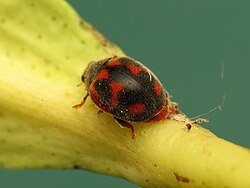
A historic success is the 19th-century importation of Rodolia cardinalis (the vedalia beetle) from Australia to California, which successfully controlled the cottony cushion scale on orange trees.
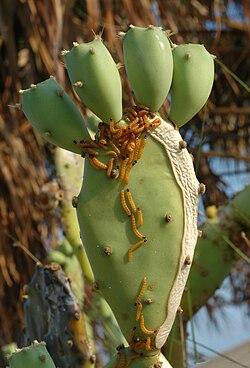
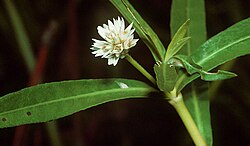
Other examples include the use of Cactoblastis cactorum larvae to feed on Opuntia prickly pear cacti and the introduction of the alligator weed flea beetle to control Alternanthera philoxeroides in Florida.
Inductive Biological Control (Augmentation)
Augmentation is used when a quick response is needed. It involves the periodic release of large populations of natural enemies to suppress a pest outbreak rapidly.
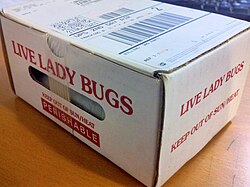
For example, the convergent lady beetle (Hippodamia convergens) is frequently sold commercially for the rapid control of aphids.
Inoculative Biological Control (Conservation)
Conservation focuses on maintaining and protecting existing natural enemies. This is achieved through measures that encourage the reestablishment of beneficial organisms in the environment.
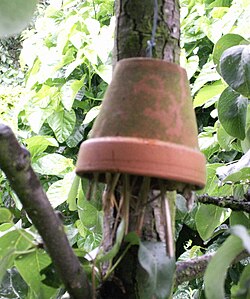
One simple method of conservation is providing habitat, such as using an inverted flowerpot filled with straw to attract earwigs.
Types of Biological Control Agents
Natural enemies are categorized by how they interact with the pest. These agents are essential for limiting the density of potential pests in any ecosystem.
Predators
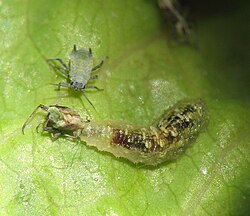
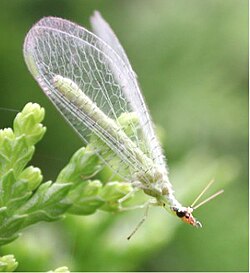
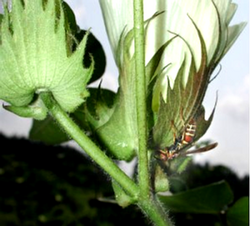
Predators are organisms that hunt and consume their prey. Examples include hoverfly larvae that feed on aphids, predatory lacewings, and Polistes wasps that search for caterpillars on cotton plants.
Parasitoids
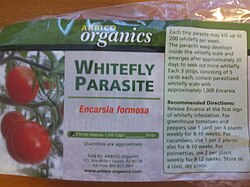
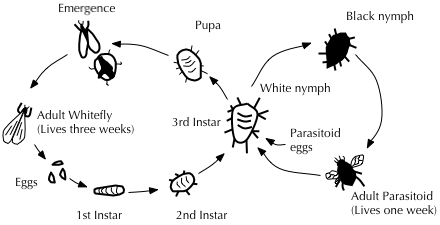
Parasitoids are insects whose larvae develop inside or on a single host, eventually killing it. This is common among Hymenoptera (wasps). For instance, Encarsia formosa is widely used in greenhouse horticulture to control whiteflies, while Aleiodes indiscretus targets spongy moth caterpillars.
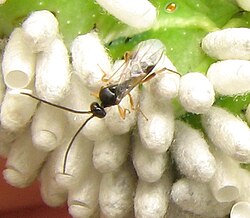
![The parasitoid wasp Aleiodes indiscretus parasitizing a spongy moth caterpillar, a serious pest of forestry[47]](/images/5f/cc/5fcc5bc4e83c5eb22e3de8905e9e9bdf507df40a0d9c6549ed8c317bf9b36149.jpg)
Pathogens
Pathogens are microorganisms that cause disease in pests. These include:
- Bacteria: Such as Bacillus thuringiensis.
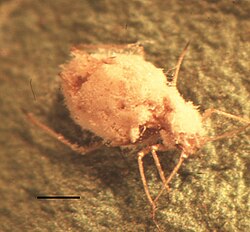
- Fungi: For example, Pandora neoaphidis, which can kill the green peach aphid.
- Viruses: Including baculoviruses.
- Oomycota: Such as Lagenidium giganteum.
Competitors
Competitors are organisms that outcompete the pest for resources, such as food or space, thereby reducing the pest population.
Summary of Biocontrol Methods
| Strategy | Primary Action | Goal | Example Agent |
|---|---|---|---|
| Classical | Importation of exotic enemies | Permanent establishment | Vedalia beetle |
| Augmentation | Mass release of enemies | Rapid, short-term control | Convergent lady beetle |
| Conservation | Habitat management | Maintenance of native enemies | Straw-filled pots for earwigs |
Challenges and Side Effects
While biocontrol is a powerful tool, it is not without risks. The most significant danger is the potential for an introduced agent to become a pest itself or to attack non-target native species.
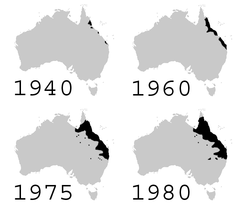
A prominent example of a failed biocontrol attempt is the cane toad, introduced to Australia in 1935. It proved ineffective at controlling its target pests and instead spread rapidly across the continent, becoming an invasive species itself.
Frequently Asked Questions
What is the difference between a predator and a parasitoid?
A predator typically consumes many prey individuals throughout its life. A parasitoid develops inside or on a single host individual, eventually killing that host to complete its life cycle.
Can biological control be used for weeds?
Yes. Biocontrol for weeds involves the use of seed predators, herbivores (such as specific insects), and plant pathogens to reduce the spread and impact of invasive plants.
What are antagonists in biological control?
Antagonists is the term used specifically for biological control agents that are used to manage plant diseases.
Is biological control always safe for the environment?
Not always. While generally more sustainable than chemicals, there is a risk of "side effects" where the control agent attacks non-target species or becomes invasive, as seen with the cane toad in Australia.
How does biocontrol fit into Integrated Pest Management (IPM)?
Biocontrol is often a key component of IPM, which combines biological, cultural, physical, and chemical tools to manage pests in a way that minimizes economic, health, and environmental risks.