Biodiversity: The Complex Web of Life and the Crisis of Extinction
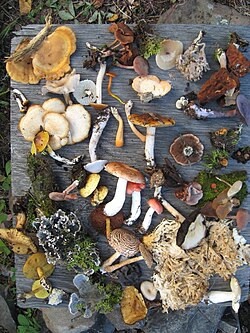
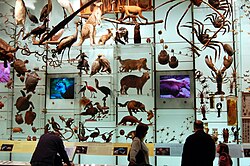
Biodiversity is the vast variability of life on Earth. Rather than a single measurement, it is a multi-layered concept encompassing genetic variability, species diversity, ecosystem diversity, and phylogenetic diversity (the evolutionary relationships between species). This intricate web of life is not spread evenly across the globe; instead, it follows distinct patterns influenced by climate and geography.
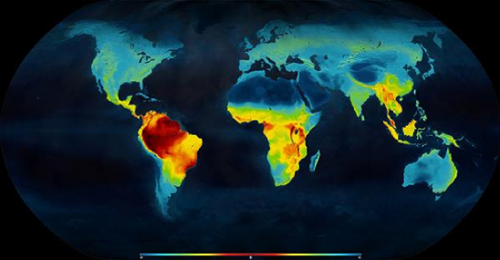
The highest concentrations of biodiversity are found in the tropics. Due to warm climates and high primary productivity—the rate at which energy is converted by photosynthetic organisms—regions near the equator are biological powerhouses. In fact, tropical forest ecosystems cover less than one-fifth of Earth's terrestrial area yet house approximately 50% of all known species. These latitudinal gradients, where diversity decreases as one moves from the equator toward the poles, are evident in both land-based and marine life.
Key Facts
- Tropical Dominance: Tropical forests contain about 50% of the world's species despite covering less than 20% of land area.
- Mass Extinctions: Earth has experienced six major mass extinction events, including the Permian-Triassic event 251 million years ago.
- Current Crisis: Human activity has triggered the Holocene extinction, with some estimates suggesting 30% of species could be lost by 2050.
- Primary Drivers: Habitat destruction for agriculture and climate change are the leading causes of modern biodiversity loss.
- Ecosystem Value: Biodiversity provides essential provisioning services (food, water) and regulating services (climate and disease control).
The Evolution and History of Life
The history of biodiversity is a cycle of rapid expansion and sudden collapse. During the Phanerozoic aeon (the last 540 million years), the "Cambrian explosion" saw a surge in biodiversity and the first appearance of most multicellular phyla.
However, this growth was interrupted by repeated mass extinctions. The most devastating was the Permian-Triassic extinction event 251 million years ago, which was so severe that vertebrate recovery took 30 million years. Other events, such as the rainforest collapse during the Carboniferous period, also caused significant losses of plant and animal life.
![Apparent marine fossil diversity during the Phanerozoic[104]](/images/5c/1f/5c1f6efbfc39387a19164b321e894b898f4f750cfc87b7ca54577c36350362af.png)
Measuring the Variety of Life
Scientists categorize diversity into three primary dimensions to better understand the natural world:
- Taxonomic Diversity: Typically measured at the species level.
- Ecological Diversity: Viewed through the lens of ecosystem variety.
- Morphological Diversity: The physical variety of organisms, which stems from molecular and genetic diversity.
The Current Biodiversity Crisis
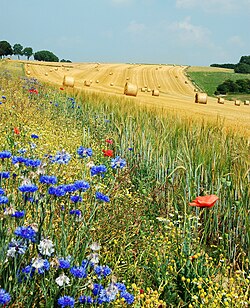
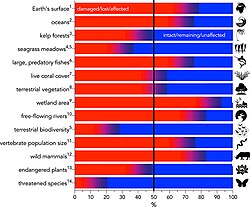
Modern Earth is currently experiencing the Holocene extinction, often called the sixth mass extinction. Unlike previous events caused by natural disasters, this crisis is anthropogenic—driven by human activity. Evidence suggests this may have begun at the end of the Pleistocene, where overhunting contributed to the extinction of megafauna after the last ice age.
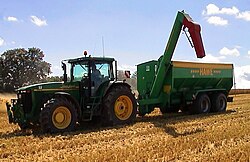
Today, the primary driver of loss is the destruction of natural habitats to make room for farming and agriculture. Climate change further exacerbates this by altering biomes and stressing species beyond their adaptive limits. The World Wildlife Fund's Living Planet Report 2024 highlights the severity of this trend, noting an average 73% decline in wildlife populations since 1970.
![The World Wildlife Fund's Living Planet Report 2024 found that wildlife populations declined by an average 73% since 1970.[29][30]](/images/81/cb/81cb7a197bda771a88edae3f1ba9048b0c8c7d0a1a224de76e3fa51c907c2357.webp)
The Value of Biodiversity: Ecosystem Services
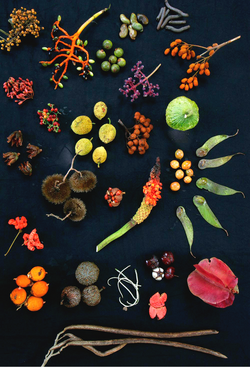
Biodiversity is not merely a matter of conservation ethics; it provides critical ecosystem services that sustain human life and the global economy. These services are generally divided into two main categories:
Provisioning Services
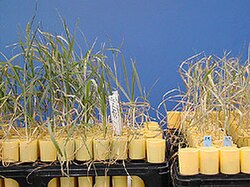
These involve the production of renewable resources. High species diversity ensures a stable supply of food, wood, and fresh water. In agriculture, genetic diversity allows for the development of hardier crops; for example, hybridizing wheat cultivars can create plants with greater tolerance to high salinity.
Regulating Services
These services mitigate environmental changes and maintain stability. Examples include climate regulation and the control of pests and diseases. In the oceans, a greater diversity of fish species has been shown to increase the stability of fisheries yields, protecting food security.
![A schematic image illustrating the relationship between biodiversity, ecosystem services, human well-being and poverty.[204] The illustration shows where conservation action, strategies, and plans can influence the drivers of the current biodiversity crisis at local, regional, to global scales.](/images/64/80/64805a17418cdea6df11f462713716063da704616d335337fcf1c286d7ce6a1b.jpg)
Conservation and Global Protection
To combat the loss of species, international legal frameworks and local protection strategies have been implemented. Global efforts include the United Nations Convention on Biological Diversity (1992), CITES (regulating endangered species trade), and the Ramsar Convention for wetlands.
Conservation strategies range from the creation of national parks and wildlife sanctuaries to the use of "citizen science" and transformative societal changes. In the European Union, the Biodiversity Strategy for 2030 sets specific targets to restore nature and protect ecosystems.
![Percentage of forest in legally protected areas (as of 2020).[77]](/images/11/de/11de3c4f9b675145f6ffd786640837c509ca36c19f7d59f8980964a24f3171cf.webp)
| Organism Group | Estimated Number of Species |
|---|---|
| Insects | 10–30 million |
| Bacteria | 5–10 million |
| Marine Species | 0.7–1 million |
| Mites | 1 million |
| Vascular Plants | 220,000 |
Frequently Asked Questions
What is the difference between species diversity and biodiversity?
Species diversity refers specifically to the variety of different species within a region. Biodiversity is a broader term that includes species diversity as well as genetic variability within species and the variety of entire ecosystems.
Why are the tropics more biodiverse than the poles?
The tropics benefit from a consistently warm climate and high primary productivity, which supports a wider array of life forms and higher energy availability compared to the colder, less productive polar regions.
What was the most severe mass extinction in Earth's history?
The Permian-Triassic extinction event, which occurred approximately 251 million years ago, is considered the worst. It caused such massive loss of life that it took vertebrates 30 million years to recover.
How does biodiversity affect human health and industry?
Biodiversity provides "provisioning services" like raw materials for medicine and food, and "regulating services" that control diseases and stabilize the climate, both of which are fundamental to human health and economic stability.
What is the Holocene extinction?
The Holocene extinction is the ongoing extinction event caused primarily by human activities, such as habitat destruction for agriculture and the effects of climate change, often referred to as the sixth mass extinction.