Biodiversity Loss: Causes, Impacts, and Global Trends
Biodiversity loss occurs when species disappear entirely from Earth—a process known as extinction—or when there is a significant decrease in species within a specific geographic area. This reduction in biological diversity can be temporary, if the damage is reversible through ecological restoration, or permanent, if the loss is absolute. Most contemporary biodiversity loss is attributed to human activities that push planetary boundaries beyond sustainable limits.
While many scientists and the Global Assessment Report on Biodiversity and Ecosystem Services point to human overpopulation and excessive consumption as the primary drivers, other experts argue that the growth of commodities for export and global wealth disparities are more significant factors. Regardless of the specific driver, the consensus remains that human activity is the central cause of current declines.
![Summary of major environmental-change categories that cause biodiversity loss. The data is expressed as a percentage of human-driven change (in red) relative to baseline (blue), as of 2021. Red indicates the percentage of the category that is damaged, lost, or otherwise affected, whereas blue indicates the percentage that is intact, remaining, or otherwise unaffected.[1]](/images/79/54/7954a591f71cd00bb304223bdf19bd8915659df89cf0e3f92c863df040e83359.jpg)
Key Facts
![The World Wildlife Fund's Living Planet Report 2022 found that wildlife populations declined by an average 69% since 1970.[57][58]](/images/81/cb/81cb7a197bda771a88edae3f1ba9048b0c8c7d0a1a224de76e3fa51c907c2357.webp)
- Wildlife Decline: The World Wildlife Fund's Living Planet Report 2022 indicates that wildlife populations have declined by an average of 69% since 1970.
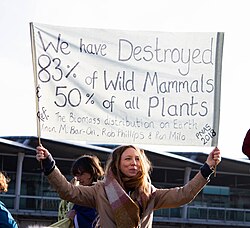
- Mammal Biomass: The biomass of wild land mammals has plummeted by 85% since the emergence of humans.
- Insect Loss: In German nature reserves, flying insect biomass has declined by 5.2% annually, totaling roughly a 75% loss over 26 years.
- Mammal Distribution: Current land mammal biomass is dominated by livestock (60%) and humans (36%), with wild mammals making up only 4%.
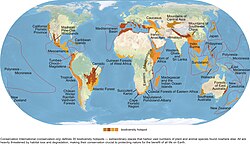
- Primary Drivers: Habitat destruction, land use intensification, pollution, overexploitation, invasive species, and climate change.
Quantifying Biodiversity Loss
To track the health of the planet, scientists use various metrics to quantify loss. One of the most prominent is the IUCN Red List, which categorizes species based on their extinction risk.
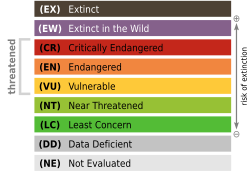
Another critical tool is the Red List Index (RLI). This index measures the conservation status of major species groups to predict the proportion of species likely to remain extant in the near future without further intervention. An RLI value of 1.0 suggests all species are of "Least Concern," while 0 indicates total extinction.
![Red List Index (2019): The Red List Index (RLI) defines the conservation status of major species groups, and measures trends in the proportion of species expected to remain extant in the near future without additional conservation action. An RLI value of 1.0 equates to all species being categorised as 'Least Concern', and hence that none are expected to go extinct in the near future. A value of 0 indicates that all species have gone extinct.[231]](/images/b9/5b/b95bc943d8da62d28d843c90b8e1402862a8f7bdabe7446091b2ac52ba4cb58a.webp)
Observations Across Life Forms
Terrestrial Invertebrates and Insects
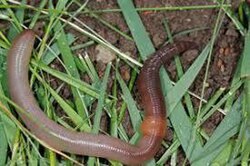
Insects and other invertebrates are facing severe declines. This is evident in the sharp drop of flying insect biomass in protected areas and the vulnerability of soil-dwelling organisms like earthworms.
![An annual decline of 5.2% in flying insect biomass found in nature reserves in Germany – about 75% loss in 26 years[65]](/images/fb/e2/fbe2fc65c11e86ccfb9ee2bffd6a966cce963de4e1d2171ad1313703cd1b33c2.png)
Amphibians and Mammals
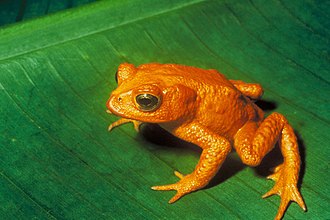
Amphibians have been among the hardest hit; for example, the golden toad of Monteverde, Costa Rica, was a primary casualty of these declines and has not been seen since 1989. Wild mammals have seen a massive shift in biomass, with livestock and humans now occupying the vast majority of the ecological space.
![The changing distribution of the world's land mammals in tonnes of carbon. The biomass of wild land mammals has declined by 85% since the emergence of humans.[179]](/images/c1/27/c127a541645f45cb6b32aed29447135ee5c4b991a40d15436c3d49331240cf9d.png)
Marine and Freshwater Species
Aquatic biodiversity is threatened by overfishing and pollution. The Atlantic cod stocks, for instance, suffered a total collapse in 1992 after decades of severe overexploitation.
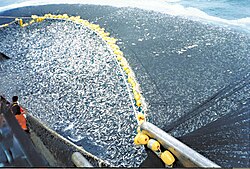
![Atlantic cod stocks were severely overexploited in the 1970s and 1980s, leading to their abrupt collapse in 1992.[173]](/images/35/1a/351aa803270989ad8a7d44b8f50c891ee32a4bafa204c58bacd4bd3f1b3ad0df.jpg)
Primary Causes of Biodiversity Loss
Habitat Destruction and Land Use
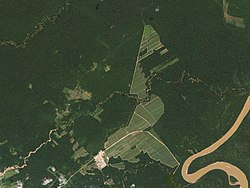
The conversion of wild land for human use is a leading cause of loss. This includes deforestation, urban growth, and habitat fragmentation. Land use intensification, such as monoculture farming, further reduces the variety of species an area can support.
Pollution and Overexploitation
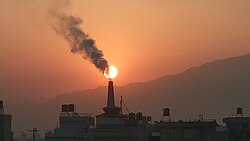
Pollution takes many forms, including nutrient pollution in water, noise pollution in oceans, and air pollution from industrial processes emitting carbon dioxide, sulfur dioxide, and nitrous oxide. Overexploitation occurs when species are harvested faster than they can reproduce, as seen in global industrial fishing.
Invasive Species and Climate Change
Invasive species compete with indigenous species for niches, often replacing them entirely. Simultaneously, climate change alters habitats—such as the decline of Arctic sea ice—and increases extinction risks. Historical data shows a strong correlation between climate variability and extinction rates over the last 450 million years.
![The relationship between the magnitude of climate variability and change (including both large increases and decreases in global temperature) and the extinction rate, over the past 450 million years.[190] This graph does not include the recent human made climate change.](/images/49/b6/49b61387bfc259035ba51330ce8cfc455025a721300085c5f1b13668e37af0ae.png)
![Relative to now, key areas for wildlife will retain less of their biodiversity under 2 °C (3.6 °F) of global warming, and even less under 4.5 °C (8.1 °F).[209]](/images/9c/6b/9c6b591135a19b4a15c736758d309205712ca404224ad176a4e843eaceca5d0c.png)
Resource Extraction
The extraction of fossil fuels often overlaps with Protected Areas (PAs), creating further risks for biodiversity in sensitive regions across North America, Europe, Asia, and Africa.
![Potential for biodiversity loss from future fossil fuel extraction: Proportions of oil and gas field area overlapping with Protected Areas (PAs) (gray polygons) of different IUCN Protected Area management categories by UN regions: North America (a), Europe (b), West Asia (c), LAC (d), Africa (e), and Asia Pacific (f). Absolute area of overlap across all IUCN management categories is shown above histograms. Location of fields overlapping with PAs are shown in (g). Shading is used so that points can be visualized even where their spatial locations coincide, so darker points indicate higher densities of fields overlapping PAs.[169]](/images/c1/73/c1733752b86b0b0c05482b6a2510de5f74aabff9a18bfb5bcf4ea02497b257ec.png)
Impacts on Human Society
Ecosystems and Food Security
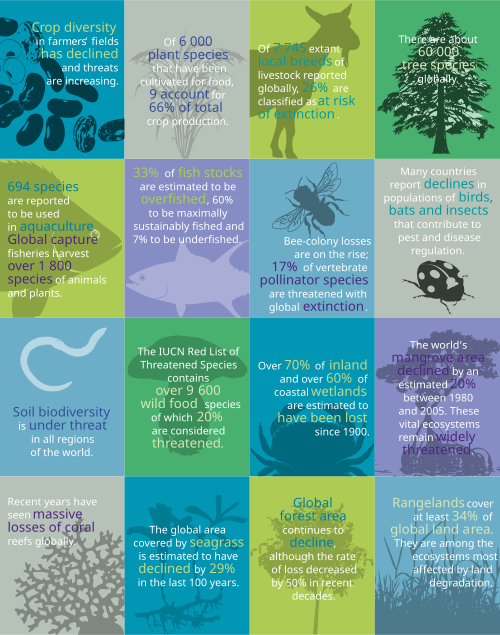
Biodiversity is fundamental to food security. A decline in biological variety threatens the stability of agriculture and the availability of diverse food sources.
Health and Medicine
Many medicines are derived from wild species. The loss of biodiversity reduces the potential for discovering new treatments and weakens the natural systems that support human health.
Summary of Biodiversity Drivers and Impacts
| Driver | Example/Mechanism | Primary Impact |
|---|---|---|
| Habitat Destruction | Deforestation, Urbanization | Loss of living space and fragmentation |
| Overexploitation | Overfishing (e.g., Atlantic Cod) | Population collapse of target species |
| Pollution | Nutrient runoff, Industrial emissions | Toxicity and ecosystem degradation |
| Climate Change | Arctic ice melt, Temperature shifts | Habitat loss and physiological stress |
| Invasive Species | Non-native species introduction | Displacement of indigenous species |
Proposed Solutions
International efforts to combat this crisis include the Convention on Biological Diversity and various national actions aimed at protecting critical habitats. Strategies such as biodiversity offsetting and species reintroduction are also employed to mitigate damage and restore lost populations.
Frequently Asked Questions
What is the difference between temporary and permanent biodiversity loss?
Biodiversity loss is temporary if the damage can be reversed through ecological restoration. It is permanent if the species becomes extinct or the habitat is destroyed beyond the possibility of recovery.
How does the IUCN Red List help in conservation?
The IUCN Red List categorizes species based on their risk of extinction, providing a standardized way for scientists and policymakers to identify which species require urgent conservation priority.
What is the relationship between biomass and biodiversity loss?
Biomass refers to the total mass of living organisms. In land mammals, there has been a massive shift where wild mammal biomass has decreased by 85%, replaced largely by humans and livestock.
How does climate change specifically cause biodiversity loss?
Climate change destroys habitats (such as melting sea ice), alters the timing of biological events, and pushes species beyond their physiological tolerance limits, leading to increased extinction risks.
Is human population growth the only cause of biodiversity loss?
While many cite overpopulation and overconsumption, other experts argue that wealth disparities and the economic drive for export commodities are more significant drivers of habitat destruction.