Bilateral Security Agreements with Ukraine
In 2024, Ukraine began establishing a strategic network of bilateral security agreements—formal treaties between two sovereign states—designed to fortify the nation's defense capabilities. These agreements serve as a critical bridge to strengthen Ukraine's security posture until the country achieves its long-term objective of becoming a member of the North Atlantic Treaty Organization (NATO).
The foundation for these pacts was laid in July 2023, following a pledge by the Group of Seven (G7), an intergovernmental political forum consisting of seven of the world's largest advanced economies. The G7's commitment focuses on bolstering Ukraine's ability to resist Russian aggression through sustained support and cooperation.
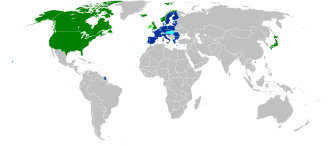
Key Facts
- Duration: Each bilateral agreement is set for a term of 10 years.
- Primary Goal: To enhance security until Ukraine can attain NATO membership.
- Origin: Based on the G7 pledge made in July 2023.
- Participation: Includes 28 of 32 NATO members, select non-NATO allies, and the European Union.
Breakdown of Participating Entities
NATO Member States
The vast majority of NATO members have signed these agreements. The process began with the United Kingdom on January 12, 2024, and has since expanded to include 28 of the 32 member nations. Notable signatories include the United States, France, Germany, and Poland, with some agreements scheduled for completion as late as March 2026.
Major Non-NATO Allies and EU Members
Beyond the NATO alliance, Ukraine has secured agreements with major non-NATO allies, specifically Japan and Qatar. Additionally, Ireland—a member of the European Union (EU) that is not part of NATO—signed an agreement on September 4, 2024.
Supranational Agreements
On June 27, 2024, the European Union signed a supranational agreement with Ukraine. This collective arrangement represents several member states; specifically, Austria, Cyprus, Hungary, and Malta do not have individual bilateral agreements but are represented through this EU-wide security framework.
Summary of Security Agreements
| Category | Number of Signatories | Key Examples |
|---|---|---|
| NATO Members | 28 of 32 | UK, USA, France, Germany, Poland |
| Major Non-NATO Allies | 2 of 22 | Japan, Qatar |
| Non-NATO EU Members | 1 of 4 | Ireland |
| Supranational Unions | 1 | European Union |
Current Status and Future Outlook
While the network of agreements is extensive, it is still evolving. Currently, Slovakia and South Korea are identified as countries seeking to establish their own bilateral security agreements with Ukraine.
Frequently Asked Questions
How long do these security agreements last?
Each of the bilateral security agreements is established for a duration of 10 years.
What is the ultimate goal of these agreements?
The agreements are intended to strengthen Ukraine's security and resilience until the country can successfully become a member of NATO.
Which international body initiated the pledge for these agreements?
The agreements are based on a pledge made by the Group of Seven (G7) in July 2023.
Are there EU countries without their own bilateral agreements?
Yes. Austria, Cyprus, Hungary, and Malta do not have individual bilateral agreements but are covered under the security agreement signed by the European Union.
Which non-NATO countries have signed agreements?
Japan and Qatar (as major non-NATO allies) and Ireland (as a non-NATO EU member) have signed agreements.