Bike Sharing Systems and Public Transport Integration
Modern urban planning is increasingly focusing on multimodal transport—the seamless connection between different modes of travel. One of the most effective ways cities are achieving this is by integrating bike sharing systems with existing public transportation. By bridging the gap between a transit hub and a final destination, these systems address the "last mile" problem, making public transit more accessible and reducing reliance on private motorized vehicles.
Integration strategies vary globally, ranging from government-owned fleets to public-private partnerships. Some cities offer financial incentives, such as transfer discounts, to encourage residents to switch from cars to a combination of trains, buses, and bicycles.
Key Facts
- Last Mile Solution: Bike sharing complements public transport by filling gaps in coverage and improving overall transit usability.
- Diverse Ownership: Systems can be managed by public transport authorities (e.g., Santander Cycles) or through Build-Operate-Transfer (BOT) partnerships (e.g., YouBike).
- Financial Incentives: Many cities provide transfer discounts or mileage rewards to encourage multimodal commuting.
- Specialized Fleets: Some cities, like Seoul, offer smaller bicycles for teenagers and the elderly to increase inclusivity.
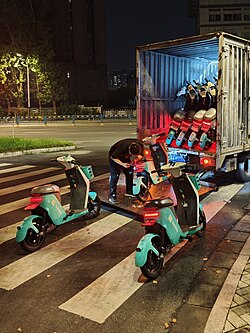
- Environmental Trade-offs: While reducing car use, the CO2 emissions from vehicles used to reposition bicycles remain a challenge.
Global Models of Integration
National and Regional Programs
In some regions, national railway operators partner with cycling organizations to create integrated networks. These programs often cater to both commuters and tourists, offering longer rental periods of 24 to 48 hours. A notable example is the Call a Bike service offered by the national rail company in several German cities.
Public-Private Partnerships
The structure of bike sharing varies by city. In London, Santander Cycles is owned by the public transport authority. In contrast, Taipei's YouBike operates via a BOT (Build-Operate-Transfer) model, a collaboration between the Taipei City Department of Transportation and the manufacturer Giant Bicycles.
Case Study: Medellín, Colombia
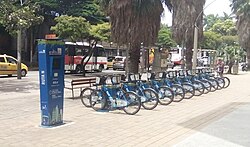
Medellín, a city of 3.4 million people, implemented the EnCicla system to address significant infrastructural mobility challenges. Conceived by three EAFIT students in 2010 and launched in August 2012, EnCicla is deeply integrated with the city's Metro system.
The system utilizes a heterogeneous fleet—meaning the number of bikes varies per station based on statistical analysis of historical demand. With over 90 stations across seven zones, the system is particularly popular near universities and colleges in the western zone. EnCicla is free for registered users aged 16 and older, with specific operating hours during the week and on Saturdays. Tourists may also access the service using a passport.
While EnCicla has seen over 13 million rentals, the city faces a contradiction: the vehicles used to redistribute bikes across the city increase CO2 emissions, partially offsetting the project's environmental goals.
Case Study: Taipei Metropolitan Area, Taiwan
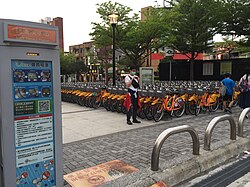
The YouBike system is strategically placed near all Taipei Metro stations to solve the last mile problem. This integration has turned the bicycle into a primary feeder mode for the metro; data from September 2015 showed that 55% of users transferred via YouBike before or after their metro trip. Among loyal users (those riding more than five times per week), this transfer ratio rises to 60%.
To further incentivize use, a transfer discount of NT$5 is offered via the EasyCard when users switch between YouBike and the Metro, local buses, or the Danhai LRT within one hour, provided the transfer is direct.
Case Study: Seoul, South Korea
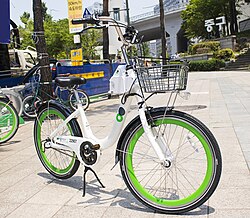
Seoul's Ddareungi system, launched officially in October 2015, serves over 3 million users. The system is heavily utilized during weekday commuting hours, particularly at stations like Ttukseom Park, Express Bus Terminal, and Jamsil Station.
Seoul has introduced several innovative features to improve the user experience:
- QR Code Locks: Introduced in March 2020, allowing users to rent and return bikes anywhere via a single scan.
- Sprout Ddareungyi: Smaller, lighter bicycles designed for teenagers (13+) and the elderly.
- Transit Mileage: Rewards for 365-day pass users who use public transport within 30 minutes of returning a bike.
- Certification Benefits: Users who pass a bicycle safety education exam receive fee reductions for two years.
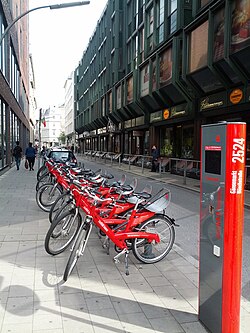
Case Study: Hamburg, Germany
Launched in 2009, StadtRAD consists of 3,100 bicycles and 20 cargo bikes across 250 fixed stations. Operated by Deutsche Bahn Connect, the system is a pillar of Hamburg's "mobility transition," aiming to increase the share of cyclists in total traffic to 25%.
The city integrates StadtRAD into a broader digital ecosystem via the Switchh app, allowing users to book carsharing, e-scooters, and HVV transport in one place. Research from the University of Hamburg indicates that 55.9% of users utilize the system for leisure, with a high level of satisfaction regarding the environmental and health benefits.
Integration with Motor Vehicles
Beyond public transit, some private operators are integrating cycling. In France, Vinci Park lends bicycles to customers who use their parking facilities. Similarly, the non-profit City CarShare in San Francisco integrated electric bicycles into its car-sharing fleet to provide more flexible urban travel options.
| City | System Name | Key Integration Feature | Notable Characteristic |
|---|---|---|---|
| Medellín | EnCicla | Metro connection | Free for registered residents 16+ |
| Taipei | YouBike | Metro/Bus transfer discounts | BOT partnership with Giant Bicycles |
| Seoul | Ddareungi | Transit Mileage rewards | QR code locks and size-specific bikes |
| Hamburg | StadtRAD | Switchh app integration | Includes cargo bikes; operated by DB Connect |
Frequently Asked Questions
What is the "last mile" problem in urban transport?
The last mile problem refers to the difficulty of getting a commuter from a public transportation hub (like a train station) to their final destination. Bike sharing systems solve this by providing a quick, flexible way to cover that remaining distance.
How does the BOT model work for bike sharing?
BOT stands for Build-Operate-Transfer. In this model, a private company (such as Giant Bicycles in Taipei) builds and operates the system in partnership with the government for a set period before the responsibility eventually transfers back to the public sector.
Are there environmental downsides to bike sharing?
While bike sharing reduces car dependency, the process of repositioning bicycles—moving them from full stations to empty ones using motorized vehicles—can increase CO2 emissions.
How do cities encourage people to use these systems?
Cities use various incentives, including transfer discounts (like in Taipei), transit mileage rewards (like in Seoul), and providing free access to registered residents (like in Medellín).
Who can use the Ddareungi system in Seoul?
General Ddareungi bikes are for those 15 and older, while the "Sprout Ddareungyi" line is specifically designed for smaller users, including teenagers from age 13 and the elderly.