Bidhannagar: The Planned Satellite City and IT Powerhouse of West Bengal
Commonly known as Salt Lake City, Bidhannagar is a meticulously planned satellite city located in the North 24 Parganas district of West Bengal. Serving as a vital part of the Greater Kolkata metropolitan area, it has transformed from reclaimed marshlands into one of Eastern India's most significant economic and technological engines.
Designed by Master Planner and Chief Architect Dobrivoje Tošković, the city's development began in the late 1960s. What started as a strategic reclamation project to alleviate population pressure on Kolkata has evolved into a modern urban center characterized by high-tech business districts, educational institutions, and significant recreational landmarks.
Key Facts
- Location: North 24 Parganas, West Bengal, India.
- Primary Economic Hub: Sector V (often called the "Silicon Valley of the East").
- Total Area: 55.51 km², with approximately 45.5% covered by water.
- Governance: Managed by the Bidhannagar Municipal Corporation (BMC).
- Major Landmark: Salt Lake Stadium (Vivekananda Yuba Bharati Krirangan).
- Environmental Significance: Home to the East Kolkata Wetlands, a designated Ramsar site.
Historical Evolution and Etymology
The history of the region is deeply intertwined with the political shifts of mid-20th century India. During the Salt Satyagraha, the local community in Mahishbathan participated in the movement by producing salt using indigenous methods, led by the zamindar Lakshmikant Pramanik.
The modern city was born from a necessity to manage the mass influx of refugees following the partition. In 1948, Bidhan Chandra Roy, the second Chief Minister of West Bengal, conceived a reclamation project for the marshy salt lakes to the east of Kolkata. The landfill project was officially inaugurated on April 16, 1962. Following the completion of various sectors, the city was officially renamed Bidhannagar on April 5, 1973, to honor Roy's legacy.
Geography and Environment
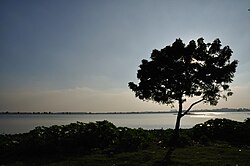
Bidhannagar is situated within the lower Ganges Delta. The city's geography is unique due to its high water content; of its 55.51 square kilometers, roughly 25 square kilometers consist of water bodies. This includes the East Kolkata Wetlands, which is one of only two Ramsar sites in West Bengal, recognized internationally for its ecological importance.
| Category | Details |
|---|---|
| Total Area | 55.51 km² |
| Water Coverage | ~45.5% |
| Average Elevation | 11 meters |
| 2011 Population | 634,107 |
| Literacy Rate | 90.44% |
The Economic Engine: Sector V
Bidhannagar's Sector V is the premier information technology (IT) hub in Eastern India. Often referred to as the "Silicon Valley of the East," it functions as a peripheral business district under the Nabadiganta Industrial Township Authority (NDITA).
The area is home to the Salt Lake Electronics Complex (SALTLEC), which was the first software technology park in the Kolkata metropolitan area. As of recent years, the sector hosts approximately 1,500 companies. Major multinational corporations and Indian conglomerates maintain significant operations here, including:
- Tata Consultancy Services (TCS)
- Wipro Limited (operating a large Special Economic Zone campus)
- Cognizant
- Tech Mahindra, SAP SE, and Infosys
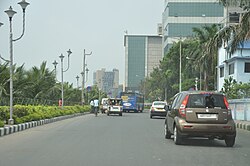
The sector boasts massive office spaces, such as Godrej Waterside and Infinity Think Tank, accommodating a workforce of hundreds of thousands of professionals.
Infrastructure and Connectivity
Public Transport and Metro
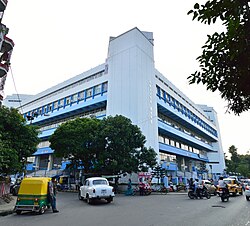
Bidhannagar is well-connected via a robust transport network. The Karunamoyee Bus Terminus serves as a central hub for various AC and non-AC WBTC bus lines, connecting the city to areas like Jadavpur, Dum Dum, and Garia.
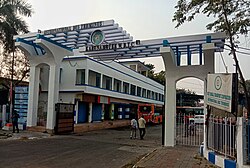
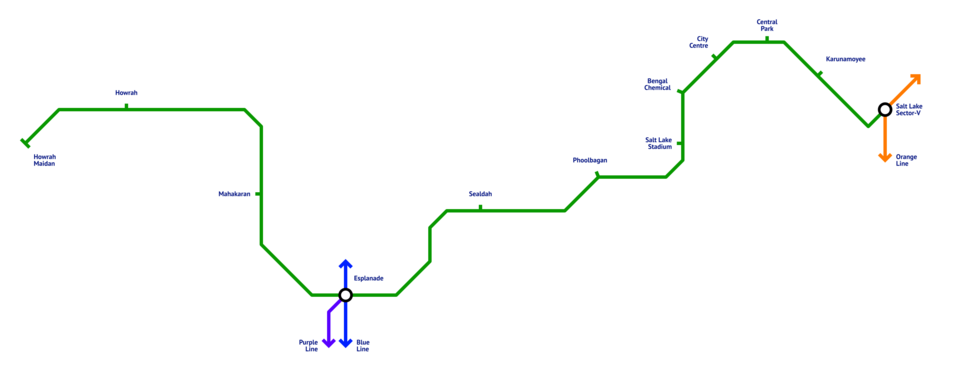
The city is also integrated into the Kolkata Metro system. The Green Line (Howrah Maidan - Salt Lake Sector V - Teghoria) has been operational since February 2020, providing a vital link between Sector V and Sealdah.
Civic Administration
The Bidhannagar Municipal Corporation (BMC) manages the city's infrastructure across 41 wards and 6 boroughs. The BMC is responsible for essential services including water supply, sanitation, solid waste management, and street lighting. Meanwhile, the NDITA specifically manages the industrial requirements of Sector V, including roads and sewerage for the IT corridor.
Frequently Asked Questions
What is the main economic driver of Bidhannagar?
The primary economic driver is the IT and ITeS sector, specifically concentrated in Sector V, which is one of the top ten IT hubs in India.
How was Bidhannagar originally formed?
The city was created through a land reclamation project of the marshy salt lakes to the east of Kolkata to accommodate the growing population and refugee influx in the 1950s and 1960s.
Is Bidhannagar a part of Kolkata?
Yes, Bidhannagar is a planned satellite city that forms an integral part of the Greater Kolkata metropolitan area.
What are the major educational institutions in the area?
The area hosts numerous prestigious institutions, including the Indian Institute of Foreign Trade, West Bengal National University of Juridical Sciences, and various campuses of Jadavpur University and the University of Calcutta.
Which metro line serves Sector V?
Sector V is served by the Green Line of the Kolkata Metro, which connects the area to Sealdah.