Beyoğlu History: From the Genoese Colony of Pera to Modern Istanbul
The district of Beyoğlu, situated on the northern shores of the Golden Horn, stands as a living museum of Istanbul's cosmopolitan evolution. Long before the rise of the Ottoman Empire, this area served as a bridge between East and West, evolving from a simple orchard into a powerhouse of European trade and diplomacy. Its history is a tapestry of Byzantine influence, Italian mercantile ambition, and Ottoman modernization.
In the earliest days of the City of Byzantium (founded in the 7th century BC), the hillside was known as Sykai (The Fig Orchard) or Peran en Sykais, meaning "The Fig Field on the Other Side." By the 5th century, it had grown into a suburb called Galata. The origin of this name remains debated: some believe it stems from galatas (milkman), referring to early medieval shepherds; others suggest it comes from the Galatai (Gauls), a Celtic tribe that camped there during the Hellenistic period. A third theory points to the Italian word Calata, meaning "downward slope," describing the hill's descent toward the sea.
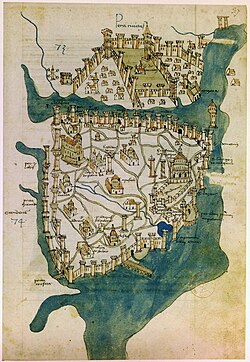
The Era of Genoese and Venetian Influence
During the Byzantine era, the area known as Pera became a strategic hub for European merchants, primarily from Genoa and Venice. Following the Fourth Crusade in 1204, the Venetians gained prominence, leaving behind landmarks such as the Dominican Church of St. Paul (1233), now known as the Arap Camii.
In 1273, Emperor Michael VIII Palaiologos granted Pera to the Republic of Genoa as a reward for their support. Under Genoese rule, Pera flourished as a trade colony governed by a podestà (a chief magistrate). This period saw the construction of the Palazzo del Comune in 1316 and the iconic Galata Tower in 1348, which remains one of Istanbul's most recognizable symbols.
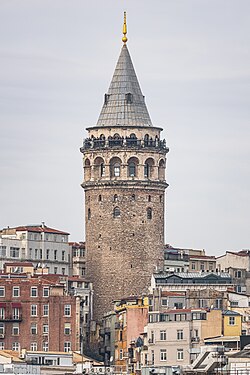
The district was a melting pot of Italian communities, including Tuscans and Ragusans. By 1432, observers described Pera as a large, wealthy town inhabited by Greeks, Jews, and Genoese, boasting one of the finest ports in the Christian world. Even after the Ottoman conquest of 1453, Sultan Mehmed II allowed the Genoese to return, though the district was no longer an independent colony.
The Republic of Venice also maintained a strong presence through the Bailo (a diplomatic representative). The Palace of Venice, built in the early 16th century, served various diplomatic roles over the centuries—including as the French and Austrian embassies—before becoming the Italian Consulate in 1923.
The 19th Century: The "Paris of the East"
By the 1800s, Pera had transformed into the most Westernized sector of Constantinople. It was the heart of the Levantine population—European Catholics who settled in the Ottoman Empire—bringing with them modern fashion, arts, and technology.
The Grande Rue de Péra (now İstiklâl Avenue) became a prestigious address for embassies and luxury shops. Beyoğlu was a pioneer in infrastructure, being among the first areas in the city to receive electricity, telephone lines, and trams. In 1875, it saw the inauguration of the Tünel, the world's second-oldest underground railway, designed to transport people between the port of Galata and the heights of Pera.
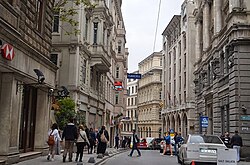
The financial heartbeat of the empire shifted here as well, with Bankalar Caddesi (Banks Street) becoming the center of Ottoman finance.
Cultural life flourished with the establishment of theaters and cafes. The Naum Theatre served as the city's primary opera house until a fire destroyed it in 1870. This era also saw the rise of a distinct cafe culture, including legendary establishments like İnci, famous for its profiteroles.
![A reception held at the Naum Theatre in honour of Giuseppe Garibaldi, who had lived and worked (as a teacher) in the Pera district of Constantinople (Istanbul) between 1828 and 1831.[20] The Naum Theatre seen in this illustration served as the chief opera house of Constantinople, until it was destroyed by a fire in 1870.](/images/d2/ac/d2aceef2df887a0290691868d3e5be715bb837b808ae2c4ebab5bb27c61f2554.jpg)
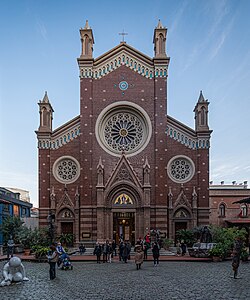
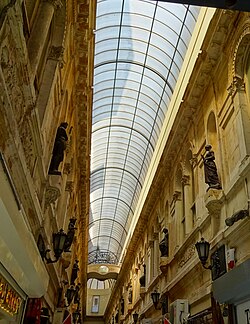
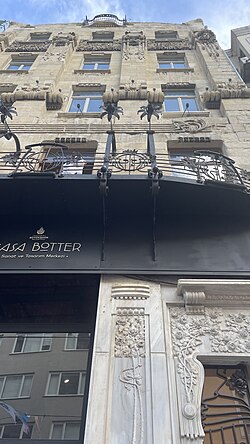
Architecturally, the district evolved through the Edict of Tanzimat (1839), a modernization program that blended traditional Ottoman styles with European Neo-Classical, Baroque, and Rococo influences. This is evident in the Dolmabahçe Palace and the ornate passages and buildings along the main thoroughfares.
Modern Transition: Decline and Gentrification
The 20th century brought significant upheaval. Following the collapse of the Ottoman Empire and the founding of the Turkish Republic, Beyoğlu entered a period of gradual decline. This was accelerated in the 1950s and 60s by the departure of the Greek population due to tensions surrounding the Cyprus conflict.
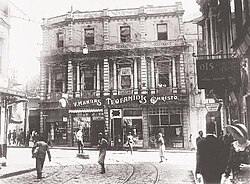
Political instability in the late 1970s further drove the middle class toward newer suburbs like Levent and Yeşilköy. By the 1980s, many Neoclassical apartment blocks had transitioned from elite residences to housing for immigrants from Anatolia.
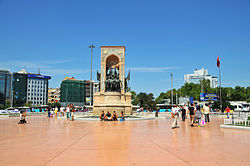
In the 21st century, Beyoğlu has experienced rapid gentrification. İstiklal Avenue has returned as a premier tourist destination, and neighborhoods like Cihangir have regained their fashionable, bohemian status. While many historic buildings have been restored, the process has also led to the creation of large luxury malls and social tensions between affluent newcomers and conservative long-term residents in areas like Tophane and Tarlabasi.
Key Facts
- Ancient Roots: Originally called Sykai (The Fig Orchard) by Greek speakers.
- Genoese Rule: Pera was a Genoese trade colony from 1273 until the Ottoman conquest in 1453.
- Engineering Milestone: The Tünel (1875) is the second oldest subway line in the world.
- Financial Hub: Bankalar Caddesi served as the financial center of the Ottoman Empire.
- Diplomatic Center: The district housed the majority of foreign embassies during the 19th century.
| Period | Primary Influence | Key Characteristics |
|---|---|---|
| Byzantine | Greek/Byzantine | Orchards (Sykai) and early suburb development. |
| 1273–1453 | Genoese/Venetian | Trade colony, construction of Galata Tower. |
| 1453–1923 | Ottoman/Levantine | Modernization, embassies, and the "Paris of the East" era. |
| 1923–Present | Turkish Republic | Post-war decline followed by 21st-century gentrification. |
Frequently Asked Questions
What is the difference between Pera, Galata, and Beyoğlu?
Historically, Galata refers to the lower area near the port and the tower, while Pera refers to the higher district that became the European quarter. Beyoğlu is the modern name for the entire district encompassing both.
Why was the Tünel subway significant?
Inaugurated in 1875, the Tünel is the second oldest subway line in the world, following only the London Underground, and was built to connect the business district of Karaköy with the residential heights of Pera.
Who were the Levantines?
The Levantines were European Catholics, often of Italian, French, or British descent, who settled in the Ottoman Empire and played a crucial role in the Westernization of Beyoğlu's culture and architecture.
What happened to the Genoese after 1453?
Although the Ottomans conquered Galata in 1453, Sultan Mehmed II allowed the Genoese to return to the city, though they lost their political autonomy and the rule of the podestà.
What caused the decline of Beyoğlu in the mid-20th century?
The decline was driven by the exodus of the Greek population during the 1950s and 60s, as well as political violence in the 1970s that pushed the middle class to suburban areas.