Better Place: The Rise and Fall of a Global Battery-Swapping Network
Better Place entered the automotive market with a bold vision: to eliminate range anxiety—the fear that an electric vehicle (EV) will run out of power before reaching its destination—by replacing traditional charging with a rapid battery-swapping model. Instead of waiting hours for a battery to charge, drivers could visit a station and have their depleted battery swapped for a full one in minutes.
The company sought to build a global ecosystem of switchable-battery cars and networked infrastructure, partnering with governments and energy giants across several continents. However, the ambitious scale of the project faced significant financial and logistical hurdles.
Key Facts
- Core Technology: Battery-swapping stations designed to replace EV batteries in approximately five minutes.
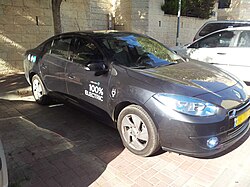
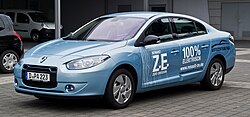
- Primary Vehicle: The Renault Fluence Z.E. was the central model used in major markets like Israel and Denmark.
- Major Markets: Operations were focused in Israel, Denmark, Australia, China, and Hawaii.
- Outcome: The company filed for bankruptcy in May 2013 across its primary markets.
- Infrastructure Goal: Aimed to integrate EVs with the smart grid to shift charging away from peak demand hours.
Global Market Rollouts
Israel: The First National Partnership
Israel served as the global launchpad for Better Place. The company aimed for more than 50% of all cars sold in Israel to be electric by 2016. The first battery-swapping station opened in Kiryat Ekron in March 2011, promising a five-minute exchange process.
Despite signing letters of intent from 400 corporations representing a potential 80,000 vehicles, actual adoption was slow. While Better Place agreed to purchase 100,000 Renault Fluence Z.E. units, sales lagged significantly. By the end of 2012, only 518 cars had been sold in the country, reaching 940 by April 2013. The company filed for bankruptcy in Israel on May 26, 2013.
![Parade of Renault Fluence Z.E. electric cars enabled with battery swapping technology to commemorate the first deliveries to Better Place employees in Israel in January 2012.[127][128]](/images/0d/80/0d80a9a24fdf60620a2966ebb8acd3180bf45258deb743a7e3ac27e11c9e1270.jpg)
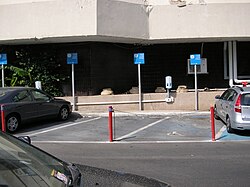
Infrastructure in Israel included over 1,000 functional charging spots, with further installations planned at hotels, shopping centers, and commercial areas.
Denmark: Integrating Wind Energy
In Denmark, Better Place partnered with DONG Energy in a €103 million investment. The goal was to use EV batteries as a storage solution for Denmark's abundant wind energy, which often produced excess power that had to be exported due to a lack of storage capacity.
The Renault Fluence Z.E. was sold for 205,000 DKK (approx. €27,496), with customers paying a monthly fee for the switchable battery based on their annual mileage. For those driving over 40,000 km per year, the fee was 2,995 DKK per month. By December 2012, 17 battery switch stations were operational, but only 234 units had been sold by April 2013. Better Place Danmark A/S entered bankruptcy proceedings on May 26, 2013.
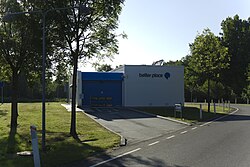
Australia and Hawaii
In Australia, Better Place planned a rollout of 500 stations across eastern coast cities, estimated to cost between $1 and $1.25 billion AUD. However, after installing fewer than 20 public spots, the rollout was halted in January 2013 to focus on Israel and Denmark. The company had also been named the preferred provider for Holden Volt home and dealership charging.
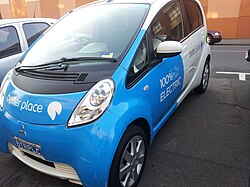
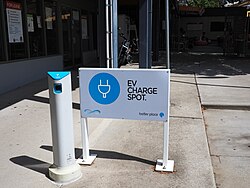
In Hawaii, the company deployed about 80 charging stations and 154 charge points across Oahu, Maui, Kauai, and the Big Island, serving nearly 700 customers. These operations were acquired by OpConnect in March 2013.
China: Utility Partnerships
Better Place pursued the Chinese market through agreements with the China Southern Power Grid Company and Chery Automobile. The goal was to explore how switchable batteries could benefit the electric grid across five provinces. However, the cost of infrastructure was a major barrier; while small charging stations cost less than 10 million yuan, a battery-swap station cost over 100 million yuan.
Customer Qualifications and Grid Integration
Better Place did not market to all drivers. They sought customers who could transition from range anxiety to range awareness. Ideal candidates were those with dedicated off-road parking at home and predictable commutes (up to 130 km each way). Drivers who frequently traveled irregular, long-distance routes were initially excluded.
Technologically, the stations were designed for smart grid interactivity. This allowed the network to automatically time-shift charging to off-peak hours. However, this approach was criticized by some as an attempt to monopolize battery charging, which potentially discouraged some buyers.
Market Summary Table
| Region | Key Partner | Primary Vehicle | Outcome |
|---|---|---|---|
| Israel | Government of Israel | Renault Fluence Z.E. | Bankruptcy (May 2013) |
| Denmark | DONG Energy | Renault Fluence Z.E. | Bankruptcy (May 2013) |
| Australia | Holden (Partnership) | Various / Holden Volt | Rollout halted (Jan 2013) |
| China | China Southern Power Grid | Chery Prototypes | Pilot projects/MOUs |
| Hawaii | N/A | N/A | Acquired by OpConnect |
Frequently Asked Questions
What was the primary purpose of battery swapping?
The primary purpose was to eliminate range anxiety by allowing drivers to replace a depleted battery with a fully charged one in about five minutes, rather than waiting for the vehicle to charge via a plug.
Why did Better Place partner with DONG Energy in Denmark?
The partnership aimed to use electric vehicle batteries to store excess wind-generated power, which Denmark produced in abundance but lacked the means to store for transportation use.
How much did a Renault Fluence Z.E. cost in Denmark?
The car was sold for 205,000 DKK (approximately €27,496 or US$38,378), including VAT, plus a monthly subscription fee for the battery service.
What were the infrastructure costs in China?
According to the State Grid smart grid research center, a battery-swap station cost more than 100 million yuan, significantly more than small-scale charging stations which cost less than 10 million yuan.
Who were the ideal customers for Better Place?
The ideal customers were those with dedicated home parking and predictable commuting patterns, typically avoiding those who frequently traveled irregular, long-distance routes.