Bethel University: A History of Growth and Resilience
From its humble beginnings as a seminary in the mid-19th century to its current status as a comprehensive university, Bethel University has a storied history defined by adaptation and expansion. Founded on a bedrock of faith and academic ambition, the institution has navigated the turmoil of war and the demands of modern growth to serve students in Tennessee.
Founding in McLemoresville
The institution began its journey in 1842 as Bethel Seminary in McLemoresville, Tennessee. By 1847, it was renamed Bethel College. The school operated under the oversight of the West Tennessee Synod of the Cumberland Presbyterian Church, an organization that managed 82 different schools throughout its history. To secure greater support from church leadership and compete with other institutions, the West Tennessee Synod established a Theology Department at the college in 1851.
The onset of the American Civil War in 1861 forced the school to close its doors. During the conflict, the campus buildings served as barracks for both American and Confederate armies. A notable event from this era involved a large refracting telescope—an instrument used to observe distant objects—which was captured by U.S. troops who mistook it for a brass cannon barrel. The telescope was eventually returned to the college and remains in its care today. Bethel College officially reopened in 1869.
The Move to McKenzie
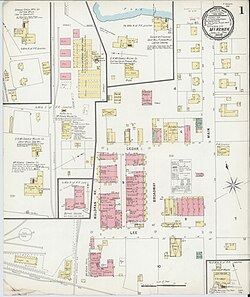
In 1872, President W.W. Hendrix spearheaded the relocation of the college from McLemoresville to McKenzie. This strategic move placed the school at the intersection of the Louisville & Nashville Railway and the Nashville, Chattanooga & St. Louis Railway, significantly improving accessibility. The college purchased land from local resident James M. McKenzie and constructed a 2.5 story brick building on the north side of town.
The 1920s marked a period of significant modernization. Supported by a $100,000 bequest from the estate of Iowa businessman John T. Laughlin, the Cumberland Presbyterian Church expanded the campus and its curriculum. Between 1924 and 1928, four new buildings were added, including a 2.5 story brick administration building designed by Missouri architect A. F. Lindsey.
The campus has also hosted notable figures over the years, including comedian Bob Hope, who appeared at the college in May 1975 to assist with a fundraiser.
Transition to Bethel University
In 2009, the institution officially changed its name to Bethel University. Leadership transitioned in 2013 when longtime President Robert Prosser retired; Walter Butler served as interim president starting August 1, 2013, before being officially named the 40th president on August 4, 2014.
To keep pace with rapidly increasing enrollment during the 2010s, the university embarked on an ambitious facility expansion. This included the construction of a new football stadium, a basketball arena, a student center, and three new dormitories. Existing structures, such as the library, the seminary, and the old cafeteria, underwent extensive renovations to meet modern academic needs.
Modern Campus Developments
The university's growth is highlighted by several key projects completed between 2010 and 2012:
- Ray and Linda Morris Science Complex: Dedicated on May 8, 2010, featuring a lecture hall, classrooms, and laboratories.
- University Hall: A residence hall dedicated in 2010 with a capacity for 250 students.
- Odom Hall and Heritage Hall: The math building (Odom Hall) reopened in June 2011, followed by the dedication of the three-story Heritage Hall in August 2011.
- Vera Low Center for Student Enrichment: Phase I was completed in August 2011, providing a bookstore, enrollment offices, student services, a cafeteria, and an activities room.
- Rosemary and Harry L. Crisp Arena: Opened in Spring 2012, this facility includes a fitness center, athletic training facilities, a gymnasium, and offices.
- Cumberland Chapel: This project was under construction as of May 2012.
Expanding beyond the main campus, Bethel University partnered with the Henry County Medical Center in November 2012 to open a satellite campus for its Physician Assistant Program, coinciding with the opening of the medical center's new Diagnostic Center.
Key Facts
- Founded: 1842 in McLemoresville, TN.
- Relocated: Moved to McKenzie, TN in 1872.
- Affiliation: Overseen by the West Tennessee Synod of the Cumberland Presbyterian Church.
- Name Change: Transitioned from Bethel College to Bethel University in 2009.
- Notable Asset: A refracting telescope captured as a "cannon" during the Civil War.
- Recent Expansion: Added the Ray and Linda Morris Science Complex and the Rosemary and Harry L. Crisp Arena.
| Year | Event | Significance |
|---|---|---|
| 1842 | Founding | Established as Bethel Seminary in McLemoresville. |
| 1861 | Closure | Closed due to the American Civil War. |
| 1872 | Relocation | Moved to McKenzie, TN for better railway access. |
| 1924-1928 | Campus Expansion | Four new buildings added via the Laughlin bequest. |
| 2009 | Renaming | Became Bethel University. |
| 2012 | Medical Expansion | Opened Physician Assistant Program satellite campus. |
Frequently Asked Questions
Why did Bethel College move to McKenzie in 1872?
President W.W. Hendrix led the move to McKenzie because it was a strategic transportation hub where the Nashville, Chattanooga & St. Louis Railway intersected with the Louisville & Nashville Railway.
What happened to the school during the American Civil War?
The school closed in 1861, and its buildings were utilized as barracks by both Confederate and American armies until it reopened in 1869.
Who is the 40th president of Bethel University?
Walter Butler was officially announced as the 40th president on August 4, 2014, after serving in an interim capacity since August 1, 2013.
What is the Vera Low Center for Student Enrichment?
It is a multi-phase development; Phase I, completed in August 2011, houses the university bookstore, enrollment and student services offices, a cafeteria, and a student activities room.
How did the university expand its medical education offerings?
In November 2012, the university opened a satellite campus for its Physician Assistant Program in conjunction with the Henry County Medical Center's new Diagnostic Center.