Drew University: A History of Academic Evolution and Excellence
From its origins as a specialized theological seminary to its current status as a comprehensive university, Drew University has spent over a century expanding its intellectual horizons. Founded on a vision of combining professional ministry training with a broad foundation in the humanities, the institution has evolved through strategic philanthropy and a commitment to academic innovation.
The 19th Century: Foundations in Theology
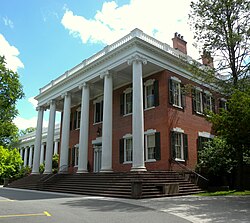
The university's journey began in 1866 when Daniel Drew, a railroad tycoon known as a "robber baron," offered to build and endow a theological seminary near New York City. Drew requested that his pastor, John McClintock, serve as the first president. Instruction officially commenced in 1867, marking the start of what is now the third-oldest of 13 Methodist seminaries affiliated with the United Methodist Church.
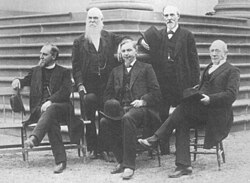
Under the leadership of McClintock, the seminary provided candidates for the ministry with professional training augmented by the study of the humanities. This approach attracted a distinguished faculty that left a lasting mark on biblical scholarship. Notably, Professor James Strong collaborated with McClintock on the ten-volume Cyclopaedia of Biblical, Theological, and Ecclesiastical Literature (1867–1881) and authored Strong's Exhaustive Concordance of the Bible (1890). The seminary's influence extended globally, as writings on early church theology were translated into Chinese for foreign missions.
The 20th Century: Expansion and Diversification
As the 20th century progressed, the institution expanded its scope beyond traditional ministry. In 1920, it established a "College of Missions" to provide a course of study for women, which was later renamed the "College of Religious Education and Missions" in 1929.
The Birth of Brothers College
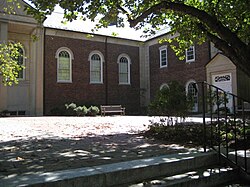
A pivotal shift occurred in 1928 when brothers Arthur J. Baldwin and Leonard D. Baldwin, successful attorneys with diverse business interests, donated $1.5 million to establish an undergraduate liberal arts college. The gift included $500,000 for construction and $1 million in Great Atlantic & Pacific Tea Company (A&P) stock, which was later converted to cash.
In honor of their sibling bond, the new institution was named Brothers College. To reflect this growth, the theological seminary was renamed Drew University. Brothers College opened in 1928 with 12 students and eventually became coeducational in 1942 to maintain enrollment during the military draft of World War II. During this era, the university also participated in the V-12 Navy College Training Program, helping students earn naval officer commissions.
Graduate Studies and Modernization
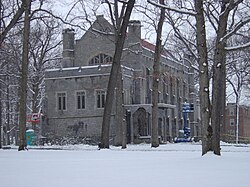
Graduate-level education began at Drew in 1912, culminating in the formal establishment of the Graduate School in 1955 under President Fred Holloway. Holloway oversaw significant campus renovations, including the construction of several dormitories and the Baldwin Gymnasium. In 1999, the school was renamed the Caspersen School of Graduate Studies following a $5 million pledge from financier Finn M. W. Caspersen and his wife, Barbara Morris Caspersen.
Drew also pioneered several academic initiatives. In the 1970s, with support from the Mellon Foundation, the university launched a freshman seminar program. In 1984, it became the first liberal arts college to require all incoming freshmen to have a personal computer and application software through the "Computer Initiative," a program that lasted until 2012.
The 21st Century: Leadership and Adaptation
The university entered the modern era under the leadership of Thomas Kean, the 48th governor of New Jersey, who served as president from 1990 to 2005. Subsequent leadership under Robert Weisbuch saw the university experiment with SAT-optional admissions, a policy that fluctuated between 2006 and 2015.
Recent years have been marked by both academic prestige and administrative shifts. In 2015, research fellow William Campbell shared the Nobel Prize in Physiology or Medicine for his work on drugs treating parasitic diseases. To increase accessibility, the university reduced its list-price tuition by 20% for the 2018–19 school year.
Following the tenure of MaryAnn Baenninger and interim president Thomas J. Schwarz, Hilary L. Link was appointed as the 15th president on February 8, 2023. Most recently, on January 12, 2026, the university announced the sale of Drew Forest, Zuck Arboretum, and Madison House to the Borough of Madison, while reserving other lands along Madison Avenue for private development.
Key Facts
- Founded: 1867 as a Methodist theological seminary.
- Founding Benefactor: Daniel Drew.
- Academic Evolution: Transitioned from a seminary to a university with the 1928 founding of Brothers College.
- Notable Achievement: First liberal arts college to implement a mandatory computer initiative for freshmen (1984).
- Nobel Recognition: Research fellow William Campbell won the Nobel Prize in Physiology or Medicine in 2015.
- Current President: Hilary L. Link (appointed 2023).
| Year | Event | Significance |
|---|---|---|
| 1867 | Opening of the Seminary | Established Methodist theological training. |
| 1928 | Founding of Brothers College | Expanded into undergraduate liberal arts. |
| 1942 | Coeducational Transition | Opened undergraduate admissions to women. |
| 1955 | Graduate School Established | Formalized advanced degree-granting entities. |
| 1999 | Caspersen School Renaming | Major endowment for graduate studies. |
| 2018 | Tuition Reduction | 20% cut to list price for accessibility. |
Frequently Asked Questions
Who founded Drew University?
The institution was founded by Daniel Drew, a railroad businessman, who provided the funding to establish a Methodist theological seminary in 1867.
What was Brothers College?
Brothers College was the undergraduate liberal arts college established in 1928 through a $1.5 million gift from Arthur J. and Leonard D. Baldwin. It was later renamed the College of Liberal Arts.
When did Drew University become coeducational?
Brothers College became coeducational in 1942, a decision driven by the need to maintain the student body during the military draft of World War II.
What is the Caspersen School of Graduate Studies?
It is the graduate division of Drew University, renamed in 1999 following a $5 million pledge from Finn M. W. Caspersen and Barbara Morris Caspersen.
Has a Drew University affiliate won a Nobel Prize?
Yes, research fellow William Campbell shared the Nobel Prize in Physiology or Medicine in 2015 for his contributions to treating parasitic diseases.