Bermuda Women's History: From Colonial Servitude to Political Power
The history of women in Bermuda is a narrative of resilience, adaptation, and a gradual shift in social dynamics. From the early days of English colonization in the 17th century to the achievement of suffrage in the 20th century, the role of women has been uniquely shaped by the archipelago's geography and its maritime economy.
The Early Colonial Era
Bermuda's permanent English settlement began following the 1609 wreck of the Sea Venture. While women were among the initial passengers, by 1610, only three men remained on the islands. It wasn't until 1612 that the Virginia Company sent sixty settlers, including women, aboard the ship Plough to establish a more stable community. By 1615, administration shifted to the Company of the City of London for the Plantacion of The Somers Isles, known as the Somers Isles Company.
During these early decades, the population was bolstered through indentured servitude—a system where individuals exchanged several years of labor for transport costs. Because early settlers were predominantly men, female convicts were often shipped to Bermuda and sold to local men to provide brides. Additionally, native Irish women and Native American prisoners were forcibly exported to the colony and sold into servitude during the mid-17th century.
While slavery was less central than in other colonies, enslaved Africans and people of African ancestry arrived via privateers, shipwrecks, or as colored indentured servants from former Spanish territories.
Maritime Economy and the Rise of Matriarchy
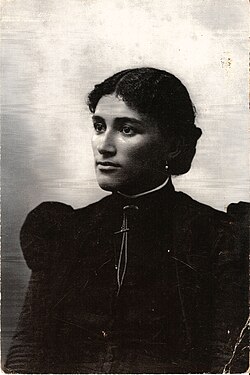
In 1684, the Crown took over direct administration after the Somers Isles Company lost its Royal Charter. This transition allowed Bermuda to pivot toward a maritime economy centered on shipbuilding and seafaring. This economic shift had a profound impact on gender roles.
Because men spent months at sea, women were left to manage households and financial affairs. This necessity fostered a level of competence and independence uncommon in other British colonies. Furthermore, the high rate of men lost at sea created a significant population of young widows. Many chose not to remarry to avoid losing control of their estates and property to another husband.
This dynamic led to a societal perception of Bermuda as a matriarchal society—one where women hold significant power or influence—contrasting with the more patriarchal structures of Britain, Canada, or the British West Indies.
Life and Hardship: Perspectives from the 19th Century
Despite the domestic influence of women, legal constraints remained. Under English law, women had no political representation, and their property typically transferred to their husbands upon marriage. The lived experience of women also varied wildly by social status.
Mary Prince, born into slavery in Bermuda, documented the brutality faced by enslaved and free women in her 1831 memoir, The History of Mary Prince. She recounted instances of domestic violence and the indignities forced upon her by her master, highlighting a dark contrast to the "polite society" maintained in public view.
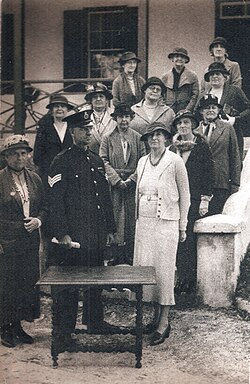
Conversely, visitors like Purser Richard Cotter (1828) and Susette Harriet Lloyd (1835) observed a different side of Bermudian womanhood. Cotter noted the "mild and gentle demeanour" of the women and the high proportion of females in the population. Lloyd observed that young ladies often attended boys' schools, with some even studying Greek and Latin, though she advocated for the establishment of ladies' seminaries to further their intellectual growth.
Lloyd also highlighted the complexities of freedom and marriage among the colored population, noting the tragedy of free women married to enslaved men, and the injustice of husbands who refused to purchase their wives' manumission (legal freedom) even after gaining their own.
The Path to Suffrage and Political Equality
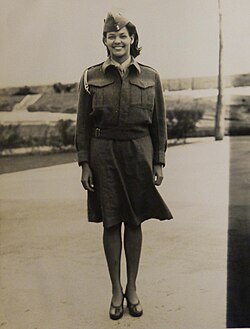
As Bermuda continued to evolve, immigration from the Portuguese Atlantic islands and the British Isles brought new cultural perspectives, sometimes clashing with the existing Bermudian social order. The push for formal political rights culminated in 1923 with the founding of the Bermuda Women's Suffrage Society.
After decades of advocacy, women in Bermuda were finally granted the right to vote in 1944. This trajectory toward equality eventually paved the way for women to reach the highest levels of government, including the office of Premier.
Key Facts
- Early Settlement: Women arrived in significant numbers in 1612 aboard the Plough.
- Economic Influence: The maritime industry forced women to manage finances and homes, contributing to a matriarchal social structure.
- Abolition: Bermuda was the first British colony to end slavery immediately upon the 1834 Imperial mandate.
- Education: In the early 19th century, some girls attended grammar schools and studied classical languages like Latin and Greek.
- Suffrage: The Bermuda Women's Suffrage Society was formed in 1923; voting rights were won in 1944.
| Period/Event | Key Characteristic | Impact on Women |
|---|---|---|
| 1612 - 1684 | Company Rule (Somers Isles Co.) | Arrival of female convicts and indentured servants. |
| 18th Century | Maritime Economy | Increased financial independence and domestic management. |
| 1834 | Immediate Abolition | End of legal slavery; complex transitions for free/enslaved couples. |
| 1923 - 1944 | Suffrage Movement | Transition from no representation to full voting rights. |
Frequently Asked Questions
Why is Bermudian society often described as matriarchal?
Because the economy relied heavily on seafaring, men were frequently absent for months. This left women in charge of the home and financial affairs, granting them a level of authority and independence that differed from other colonial societies.
How did women arrive in Bermuda during the early colonial period?
Women arrived as official settlers (such as those on the Plough in 1612), as indentured servants exchanging labor for passage, or as female convicts sold to local men.
When did women in Bermuda gain the right to vote?
Women were granted suffrage in 1944, following the efforts of the Bermuda Women's Suffrage Society, which was established in 1923.
What was the educational status of women in the early 19th century?
Some girls attended boys' grammar schools, where a minority learned to construe Greek and Latin, though there was a contemporary push to establish dedicated ladies' seminaries.
How did Bermuda's abolition of slavery differ from other British colonies?
Bermuda elected to end slavery immediately in 1834, whereas most other British colonies (with the exception of Antigua) used a government allowance to phase out slavery gradually.