Bermuda's Agricultural History and Economic Evolution
Long before it became a global hub for finance and tourism, Bermuda's economy was rooted in the soil. From the 1800s until the mid-20th century, the island served as a vital source of early-season produce for the North American market, leveraging its unique climate to provide vegetables and flowers to New York when they were unavailable elsewhere.
The Golden Age of Early-Season Exports
Starting in the 19th century, Bermuda established a thriving industry exporting early vegetables and flowers by sea. The island's productivity was remarkable, yielding three crops per year. To support this growth, the Bermuda Botanic Gardens, which now spans 38 acres, was established in 1898 to foster botanical research and cultivation.
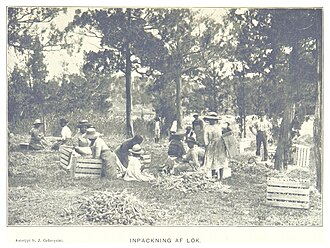
By the early 1920s, the government began formalizing the industry to ensure quality and sustainability. In 1922, comprehensive agricultural acts were added to the statute book, introducing produce inspections and seed testing. This era saw the registration of local seedsmen in 1923 and the launch of a local farmers' market that same year. Under the leadership of Agricultural Director Mr. McCallan, the Agricultural Exhibition was reorganized to better showcase the island's output.
Combating Crop Disease
Agricultural success was often threatened by pests and pathogens. Between 1921 and 1923, Professor H.H. Whetzel of Cornell University provided critical guidance on treating various cash crop diseases, including potato blight, onion thrips, celery leaf spot, lily Botritis, and melon mildew. Professor Whetzel emphasized the need for a dedicated plant pathologist to protect the colony's primary economic driver.
The Impact of Lawrence Ogilvie
In September 1923, the government appointed Lawrence Ogilvie, a specialist from Scotland, as its plant pathologist. Ogilvie's tenure, which lasted until April 1928, marked a turning point for Bermudian agriculture. He implemented strict regulations in 1924 to control local pests and manage the import of plants to prevent the introduction of foreign diseases.
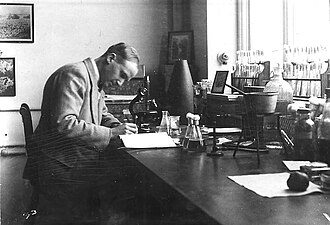
To safeguard the island, Ogilvie established import embargoes on several items, including banana plants, lily bulbs, sweet potatoes, and citrus fruits from the West Indies. He also oversaw the construction of a concrete fumigation chamber in 1924 to treat infected imports. While celery crops flourished during the 1920s, citrus cultivation struggled due to the Mediterranean fruit fly, not seeing significant development until 1944.
Saving the Easter-Lily Industry
One of Ogilvie's most significant achievements involved the Easter-lily. These high-value bulbs, exported to New York and the Isle of Man, had been plagued by disease since the late 19th century. While many believed the damage was caused by aphids, Ogilvie identified the true culprit as a virus. By instituting rigorous controls in packing houses and fields, he saved the industry.
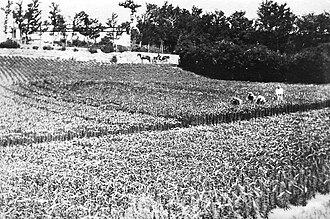
The results were staggering: lily bulb exports grew from just 23 cases in 1918 to 6,043 cases by 1927, produced across 204 lily fields. This success earned the young pathologist professional recognition in the scientific journal Nature. The trade remained prosperous until the 1940s, when Japanese competition captured much of the market.
Key Facts
- Primary Early Industry: Export of early-season vegetables and flowers to New York.
- Agricultural Peak: The lily industry grew from 23 cases (1918) to 6,043 cases (1927).
- Scientific Breakthrough: Lawrence Ogilvie identified that a virus, not aphids, was destroying Easter-lily bulbs.
- Infrastructure: A concrete fumigation chamber was built in 1924 to protect against imported pests.
- Modern Economy: Now dominated by international business (re-insurance) and tourism.
Economic Transition After World War II
Following World War II, Bermuda transitioned from an agrarian economy to one based on services. While the island has seen steady prosperity, it has mirrored the economic cycles of the United States, experiencing recessions in the early 1990s and 2001–02. The 1990s contraction was particularly notable, leading to a population decrease of 2,000 people as work permits for long-term residents were not renewed.
Today, the economy relies on international business and tourism, which together account for over 70% of foreign exchange receipts. Notably, the international business sector—specifically re-insurance (insurance for insurance companies)—has expanded to become a world center, while the relative role of tourism has contracted.
| Era | Primary Economic Driver | Key Products/Services |
|---|---|---|
| 1800s – 1940s | Agricultural Exports | Easter-lilies, onions, celery, potatoes |
| Post-WWII – Present | International Business & Tourism | Re-insurance, travel and hospitality |
Frequently Asked Questions
What was the main agricultural export of Bermuda before WWII?
Bermuda primarily exported early-season vegetables and flowers to New York, with Easter-lily bulbs being among the most financially vital and high-value exports.
Who was Lawrence Ogilvie and why was he important?
Lawrence Ogilvie was the government's plant pathologist from 1923 to 1928. He is credited with saving the Easter-lily industry by correctly identifying a virus as the cause of crop disease and implementing strict import and field controls.
How did the economy of Bermuda change after World War II?
The economy shifted from a reliance on agricultural exports to a focus on international business and tourism. International business, particularly re-insurance, has since become a dominant global center.
What caused the decline of the lily export trade?
While the industry flourished after the 1920s, it eventually declined in the 1940s when Japanese producers captured a significant portion of the market.
What role did the Bermuda Botanic Gardens play?
Established in 1898 and now covering 38 acres, the gardens supported the island's agricultural industry through botanical research and cultivation.