Bergmann's Rule: How Climate Shapes Animal Body Size
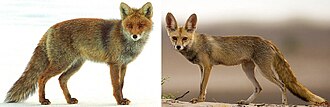
In the natural world, size is rarely accidental. From the massive polar bears of the Arctic to the smaller mammals of the tropics, there is a recurring pattern in how animals are built relative to their environment. This phenomenon is known as Bergmann's rule, an ecogeographical principle stating that within a broadly distributed taxonomic clade, populations and species of larger size are typically found in colder environments, while smaller species and populations inhabit warmer regions.
First described in 1847 by German biologist Carl Bergmann, this rule focuses on overall body size—specifically linear dimensions like height and volume. It is important to distinguish this from Allen's rule, which focuses on the proportions of specific body parts, such as limb length.
![Bergmann's rule - Penguins on the Earth (mass m, height h)[1]](/images/9e/2b/9e2b24f2ff68d96a00e1b81440701117a8c6015f5cd267a45ee8d293abfa77b5.png)
Key Facts
- Core Principle: Body mass generally increases as climates become colder.
- Primary Mechanism: Larger animals have a lower surface area-to-volume ratio, which reduces heat loss.
- Primary Subjects: Most commonly observed in endotherms (animals that regulate their own body temperature), such as birds and mammals.
- Scope: Applies to species within a genus, populations within a species, and often correlates with latitude.
- Exceptions: Not universal; some ectotherms, plants, and specific fossil records contradict the rule.
The Science of Heat Retention
The fundamental explanation for Bergmann's rule lies in geometry and thermodynamics. Larger animals possess a lower surface area-to-volume ratio than smaller animals. Because heat is lost through the skin (the surface), a larger body radiates less heat per unit of mass, allowing the animal to maintain a stable internal temperature in freezing climates.
Conversely, in hot and dry climates, a higher surface area-to-volume ratio is an advantage. Smaller animals can dissipate metabolic heat more quickly through their skin, preventing overheating. For example, modeling a human trunk and limbs as cylinders reveals that increasing height from 1.5 meters (5 ft) to 1.8 meters (6 ft) results in a 17% decrease in the surface area-to-volume ratio, even if the Body Mass Index (BMI) remains the same.
![Bergmann's rule is an ecologic principle stating that body mass increases with colder climate. Data illustrating such a relationship are shown for Eurasian elk in Sweden.[15]](/images/1d/d3/1dd3c737db1c543edd5ccd31de9c759418dabc28c5a5a284a110759d78aff2d6.webp)
Bergmann's Rule Across Different Species
Humans
Human populations near the poles, such as the Inuit, Aleut, and Sami, are on average heavier than those from mid-latitudes. While Marshall T. Newman noted in 1953 that the rule generally holds for Eurasia, he found it did not apply to sub-Saharan Africa. Additionally, some groups like the Eastern Inuit and Andes natives exhibit a combination of cold climates and small body sizes that run contrary to the rule.
Birds
Recent data suggest that Bergmann's rule may be playing out in real-time due to global warming. A 2019 study of migratory birds in Chicago (1978–2016) found that lower leg bones shortened by an average of 2.4%. Similarly, a 2021 study of 77 nonmigratory bird species in the Amazon rainforest showed that species have shrunk by up to 2% per decade between 1979 and 2019.
Other Organisms
- Reptiles: The rule is vaguely followed by female crocodilians, but evidence does not support its validity for lizards or turtles.
- Invertebrates: Evidence of the rule has been documented in marine copepods.
- Plants: Some evidence suggests the rule may apply to certain plants, such as Rapicactus.
Temporal Shifts and Evolutionary Changes
Bergmann's rule is not just a spatial pattern; it also appears over evolutionary time. During the Paleogene, specifically the Paleocene-Eocene thermal maximum and the Eocene Thermal Maximum 2, mammals experienced temporary, reversible dwarfing during brief temperature spikes.
However, modern researchers caution that these size shifts may be influenced by demographic effects. A shift in the age structure of a population—such as having more young (smaller) individuals—can mimic the effects of climate-driven size reduction.
Critiques and Alternative Theories
Not all scientists agree that temperature is the primary driver of body size. In 1986, Valerius Geist argued that the correlation with temperature is spurious. He proposed that body size is actually proportional to food availability and the duration of the annual productivity pulse during the growing season.
Other contradictions appear in the fossil record. During the Pleistocene, European hippopotamuses became smaller during colder, drier intervals. Furthermore, a 2024 study on dinosaurs found that their size did not increase at northern Arctic latitudes, suggesting the rule may only apply to a subset of homeothermic animals.
Related Concepts: Hesse's Rule
In 1937, Richard Hesse proposed an extension known as Hesse's rule (or the heart-weight rule). This principle suggests that species in colder climates possess a larger heart in relation to their total body weight compared to closely related species in warmer climates.
| Rule/Theory | Key Focus | Main Prediction | Primary Driver |
|---|---|---|---|
| Bergmann's Rule | Overall Body Mass | Larger size in cold climates | Surface area-to-volume ratio |
| Allen's Rule | Body Proportions | Shorter limbs in cold climates | Heat dissipation |
| Hesse's Rule | Organ Size (Heart) | Larger heart relative to weight in cold | Metabolic demand/Climate |
| Geist's Theory | Resource Availability | Size based on food productivity | Nutritional availability |
Frequently Asked Questions
What is the main difference between Bergmann's rule and Allen's rule?
Bergmann's rule describes the overall size and mass of an animal, whereas Allen's rule describes the proportions of specific appendages, such as the length of ears or limbs.
Does Bergmann's rule apply to all animals?
No. While it is most common in endotherms like birds and mammals, it is not universal. It is not supported for turtles or lizards, and some fossil evidence, such as that of Pleistocene hippopotamuses and certain dinosaurs, contradicts the rule.
How does global warming affect Bergmann's rule?
Recent studies indicate that some bird species are becoming smaller as temperatures rise, which serves as a modern example of evolutionary change following the logic of Bergmann's rule.
Why do larger animals stay warmer in the cold?
Larger animals have a smaller surface area relative to their total volume. This means they have less skin surface through which to lose body heat compared to the amount of heat-generating mass they possess.
What is the "heart-weight rule"?
Also known as Hesse's rule, it states that species living in colder environments tend to have larger hearts relative to their body weight than their relatives in warmer climates.