Ecotypes: How Environmental Adaptation Shapes Biological Diversity
In the complex tapestry of life, organisms within a single species often exhibit striking differences. These variations are not merely random; they are frequently the result of ecotypes—populations that have developed specific physical or behavioral traits to thrive in particular environments. Often referred to as ecospecies, ecotypes represent a fascinating middle ground in the evolutionary process, where environmental factors like climate, elevation, and predation drive distinct biological responses.
By studying ecotypes, biologists can observe how life adapts to the nuances of its surroundings, providing a window into the mechanisms that eventually lead to the formation of entirely new species.
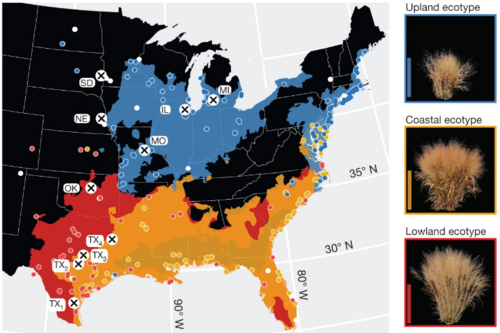
Key Facts
- Definition: An ecotype is a genetically distinct variety or population within a species that is adapted to specific environmental conditions.
- Drivers of Change: Key factors influencing ecotype development include climate, elevation, and predation.
- Evolutionary Role: Over time, the divergence of ecotypes can lead to speciation (the creation of new species).
- Phenotypic Variation: Ecotypes possess different physical or behavioral features (phenotypes) despite belonging to the same species.
The Science of Adaptation and Speciation
In the field of evolutionary ecology, an ecotype describes a population that is genotypically adapted to its local habitat. This means that the differences observed are not just temporary changes in appearance, but are rooted in the organism's genetic makeup. These adaptations allow the population to survive more effectively in its specific niche.
The relationship between ecotypes and speciation is a central topic in biology. As populations become increasingly specialized to their unique environments—such as a specific mountain range or a particular river system—they may become so distinct that they can no longer interbreed with other populations of the same species. This process marks the transition from a single species with multiple varieties to the emergence of entirely separate biological entities.
Real-World Examples of Ecotypes
Mammals: Reindeer and Caribou
One of the most prominent examples of ecotypic variation can be found in reindeer (Rangifer tarandus). There are two primary ecotypes: tundra reindeer and woodland reindeer. Tundra reindeer are known for their massive annual migrations, sometimes traveling up to 5,000 km between environments. In contrast, woodland reindeer are fewer in number and tend to remain within forest habitats during the summer.
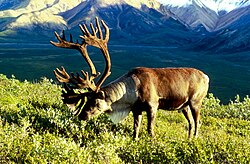
In North America, the species is locally known as caribou. Following the work of Banfield in 1961, caribou are classified into several subspecies and further subdivided into ecotypes based on habitat use, spacing, and migration patterns. For instance, the subspecies Rangifer tarandus caribou includes various ecotypes such as boreal woodland, mountain woodland, and migratory woodland caribou.
Plants: From Scots Pine to Alpine Herbs
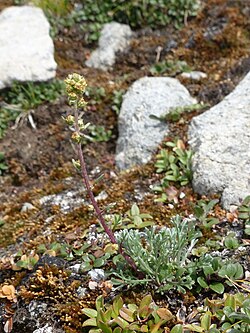
Plants frequently demonstrate ecotypic variation due to their stationary nature. The Scots pine (Pinus sylvestris) exhibits 20 different ecotypes across a vast range stretching from Scotland to Siberia, all of which remain capable of interbreeding. Similarly, the herb Arabis fecunda, found in Montana, exists in two distinct ecotypes separated by only 100 km. The "low elevation" group lives in arid, warm environments and has developed a much higher tolerance for drought than its "high elevation" counterparts.
Marine Life: Dolphins and Beyond
Marine environments also host distinct ecotypes. The Tucuxi dolphin is recognized as having both riverine ecotypes in South American rivers and pelagic ecotypes in the South Atlantic Ocean. Interestingly, the line between ecotype and species can shift as scientific understanding evolves. In 2022, research on the common bottlenose dolphin (Tursiops truncatus) led scientists to reclassify a previously recognized ecotype as a separate species, Tursiops erebennus.
Summary of Ecotype Characteristics
| Organism Group | Environmental Driver | Key Adaptive Trait |
|---|---|---|
| Reindeer | Habitat (Tundra vs. Forest) | Migration patterns and spacing |
| Arabis fecunda | Elevation and Aridity | Drought tolerance |
| Tucuxi Dolphin | Salinity/Habitat (River vs. Ocean) | Geographic distribution |
| Scots Pine | Climate/Geography | Regional survival capability |
Frequently Asked Questions
What is the difference between an ecotype and a species?
An ecotype is a population within a species that has adapted to a specific environment but can still typically interbreed with other populations of that species. A species is a broader classification; when ecotypes become so different that they can no longer interbreed, they may be reclassified as separate species.
Can an ecotype change quickly?
Ecotypes develop as a result of environmental pressures acting on a population over time. While the exact speed varies, these adaptations are genetically rooted to ensure the population's survival in its specific niche.
Are all ecotypes capable of interbreeding?
Generally, yes. For example, the 20 different ecotypes of the Scots pine are all capable of interbreeding. However, if the genetic divergence becomes too great, it can lead to reproductive isolation, which is the precursor to speciation.
How do scientists identify an ecotype?
Scientists use various methods, including observing phenotypic features (physical traits), analyzing behavioral patterns (such as migration), and studying genetic and morphometric data to determine if a population is uniquely adapted to its environment.
What role does geography play in ecotype formation?
Geography is a primary driver. Physical barriers or vast distances between habitats—such as different elevations or different water bodies—can isolate populations, allowing them to adapt to their local conditions independently.