Self-Pollination in Plants: Mechanisms, Advantages, and Evolutionary Trade-offs
In the diverse world of botany, plants have evolved a variety of strategies to ensure the survival of their species. One of the most critical processes is pollination—the transfer of pollen to the female reproductive organs to facilitate fertilization. While many people associate pollination with bees and butterflies, many plants rely on self-pollination, a process where pollen arrives at the stigma of a flower (in flowering plants) or the ovule (in gymnosperms) of the same plant.
This strategy stands in contrast to cross-pollination, where pollen is transferred from one plant to a completely different individual. While cross-pollination promotes genetic diversity, self-pollination offers a reliable reproductive safety net, especially in harsh or isolated environments.
Key Facts
- Autogamy occurs when pollen is transferred within the same flower.
- Geitonogamy occurs when pollen moves between different flowers on the same plant.
- Approximately 80% of flowering plants are hermaphroditic, meaning they possess both male and female organs in one flower.
- Self-pollinating plants can thrive in pollinator-scarce regions like the Arctic or high-altitude elevations.
- About 42% of flowering plants utilize a mixed mating system, combining selfing and outcrossing.
Types of Self-Pollination
Self-pollination is not a single process but is categorized based on where the pollen originates and where it lands. The two primary types are:
- Autogamy: The simplest form of self-pollination, where pollen is transferred to the stigma of the same flower. Some plants ensure this through cleistogamy, where flowers never open, forcing self-fertilization.
- Geitonogamy: This occurs when pollen is transferred from the anther of one flower to the stigma of another flower on the same plant. In monoecious gymnosperms (plants with separate male and female cones on one plant), this happens when pollen moves from the microsporangium to the ovule.
The broader term selfing is often used as a synonym, though it technically encompasses all forms of self-fertilization beyond just pollination.
The Mechanics of Self-Pollination
While some plants rely on wind or insects to move pollen within the same plant, others have evolved automatic mechanisms. For example, in soybeans, flowers remain open for insect cross-pollination during the day but self-pollinate as they close if no insect has visited.
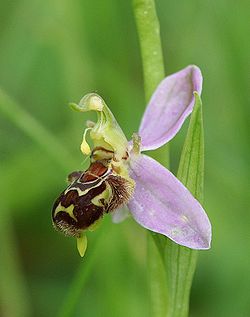
Other species have developed specialized physical movements. Some orchids have stamens that physically move to contact the stigma, while others have flowers that shed pollen directly onto the stigma before the bud even opens.
Comparison of Pollination Methods
| Feature | Self-Pollination | Cross-Pollination |
|---|---|---|
| Pollen Source | Same plant | Different plant |
| Pollinator Dependency | Low to None | High (Wind, Insects, Birds) |
| Genetic Variation | Limited | High |
| Energy Expenditure | Low (no need for nectar/scent) | High (attractants required) |
| Pollen Wastage | Minimal | Significant |
Advantages and Disadvantages
The Benefits of Selfing
Self-pollination provides a significant evolutionary advantage in unstable environments. Because these plants do not depend on external carriers, they can reproduce even when bees or wind are absent. This allows species to spread into areas where pollinators are scarce, such as high elevations.
Additionally, if a plant possesses a genotype perfectly suited for its environment, self-pollination ensures these traits remain stable and pure across generations. Because they don't need to attract pollinators, these plants save energy by not producing colorful petals, scents, or nectar.
The Risks of Inbreeding
The primary drawback is a lack of genetic variation. This makes the population less adaptable to changing environments or new pathogen attacks. Furthermore, self-pollination can lead to inbreeding depression, where the expression of harmful recessive mutations reduces the overall health and vigor of the species.
Case Studies in Plant Evolution
The transition from outcrossing to self-fertilization is a common evolutionary path. Roughly 10-15% of flowering plants are predominantly self-fertilizing.
- Orchids: The Holcoglossum amesianum turns its anther 360° against gravity to insert pollen into its own stigma, an adaptation to windless, drought-prone areas. In Paphiopedilum parishii, the anther liquefies to contact the stigma directly.
- Caulokaempferia coenobialis: This Chinese herb uses an oily emulsion to slide pollen sideways along the style into the stigma, helping it survive in shady, humid habitats with few pollinators.
- Arabidopsis thaliana: A predominantly self-pollinating plant with an out-crossing rate of less than 0.3%, a trait evolved over a million years.
- Tomato: These plants utilize modified floral structures to create a stigma that encloses the floral structure, promoting automatic self-pollination.
- Capsella rubella: This species became self-compatible between 50,000 and 100,000 years ago, evolving from the out-crossing Capsella grandiflora.
The Role of Meiosis in Self-Pollinating Plants
Since self-pollination produces little genetic variation, scientists have questioned why these plants still undergo meiosis (a specialized cell division that reduces chromosome number) rather than simpler asexual reproduction. The prevailing theory is that meiosis allows for the efficient recombinational repair of DNA damage, providing a critical benefit to the plant's health in every generation.
Frequently Asked Questions
What is the difference between autogamy and geitonogamy?
Autogamy is the transfer of pollen within a single flower, while geitonogamy is the transfer of pollen between different flowers on the same individual plant.
Why do some plants prefer self-pollination over cross-pollination?
Self-pollination is advantageous in environments where pollinators are scarce or unreliable. It also ensures that successful genetic traits are preserved without being diluted by outside genetic material.
What is inbreeding depression?
Inbreeding depression is the reduced biological fitness or health of a species caused by the breeding of closely related individuals, which often leads to the expression of harmful recessive mutations.
What is cleistogamy?
Cleistogamy is a mechanism where flowers do not open, ensuring that pollination occurs exclusively within the closed bud (automatic self-pollination).
Can a plant do both self-pollination and cross-pollination?
Yes. About 42% of flowering plants have a mixed mating system. Some, like dandelions, are capable of both, while others produce two types of flowers: open flowers for outcrossing and closed flowers for obligate self-pollination (dimorphic cleistogamy).