Benito Quinquela Martín: The Master Painter of La Boca
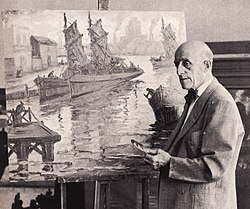
Benito Quinquela Martín was a towering figure in Argentine art, celebrated as the definitive painter of the port. His work is synonymous with the vigor, roughness, and daily activity of La Boca, the colorful waterfront district of Buenos Aires. Through his vivid canvases, he captured the industrial spirit and the human struggle of the docks, elevating the local scenery to international acclaim.
Key Facts
- Born: March 1, 1890 (estimated), La Boca, Buenos Aires.
- Died: January 28, 1977, Buenos Aires.
- Specialization: Port scenes and industrial landscapes.
- Global Reach: Exhibited in Brazil, Spain, France, USA, Italy, and the UK.
- Legacy: Founded schools and hospitals in La Boca and donated his home as a museum.
Early Life and Artistic Foundations
The beginnings of Quinquela Martín's life were marked by mystery. He was abandoned at an orphanage on March 20, 1890, with a note identifying him as Benito Juan Martín. Based on his appearance, nuns estimated he was twenty days old, leading to the accepted birthday of March 1. At age seven, he was adopted by Manuel and Justina Molina de Chinchella, eventually adopting his stepfather's surname, which was later hispanized to Quinquela.
His journey into art began at age 14, when he attended a modest night school in La Boca while spending his days working in the family coal-yard. This early exposure to the grit of the port would later define his artistic vision. At 17, he furthered his formal education at the Pezzini Stiattesi Conservatory, where he studied until 1912.
Rise to International Fame
Quinquela Martín began exhibiting locally in La Boca around 1910. His ascent was rapid; by 1920, he won second prize at the Salón Nacional (National Exhibition). That same year, he represented Argentina at an exhibition in Rio de Janeiro, Brazil, which was attended by President Epitacio Pessoa.
The 1920s marked a period of significant diplomatic and artistic expansion. A friendship with President Marcelo T. de Alvear opened doors to Europe. In 1922, Quinquela served as the chancellor of the Argentine Madrid Consulate. During his time in Spain, the Círculo de Bellas Artes and the Museum of Modern Art of Madrid acquired several of his works, including Buque en reparación and Efecto de Sol.
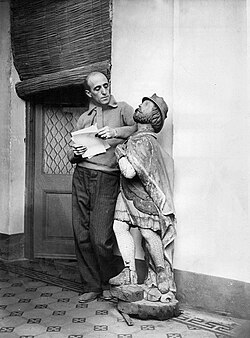
His travels continued to France in 1925, where the Musée du Luxembourg acquired his piece Tormenta en el astillero. In 1928, he arrived in New York City aboard the SS American Legion. Fluent in Spanish, Italian, and French, he exhibited at the Anderson Galleries, leading to the acquisition of two paintings by a Mr. Havemeyer for the Metropolitan Museum of New York. His global tour concluded with exhibitions in Havana, Rome—where Benito Mussolini selected several paintings for the Museum of Modern Art of Rome—and London, where his work was acquired by institutions such as the Museum of Arts of London and St. James's Palace.
Artistic Evolution and Style
Quinquela Martín was a prolific artist whose style shifted across different eras. His early works (pre-1925) are characterized as less refined than the pieces produced after his international travels. The 1930s and 1940s are widely considered his peak period, producing his most masterful port paintings.
In his final years, his style evolved once more toward simplified imagery and a more muted color palette, reflecting a different stage of his artistic maturity.
Philanthropy and Final Years
Beyond the canvas, Quinquela Martín was a dedicated philanthropist. He invested heavily in the community of La Boca, donating land and funds to establish a school, a Children's Dental Hospital, and a facility for breastfeeding orphaned children. He also ensured his own home would serve as a museum for the public.
In 1974, at age 84, he married his longtime assistant, Alejandrina Marta Cerruti. He passed away on January 28, 1977, due to heart complications. In a final act of artistic expression, he was buried in La Chacarita Cemetery in a coffin he had painted himself the previous year, featuring a depiction of the port of La Boca. He famously stated, "He who lived surrounded by colour cannot be buried in a plain box."
Summary of Career and Legacy
| Category | Details |
|---|---|
| Primary Subject | The port of La Boca, Buenos Aires |
| Key Works | Tormenta en el Astillero, Puente de la Boca, Crepúsculo en el astillero |
| Major Museums | Musée du Luxembourg, Metropolitan Museum of New York, Museum of Modern Art of Rome |
| Philanthropic Contributions | School, Children's Dental Hospital, and a personal museum |
| Languages Spoken | Spanish, Italian, French |
Frequently Asked Questions
What is Benito Quinquela Martín most famous for?
He is most famous for his paintings of the port of La Boca in Buenos Aires, capturing the vigor and daily life of the docks with a style that made him one of Argentina's most popular painters.
Which international museums hold his work?
His works are held in several prestigious institutions, including the Musée du Luxembourg in Paris, the Metropolitan Museum of New York, the Museum of Modern Art of Rome, and various museums in London, Birmingham, and Cardiff.
How did he contribute to his community?
Quinquela Martín was a philanthropist who donated money and land to build a school and a Children's Dental Hospital in La Boca, and he donated his own home to be used as a museum.
What was unique about his burial?
He was buried in a coffin that he painted himself the year before his death. The coffin featured a painting of the port of La Boca, as he believed someone who lived surrounded by color should not be buried in a plain box.
Where did he study art?
He began his studies at a modest night school in La Boca at age 14 and later attended the Pezzini Stiattesi Conservatory from age 17 until 1912.