Benito Mussolini: The Rise and Fall of Italian Fascism
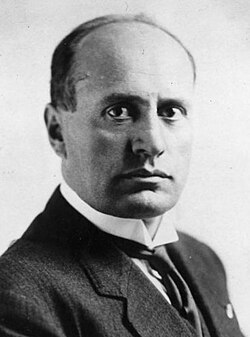
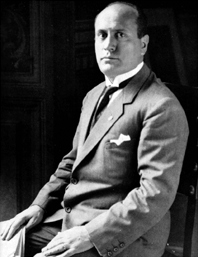
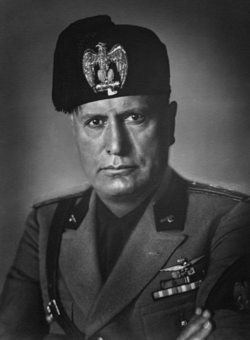
Benito Mussolini was the primary architect of Fascism, a far-right political ideology characterized by dictatorial power, extreme nationalism, and the suppression of opposition. As the Prime Minister of Italy from 1922 to 1943, he transformed the nation into a totalitarian state, styling himself as Il Duce (The Leader). His trajectory from a socialist journalist to a wartime ally of Adolf Hitler remains one of the most studied arcs of 20th-century political history.
Born in 1883 in Dovia di Predappio, Mussolini's early life was marked by political volatility and intellectual exploration. Before embracing fascism, he was a prominent member of the Italian Socialist Party (PSI), serving as a journalist and intellectual.
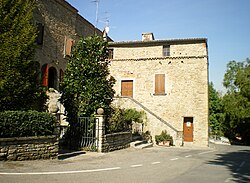
Key Facts
- Tenure: Served as Prime Minister of Italy from October 31, 1922, to July 25, 1943.
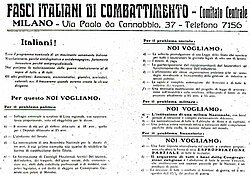
- Ideology: Founded the Fasci italiani di combattimento in 1919, which evolved into the National Fascist Party (PNF).
- Rise to Power: Seized control following the March on Rome in 1922.
- Alliances: Formed a strategic and ideological partnership with Adolf Hitler and Nazi Germany.
- Death: Executed by shooting on April 28, 1945, during the final stages of World War II.
Early Life and Political Evolution
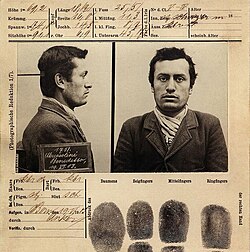
Mussolini's early political leanings were rooted in socialism. During his time in Switzerland, his activism led to clashes with authorities, including a police arrest in Bern in 1903.
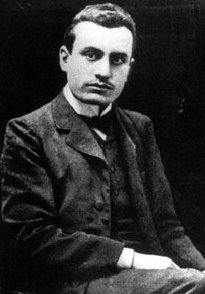
He eventually became the director of Avanti!, the official newspaper of the Socialist Party. However, the outbreak of World War I caused a rift in his ideology. While many socialists opposed the war, Mussolini shifted toward interventionism, viewing the conflict as an opportunity for Italian national renewal.
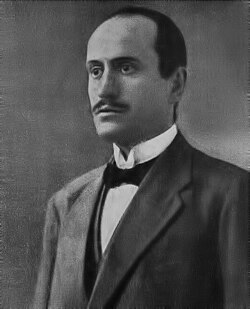
Military Service in World War I
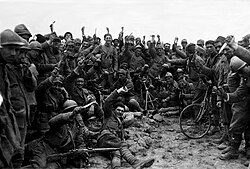
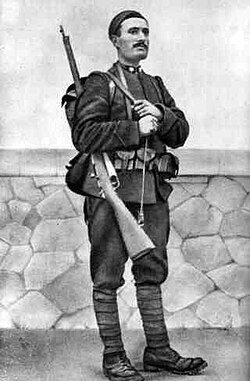
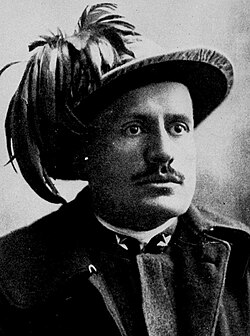
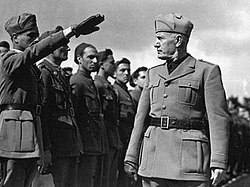
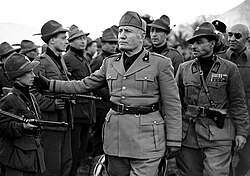
Mussolini served in the Royal Italian Army, specifically within the 11th Bersaglieri Regiment. He was also influenced by the Arditi, elite shock troops known for their bravery and distinct uniforms, including the fez and daggers. This military aesthetic would later be adopted by his Fascist paramilitary forces.
The Ascent to Power
In March 1919, Mussolini established the Fasci italiani di combattimento. This movement combined nationalist fervor with a desire for social reform, appealing to veterans and the middle class disillusioned by the post-war economy.
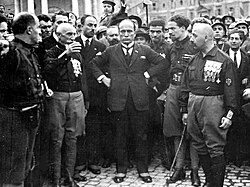
The defining moment of his rise was the March on Rome in October 1922. Alongside the Quadrumvirs—Michele Bianchi, Emilio De Bono, Italo Balbo, and Cesare Maria De Vecchi—Mussolini pressured King Victor Emmanuel III into appointing him Prime Minister.
Consolidating the Dictatorship
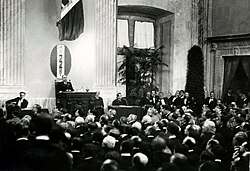
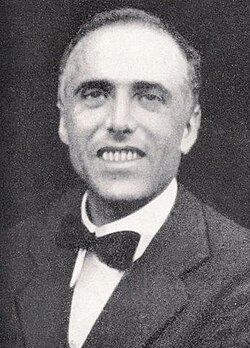
Once in power, Mussolini systematically dismantled democratic institutions. A critical turning point was the Matteotti Crisis in 1924, following the assassination of Socialist leader Giacomo Matteotti, who had denounced fascist violence. Rather than retreating, Mussolini used the crisis to accelerate the transition to a full dictatorship.
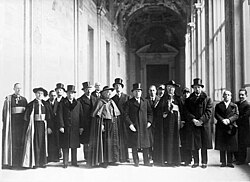
By the late 1920s, he had established a corporate state, where the government controlled labor and industry. He also sought to resolve the long-standing conflict between the Italian state and the Catholic Church through the Lateran Treaty, which recognized Vatican City as an independent state.
Imperial Ambitions and the Axis Alliance
Mussolini sought to recreate the glory of the Roman Empire, pursuing a policy of irredentism—the claim that Italian-speaking territories outside Italy's borders should be annexed.
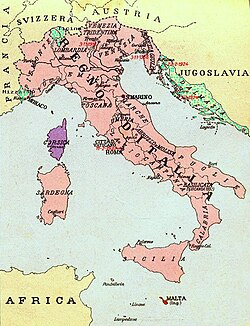
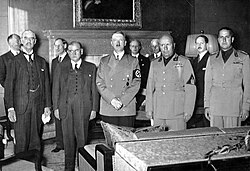
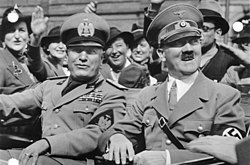
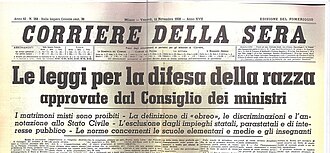
This ambition led to the Second Italo-Ethiopian War and the invasion of Albania. During this period, Mussolini's relationship with Adolf Hitler deepened. Despite early reservations about German racial theories, Mussolini eventually implemented the racial laws in 1938, aligning Italy with Nazi Germany's antisemitic policies.
World War II and Downfall
Italy entered World War II in June 1940, declaring war on France and Great Britain. However, Italy's military failures in North Africa and the Balkans weakened Mussolini's prestige and the stability of his regime.
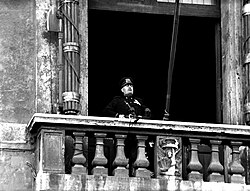
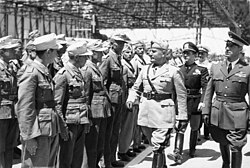
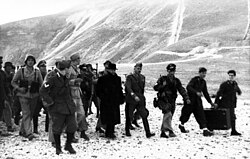
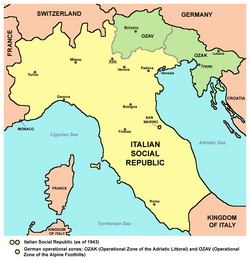
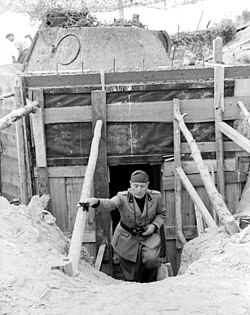
In July 1943, the Grand Council of Fascism voted to remove him, and he was arrested by order of the King. He was later rescued by German paratroopers in a daring raid at Campo Imperatore, where he was installed as the head of the Italian Social Republic (RSI), a puppet state under German control in Northern Italy.
Execution and Aftermath
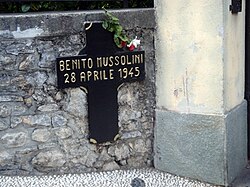
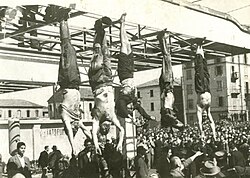
As Allied and partisan forces advanced, Mussolini attempted to flee to Switzerland in April 1945. He was captured by Italian partisans in Mezzegra and executed by shooting on April 28, 1945. His body, along with those of other fascist leaders, was displayed in Piazzale Loreto, Milan.
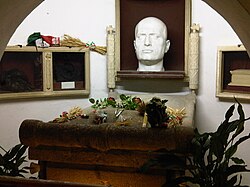
He was eventually buried in the family crypt in Predappio.
Summary of Mussolini's Political Career
| Role | Period | Key Significance |
|---|---|---|
| Socialist Journalist | 1901–1914 | Director of Avanti!; early political activism. |
| Founder of Fascism | 1919–1921 | Established the Fasci italiani di combattimento. |
| Prime Minister of Italy | 1922–1943 | Established a totalitarian regime as Il Duce. |
| Head of Italian Social Republic | 1943–1945 | Led a German-backed puppet state in Northern Italy. |
Frequently Asked Questions
How did Mussolini come to power?
Mussolini rose to power through a combination of political maneuvering and intimidation. Following the March on Rome in 1922, King Victor Emmanuel III appointed him Prime Minister to avoid further civil unrest, after which Mussolini systematically dismantled democratic opposition.
What was the significance of the Lateran Treaty?
The Lateran Treaty ended a long-standing dispute between the Italian state and the Catholic Church. It established Vatican City as an independent city-state and recognized Catholicism as the official state religion of Italy, granting Mussolini significant domestic legitimacy.
What was the Italian Social Republic (RSI)?
The RSI was a puppet state established by Nazi Germany in 1943 after Mussolini was rescued from prison. It operated in the northern and central parts of Italy under direct German military administration until the end of the war.
What were the racial laws of 1938?
The racial laws were a series of decrees that stripped Italian Jews of their citizenship and prohibited them from holding public office or marrying non-Jews, marking Italy's alignment with Nazi Germany's antisemitic ideology.
How did Benito Mussolini die?
Mussolini was captured by Italian partisans while attempting to escape to Switzerland. He was executed by shooting on April 28, 1945, in Giulino di Mezzegra.