1934 FIFA World Cup: Italy's Historic First Triumph
The 1934 FIFA World Cup marked a pivotal moment in the history of international football. As the second edition of the quadrennial championship for senior men's national teams, it expanded the scope of the game and introduced structural changes that would define the tournament for decades to come. Hosted by Italy from May 27 to June 10, 1934, the event saw the rise of European dominance in the sport.
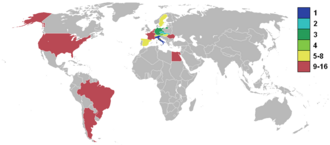
This tournament was the first to implement a qualification process, requiring nations to earn their place in the finals. While 32 nations entered the competition, only 16 qualified for the final tournament. The event was played across eight host cities using the Italian-manufactured Federale 102 match ball.
Key Facts
- Champions: Italy (their 1st title).
- Runners-up: Czechoslovakia.
- Top Scorer: Oldřich Nejedlý with 5 goals.
- Best Player: Giuseppe Meazza.
- Best Goalkeeper: Ricardo Zamora.
- Total Attendance: 363,000 spectators.
- Historic First: Egypt became the first African nation to qualify for a World Cup.
Host Selection and Political Backdrop
Italy was selected as the host nation on October 9, 1932, during a meeting in Stockholm. The FIFA executive committee chose Italy over a bid from Sweden without a formal ballot. To support the event, the Italian government allocated a budget of 3.5 million Lire.
The tournament is frequently discussed by historians for its intersection with politics. Benito Mussolini sought to use the World Cup as a high-profile tool to promote fascism. This led to long-standing allegations of corruption and government meddling to ensure an Italian victory. While Italy has consistently maintained that their win was deserved—pointing to their subsequent successes in the 1936 Olympics and the 1938 World Cup—the 1934 event remains a primary example of sports being used for political gain.
Qualification and Participants
The introduction of qualifying matches brought new dynamics to the tournament. However, the 1934 edition was notable for the absence of the reigning champions, Uruguay, who boycotted the event. This protest stemmed from the fact that only four European teams had accepted invitations to the inaugural 1930 tournament in South America. Consequently, 1934 is the only World Cup where the defending champion did not participate.
Additionally, the British Home Nations (England, Scotland, Wales, and Ireland) remained in self-imposed exile from FIFA and refused to enter, despite offers of direct entry for England and Scotland.
Of the 16 qualified teams, 12 were from Europe, three from the Americas, and one from Africa or Asia. Egypt made history as the first African representative. The final spot was decided in a one-off match in Rome just three days before the tournament began, where the United States defeated Mexico.
Tournament Venues
The event saw a significant increase in international travel, with thousands of supporters arriving from the Netherlands, Austria, and Switzerland. Matches were held in eight cities across Italy.
| City | Stadium | Capacity |
|---|---|---|
| Milan | Stadio San Siro | 55,000 |
| Bologna | Stadio Littoriale | 50,100 |
| Rome | Stadio Nazionale PNF | 47,300 |
| Florence | Stadio Giovanni Berta | 47,290 |
| Naples | Stadio Giorgio Ascarelli | 40,000 |
| Genoa | Stadio Luigi Ferraris | 36,703 |
| Turin | Stadio Benito Mussolini | 28,140 |
| Trieste | Stadio Littorio | 8,000 |
The Road to the Final
The tournament began with the Round of 16, where Italy made a dominant start by defeating the United States 7–1. Other notable early exits included Brazil, who lost 3–1 to Spain, and Argentina, who were defeated 3–2 by Sweden. Argentina's squad was particularly weakened by internal disputes, resulting in the use of an amateur squad.
The knockout stages intensified in the quarter-finals. Italy faced Spain in a grueling encounter that ended 1–1 after extra time, necessitating a replay. Italy eventually won the replay 1–0 thanks to a goal by Giuseppe Meazza.
In the semi-finals, Italy overcame Austria 1–0, while Czechoslovakia defeated Germany 3–1. Germany eventually secured third place by beating Austria 3–2.
The final took place on June 10 in Rome. Italy faced Czechoslovakia in a tense match that went into extra time. Goals from Orsi and Schiavio secured a 2–1 victory for the hosts, making Italy the second World Cup champions and the first from Europe.
Frequently Asked Questions
Why did Uruguay not participate in the 1934 World Cup?
Uruguay boycotted the tournament in protest because several European nations had refused to travel to South America for the first World Cup in 1930, which Uruguay had hosted.
Who was the top scorer of the 1934 tournament?
Oldřich Nejedlý of Czechoslovakia was the top scorer, netting a total of 5 goals.
What was the significance of Egypt's participation?
Egypt was the first team from Africa to qualify for the finals of a FIFA World Cup.
How did the 1934 World Cup differ from the 1930 edition in terms of entry?
The 1934 tournament was the first edition to require teams to play qualifying matches to enter the final competition, rather than relying on invitations.
What were the allegations regarding the tournament's integrity?
There were accusations that Benito Mussolini influenced the tournament for political propaganda, specifically by selecting referees for Italy's matches and manipulating logistics to favor the host nation.