Benaki Museum: A Journey Through Greek Culture and History
Located opposite the National Garden on Queen Sofias Avenue, the Benaki Museum stands as a testament to the enduring legacy of Greek civilization. Established through the generosity of Antonis Benakis, whose family resided in Alexandria, Egypt, the museum serves as a bridge between the ancient past and the modern era.
The institution began in 1931 when the Benakis family donated their Athens residence along with a vast collection of over 37,000 Islamic and Byzantine objects. By the 1970s, this collection grew by more than 9,000 artifacts, sparking further donations from various sources. Antonis Benakis remained a driving force behind the museum's development until his passing in 1954.
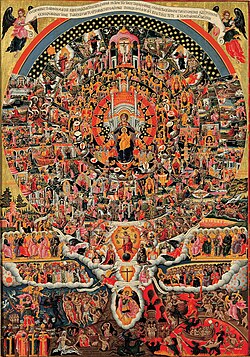
Expanding the Vision
Under the leadership of director Angelos Delivorrias, the museum underwent a significant expansion, adding over 60,000 objects, books, and documents through a combination of purchases and donations. Delivorrias implemented a strategic focus on displaying donated items to foster public participation and deepen the community's connection to the institution.
Central to the museum's philosophy is the belief that Greek history is not a series of isolated events, but a continuum—a continuous sequence that persists into the present day.
The 2000 Re-opening and Modern Focus
Following damage caused by an earthquake, the Benaki Museum underwent a comprehensive $20 million renovation and restoration, reopening its doors in 2000. This transformation allowed the museum to become the only institution in Greece that guides visitors through every age of Greek culture and history.
Unlike many traditional institutions, the Benaki Museum avoids a narrow focus on nationalism. Instead, it celebrates the diverse foreign influences that have shaped Greek culture over millennia. To achieve this specialized focus on Greece, the museum relocated its collections of Chinese porcelain with painting and Islamic Art to other venues.
This strategic shift was the result of a vision first conceived by Angelos Delivorrias in 1973, which took over 25 years to fully realize.
Global Reach and Exhibitions
The museum's treasures have reached audiences far beyond Athens. Its collections have traveled to Canada (2008) and the United States (1959), the latter in partnership with the Smithsonian Institution. In 2005, a historic milestone occurred when an Ancient Greek solid gold drinking cup left Greece for the first time to be exhibited at the Powerhouse Museum in Sydney and the Melbourne Immigration Museum in Australia.
Key Facts
- Founder: Antonis Benakis.
- Established: 1931.
- Initial Collection: Over 37,000 Islamic and Byzantine objects.
- Expansion: Over 60,000 additional items added under Angelos Delivorrias.
- Renovation: A $20 million restoration completed in 2000.
- Unique Status: The only Greek museum covering all eras of Greek culture.
| Category | Details |
|---|---|
| Location | Queen Sofias Avenue, Athens |
| Primary Focus | Continuum of Greek culture and foreign influences |
| Major Renovations | $20 million (Re-opened 2000) |
| Notable International Loans | USA, Canada, Australia |
Frequently Asked Questions
Who founded the Benaki Museum?
The museum was founded by Antonis Benakis, who donated his family's Athens home and a massive collection of artifacts in 1931.
What makes the Benaki Museum unique compared to other Greek museums?
It is the only museum in Greece that presents the entirety of Greek culture and history across all ages, focusing on a cultural continuum and foreign influences rather than nationalism.
How did the museum change after the 2000 renovation?
Following a $20 million restoration, the museum refocused its main Athens campus exclusively on Greek history by moving its Islamic Art and Chinese porcelain collections to other locations.
Has the museum's collection ever been exhibited outside of Greece?
Yes, collections have traveled to the United States, Canada, and Australia, including a rare solid gold drinking cup exhibited in Sydney and Melbourne in 2005.
What is the museum's approach to its collections?
Under director Angelos Delivorrias, the museum emphasizes the display of donated items to encourage community ties and public participation.