Belt of Venus: The Pink Glow of the Anti-Twilight Arch
As the sun dips toward the horizon during sunrise or sunset, the sky transforms into a canvas of vibrant colors. While most observers focus on the brilliant hues of the setting sun, a subtle and beautiful phenomenon often emerges in the opposite direction: the Belt of Venus. Also known as the anti-twilight arch, this pinkish band provides a striking contrast to the deepening blue of the evening or morning sky.
What is the Belt of Venus?
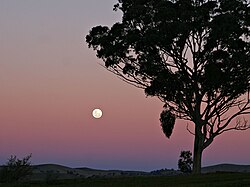
The Belt of Venus is a pinkish band of light visible in the sky opposite the sun. It appears directly above the bluish shade of the Earth's shadow. The phenomenon is named after the planet Venus, which is frequently located in this specific region of the sky when it is visible to the naked eye.
It is important to note that there is no sharp, defined line separating the Earth's shadow from the Belt of Venus; instead, the two colored bands blend seamlessly into one another.
The Science of Color and Light
The distinct pink hue of the Belt of Venus is the result of how sunlight interacts with the Earth's atmosphere. When the sun is near the horizon, its light rays must penetrate an exceptionally thick layer of the atmosphere. This layer acts as a filter, scattering shorter wavelengths of light and allowing only the longer, redder wavelengths to pass through.
Backscattering and Atmospheric Particles
From the perspective of an observer on the ground, this red sunlight directly illuminates small particles in the lower atmosphere in the part of the sky opposite the sun. This red light is then backscattered—reflected back toward the observer—which creates the characteristic pink appearance of the arch.
The Transition to Night
As the sun descends further below the horizon, the boundary between the Earth's shadow and the Belt of Venus becomes less defined. This occurs because the sun begins to illuminate a thinner portion of the upper atmosphere where fewer particles are present. In these regions, red light is not scattered, and the observer sees the standard blue sky caused by Rayleigh scattering (the scattering of light by air molecules). Eventually, both the Belt of Venus and the Earth's shadow fade into the darkness of the night sky.
Key Facts
- Alternative Name: Also referred to as the anti-twilight arch.
- Appearance: A pinkish band located above the blue Earth's shadow.
- Location: Visible in the sky geometrically opposite the sun.
- Cause: Red sunlight backscattered by particles in the lower atmosphere.
- Distinction: It is a separate phenomenon from the afterglow.
| Phenomenon | Primary Color | Position Relative to Sun | Cause |
|---|---|---|---|
| Belt of Venus | Pink | Opposite the Sun | Backscattering of red light by particles |
| Earth's Shadow | Blue/Dark Blue | Opposite the Sun (below Belt) | Obstruction of sunlight by Earth |
| Standard Sky | Blue | General Sky | Rayleigh scattering by air molecules |
Frequently Asked Questions
Is the Belt of Venus the same as the afterglow?
No, the Belt of Venus is a different phenomenon from the afterglow, which appears in the geometrically opposite part of the sky.
Why is the Belt of Venus pink?
It appears pink because the atmosphere filters out shorter wavelengths of sunlight near the horizon, leaving redder light that is backscattered by particles in the lower atmosphere toward the observer.
What is the blue band beneath the Belt of Venus?
The bluish shade located directly below the Belt of Venus is the Earth's own shadow being cast into the atmosphere.
Why does the pink band disappear as the sun sets further?
As the sun sinks lower, it illuminates thinner parts of the upper atmosphere with fewer particles. This reduces the scattering of red light, leaving only the blue light from Rayleigh scattering before the sky turns completely dark.