Belgrano: A Historic Neighborhood of Rosario, Argentina
Located in the western region of Rosario, Santa Fe, Belgrano is a neighborhood that blends historical roots with urban development. Named in honor of Manuel Belgrano, the creator of the Argentine flag, this district serves as a testament to the growth of the city and its surrounding settlements.
Key Facts
- Location: West Rosario, Santa Fe Province, Argentina.
- Established: 1889.
- Original Names: Formerly known as Eloy Palacios and Barrio Vila.
- Central Landmark: The intersection of Provincias Unidas Avenue and Mendoza Avenue.
- Key Architecture: Includes the 1891 Barrio Vila train station and the Church of Saint Anthony of Padua.
The Evolution of Barrio Belgrano
The origins of the neighborhood date back to 1889, when it was first settled by farmers. At the end of the 19th century, the area was recognized as a town called Eloy Palacios, and it was also referred to as Barrio Vila.
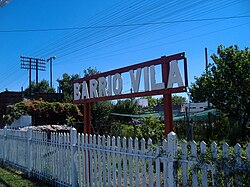
Over time, these early settlements integrated into the larger urban fabric of Rosario, eventually becoming the Belgrano neighborhood known today.
Urban Layout and Landmarks
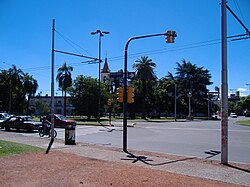
The heart of the neighborhood is defined by the intersection of Provincias Unidas Avenue and Mendoza Avenue. This central point is home to the Bartolomé Mitre Park, a space popularly known as Las Cuatro Plazas (The Four Squares) because it occupies all four corners of the intersection.
Historical Architecture and Institutions
Belgrano preserves several structures from the late 19th and early 20th centuries that highlight its heritage:
- Barrio Vila Train Station: Built in 1891 by the Ferrocarril Central Argentino, this station remains preserved, although it is now mostly inactive.
- Church of Saint Anthony of Padua: Also constructed in 1891, this church stands as a spiritual landmark near the Cuatro Plazas.
- College of the Immaculate Conception: A parochial institution established in 1903, located adjacent to the church.
Southern District
Moving toward the southern part of the neighborhood along Provincias Unidas Avenue, visitors will find the La Piedad Cemetery, another significant site within the local geography.
Neighborhood Summary
| Category | Details |
|---|---|
| Coordinates | 32°56′S 60°43′W |
| Province | Santa Fe |
| Department | Rosario |
| Founding Year | 1889 |
| Primary Park | Bartolomé Mitre Park (Las Cuatro Plazas) |
Frequently Asked Questions
Who is the neighborhood named after?
The neighborhood is named after Manuel Belgrano, the historical figure who created the Argentine flag.
What were the previous names of Belgrano?
Before being known as Belgrano, the area was settled as a town called Eloy Palacios and was also known as Barrio Vila.
What is the significance of Las Cuatro Plazas?
Las Cuatro Plazas is the popular name for the Bartolomé Mitre Park, which occupies the four corners of the intersection of Provincias Unidas and Mendoza Avenues.
Is the old train station still in use?
The Barrio Vila train station, built in 1891, has been preserved but is currently mostly inactive.
Where is the La Piedad Cemetery located?
The cemetery is located in the southern part of the neighborhood on Provincias Unidas Avenue.