Beirut Governorate: The Heart of Lebanon
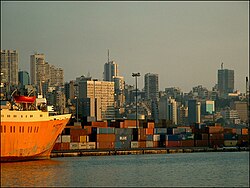
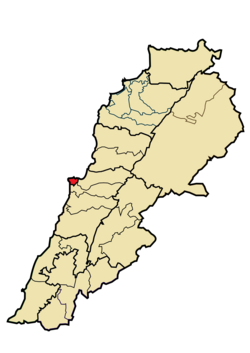
The Beirut Governorate (Arabic: محافظة بيروت) serves as the administrative and political core of Lebanon. Comprising a single district and a single city, it is home to Beirut, which functions as both the governorate's capital and the national capital of Lebanon. Despite its compact size, the region is the most influential area in the country, driving Lebanon's economic, political, cultural, and social activity.
Located at coordinates 33°53′N 35°30′E, the governorate is a bustling urban center that balances traditional governance with a modern, cosmopolitan atmosphere.
Key Facts
- Total Area: 19.8 square kilometers (excluding suburbs).
- Population: Estimated at 433,249 (2017), with Greater Beirut reaching approximately 2.5 million people.
- Governance: Led by a Governor (currently Marwan Abboud) and a Mayor.
- Diversity: Recognized as the most religiously diverse city in the Middle East.
- Time Zone: UTC+2 (EET), shifting to UTC+3 (EEST) during summer.
Administrative Structure and Governance
The administration of the Beirut Governorate follows specific traditional protocols regarding religious representation. By tradition, the Governor is Greek Orthodox, while the Mayor of the City of Beirut is a Sunni Muslim. This arrangement reflects the broader social fabric of the region.
Demographics and Religious Diversity
Beirut is celebrated for its pluralism. Data from registered voters in 2014 highlights a complex demographic landscape. Muslims make up 61.17% of the voting population, with Sunnis representing the largest group at 45.39%, followed by Shias at 15.75%.
The Christian population accounts for 36.08% of registered voters. This group is further divided among several denominations, including Greek Orthodox (9.60%), Maronites (8.46%), Greek Catholics (6.11%), and Armenian Orthodox (4.22%), among others. A small percentage of the population identifies as Druze (1.12%) or Alawite (0.03%).
Demographic Breakdown (2014 Registered Voters)
| Group | Percentage | Sub-group Details |
|---|---|---|
| Muslims | 61.17% | Sunni (45.39%), Shia (15.75%), Alawite (0.03%) |
| Christians | 36.08% | Greek Orthodox (9.60%), Maronite (8.46%), Greek Catholic (6.11%), Armenian Orthodox (4.22%) |
| Druze | 1.12% | - |
The Quarters of Beirut
The governorate is divided into several quarters, or neighborhoods, each contributing to the city's unique character. These areas vary significantly in size and population density.
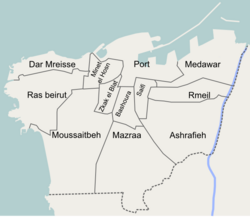
Based on 2014 registered voter data, the most populous quarters include Mazraa (87,222 voters) and Mousaitbeh (72,337 voters). Other significant neighborhoods include Bachoura, Achrafieh, and Zuqaq al-Blat. Smaller, specialized areas such as the Marfa (Port) and Saifi also play critical roles in the city's infrastructure and economy.
Registered Voters by Quarter (2014)
- Mazraa: 87,222
- Mousaitbeh: 72,337
- Bachoura: 54,304
- Achrafieh: 54,199
- Zuqaq al-Blat: 50,795
- Medawar: 41,358
- Ras Beirut: 33,724
- Rmeil: 28,847
- Minet el-Hosn: 13,105
- Dar el-Mraisseh: 11,587
- Marfa (Port): 10,146
- Saifi: 9,155
Frequently Asked Questions
What is the total area of the Beirut Governorate?
The total area of the governorate is 19.8 square kilometers, excluding its suburbs.
Who is the current Governor of Beirut?
The current Governor is Marwan Abboud, who is an Independent.
How many people live in Greater Beirut?
While the governorate's 2017 estimate is 433,249, the population of Greater Beirut (including suburbs) is approximately 2.5 million people.
Which quarter in Beirut has the highest number of registered voters?
According to 2014 data, the Mazraa quarter has the highest number of registered voters with 87,222.
What makes Beirut's governance unique?
By tradition, the Governor of the Beirut Governorate is Greek Orthodox, while the Mayor of the City of Beirut is a Sunni Muslim.