Beatriz Guido: The Literary and Cinematic Legacy of an Argentine Icon
Beatriz Guido was a formidable force in 20th-century Argentine culture, excelling as both a novelist and a screenwriter. Known for her intellectual depth and stylistic precision, she bridged the gap between high literature and the silver screen, leaving behind a body of work that explored the complexities of human existence and social structures.
Born into a family of artistic prestige, Guido was the daughter of Berta Eirin, a Uruguayan actress, and Ángel Guido, the architect famous for creating the National Flag Memorial. This environment of creativity and intellectualism shaped her early trajectory, leading her to study at the Faculty of Philosophy and Letters of the University of Buenos Aires.
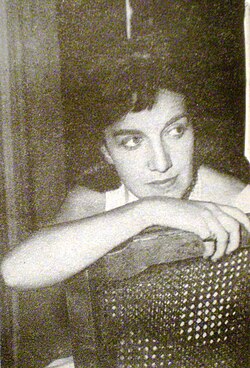
Intellectual Foundations and Early Career
Guido's intellectual horizons expanded during her studies in Italy and France, where she immersed herself in existentialism—a philosophical movement focusing on individual existence, freedom, and choice. She contributed articles to various cultural magazines and, around 1950, began translating the works of French philosopher Gabriel Marcel into Spanish.
Her literary breakthrough arrived in 1954 when her first novel, La casa del ángel, won the prestigious EMECE prize. This success launched a series of bestsellers, including La caída, Fin de fiesta, and the highly influential El incendio y las vísperas, which established her as a prominent figure in the public eye.
A Cinematic Partnership
Beatriz Guido's influence extended deeply into cinema through her collaboration with director Leopoldo Torre Nilsson. Their professional partnership began with the film adaptation of La casa del ángel and mirrored their personal relationship. Over the next twenty years, they collaborated on 18 films until Torre Nilsson's death in 1978.
While she later worked with other directors, a significant portion of her screenwriting—usually co-written with other authors—was based on her own short stories and novels. Her ability to translate literary nuance into visual storytelling made her one of the most respected screenwriters of her era.
Political Friction and Late Recognition
Guido's career was not without controversy. Due to her outspoken anti-Peronism (opposition to the political movement led by Juan Perón), she faced harsh criticism from the government and some contemporary critics, who labeled her a "right-wing writer" and a "false aristocrat."
Despite these political tensions, her literary merit remained undeniable. In 1983, she was awarded the National Literature Prize, followed by the Konex Merit Diploma on Letters in 1984. That same year, she served as the Cultural Attaché of the Argentinean Embassy in Spain, where she eventually passed away on March 4, 1988.
Key Facts
- Born: December 13, 1922, in Rosario, Santa Fe Province.
- Died: March 4, 1988, in Madrid, Spain.
- Major Award: Winner of the National Literature Prize (1983).
- Cinematic Legacy: Collaborated on 18 films with Leopoldo Torre Nilsson.
- Key Work: La casa del ángel (1954), winner of the EMECE prize.
- Diplomatic Role: Served as Cultural Attaché of the Argentinean Embassy in Spain.
Summary of Major Works
| Category | Title | Year |
|---|---|---|
| Novel | La casa del ángel | 1954 |
| Novel | El incendio y las vísperas | 1964 |
| Short Story | La mano en la trampa | 1961 |
| Drama | Esperando a los Castro | 1957 |
| Film | The Kidnapper | 1958 |
| Film | Traitors of San Angel | 1967 |
Centenary Tributes
In 2022, the city of Rosario distinguished Guido as an illustrious personality. In 2023, the Buenos Aires International Independent Film Festival (Bafici) celebrated her centenary with a tribute featuring three emblematic films and an exhibition of her personal papers. This event coincided with the publication of Espía privilegiada by José Miguel Onaindia and Diego Sabenés, a book containing 15 unpublished texts and providing the first comprehensive analysis of her cinematic contributions.
Frequently Asked Questions
What was Beatriz Guido's most famous novel?
Her most famous early work was La casa del ángel, published in 1954, which won the EMECE prize and was later adapted into a film.
Who was her primary collaborator in cinema?
She had a long-term professional and sentimental partnership with director Leopoldo Torre Nilsson, with whom she worked on 18 films over two decades.
What philosophical influence shaped her writing?
Guido was heavily influenced by existentialist authors during her studies in France and Italy, which is reflected in her literary themes and her translations of Gabriel Marcel.
Why was she a controversial figure during her life?
Because of her outspoken anti-Peronism, she was targeted by the government of Juan Perón and critics who labeled her a "right-wing writer."
What honors did she receive late in her career?
She won the National Literature Prize in 1983 and the Konex Merit Diploma on Letters in 1984, and she served as the Cultural Attaché of the Argentinean Embassy in Spain.