Bayern Munich: The History and Legacy of Germany's Football Giant
Known to the world as FC Bayern Munich (Fußball-Club Bayern München e. V.), this sporting institution is more than just a football club; it is a symbol of Bavarian pride and global excellence. From its humble beginnings in 1900 to its current status as a dominant force in the Bundesliga and European football, the club has earned nicknames like Die Roten (The Reds) and Stern des Südens (Star of the South).
With a culture defined by the motto "Mia San Mia" (We are who we are), Bayern Munich has consistently pushed the boundaries of athletic achievement, blending a rich history of legendary players with a modern, corporate approach to sports management.
Key Facts
- Founded: 27 February 1900.
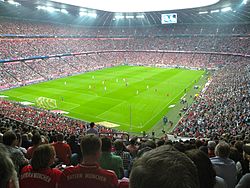
- Home Ground: Allianz Arena (Capacity: 75,024).
- Current Head Coach: Vincent Kompany.
- Major Achievement: Two seasonal trebles (2012–13, 2019–20).
- League Status: Most successful club in Bundesliga history.
- Key Leadership: President Herbert Hainer and CEO Jan-Christian Dreesen.
A Journey Through Time: From 1900 to the Present
Early Years and the Rise to Power
The club's early decades were marked by steady growth and the establishment of its identity in Munich. One of the earliest milestones was their first match against 1. FC Nürnberg in 1901, setting the stage for a century of competition.
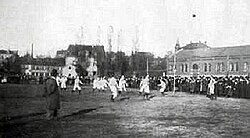
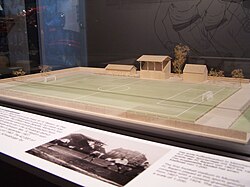
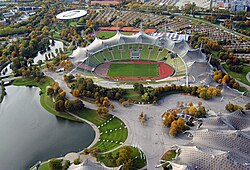
Between 1906 and 1924, the club played at its first dedicated stadium before eventually moving to larger venues to accommodate a growing fanbase.
The Golden Era and European Dominance
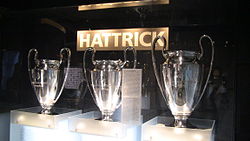
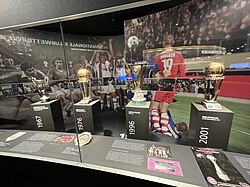
The 1960s and 70s transformed Bayern Munich into a continental powerhouse. The win in the 1967 Cup Winners' Cup signaled the start of their European success, followed by three consecutive European Cup trophies from 1974 to 1976.
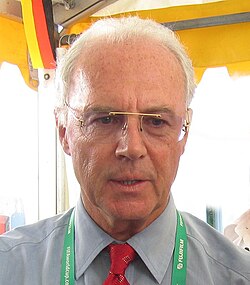
This era was defined by icons such as Franz Beckenbauer, whose influence as a player and later as president helped shape the club's professional standards.
Modern Dominance and the Treble
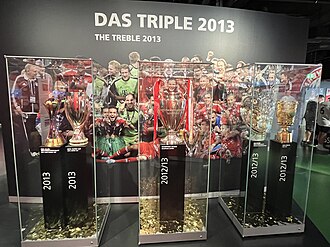
Entering the 21st century, Bayern Munich solidified its domestic dominance. The club achieved a historic Sextuple during the 2019–20 season, winning six trophies across two seasons, including the Bundesliga, DFB-Pokal, and UEFA Champions League.
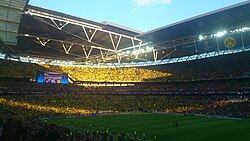
The 2012–13 season remains a landmark moment, as the club secured its first seasonal treble, a feat they repeated in 2019–20.
Infrastructure and Identity
The Allianz Arena and Fan Culture
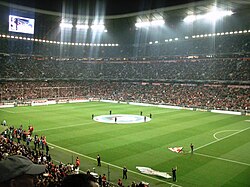
Since 2005, the club has called the Allianz Arena home. This architectural marvel is famous for its glowing exterior and the passionate "Südkurve," where the ultra-scene—the most fervent supporters—gather to cheer on the team.
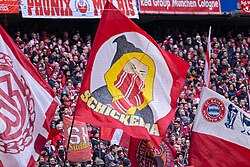
The rivalry with 1860 Munich, known as the Munich derby, remains one of the most intense fixtures in German football.
Youth Development and Facilities
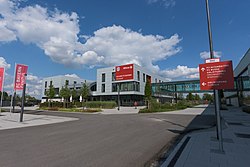
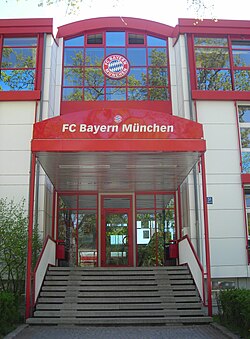
To ensure a future of success, the club invested in the FC Bayern Campus, a state-of-the-art academy dedicated to nurturing young talent.
Club Organization and Kit History
Bayern Munich operates as a professional entity (FC Bayern München AG) with significant partnerships. Their long-standing relationship with Adidas, dating back to 1974, is one of the most lucrative in sports history, with a contract extending to 2030 valued at €900 million.
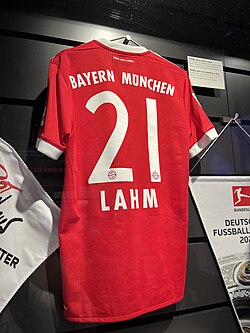
The club's jerseys have evolved over time, and as a mark of their 30th Bundesliga title, players are now permitted to wear a fifth star on their shirts.
![Since the club's 30th Bundesliga title, its players are allowed to wear a fifth star on their jerseys.[227]](/images/1c/6c/1c6c6db389f4fc67de780aacb583daeec67cae8a53db687df1dfe11fc28bb372.webp)
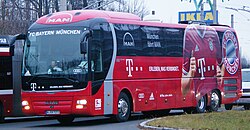
Beyond the pitch, the club maintains a professional image with high-end logistics, including a dedicated team bus provided by sponsor MAN.
Summary of Club Achievements
| Category | Achievement / Detail | Notable Years |
|---|---|---|
| Seasonal Treble | Bundesliga, DFB-Pokal, UEFA Champions League | 2012–13, 2019–20 |
| European Treble | Cup Winners' Cup, European Cup, UEFA Cup | 1966–67, 1973–74, 1995–96 |
| Sextuple | 6 Trophies in 2 Seasons | 2019–2021 |
| Domestic Treble | Bundesliga, DFB-Pokal, DFB-Ligapokal | 1999–2000 |
Frequently Asked Questions
What is a "Treble" in football?
A seasonal treble occurs when a club wins three major trophies in a single season. For Bayern Munich, this typically refers to winning the Bundesliga, the DFB-Pokal (German Cup), and the UEFA Champions League.
Who is the current head coach of Bayern Munich?
As of 2024, the head coach is Vincent Kompany.
What does the fifth star on the jersey represent?
The fifth star was introduced to commemorate the club's achievement of winning 30 Bundesliga titles.
Which stadium does Bayern Munich currently use?
The club plays its home matches at the Allianz Arena, which has a capacity of 75,024 spectators.
Who is the most iconic captain in the club's history?
While many have led the team, Franz Beckenbauer is among the most legendary, serving as captain from 1970 to 1977 and later as the club's president.